
Where to Start Reading the Wycliffe Series
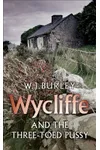
For readers looking to dive into W.J. Burley's classic police procedurals, the absolute best starting point is the very first novel, Wycliffe and the Three-Toed Pussy (1968). Reading the books in order allows you to appreciate the subtle, slow-burn development of Charles Wycliffe's character, his family life, and the professional growth of his dedicated squad, including characters like Detective Inspector Doug Kersey and Detective Inspector Lucy Lane.
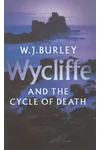
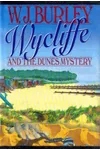
However, because the overarching continuity of the series is relatively light, most novels function perfectly well as standalones. If you happen to pick up a book mid-series, such as Wycliffe and the Dunes Mystery or Wycliffe and the Cycle of Death, you will not find yourself lost. Each book is a self-contained investigation focused on a specific crime, its suspects, and a final resolution.
The Complete Wycliffe Books in Publication Order
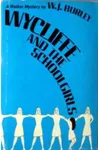
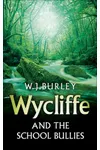
W.J. Burley wrote 22 novels in the Wycliffe series between 1968 and 2000. While some lists compile 23 entries, this is due to a title variation: the seventh novel, published in 1976, was released as both Wycliffe and the Schoolgirls and Wycliffe and the School Bullies. Below is the complete publication order, which also matches the chronological sequence of events:
- Wycliffe and the Three-Toed Pussy (1968)
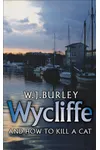
- Wycliffe and How to Kill a Cat (1970)
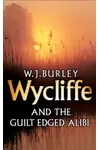
- Wycliffe and the Guilt-Edged Alibi (1971)
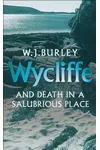
- Wycliffe and Death in a Salubrious Place (1973)
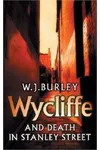
- Wycliffe and Death in Stanley Street (1974)
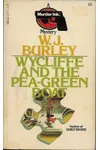
- Wycliffe and the Pea-Green Boat (1975)
- Wycliffe and the Schoolgirls / Wycliffe and the School Bullies (1976)
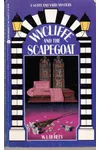
- Wycliffe and the Scapegoat (1978)
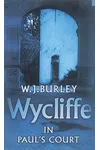
- Wycliffe in Paul's Court (1980)
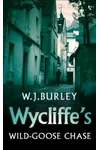
- Wycliffe's Wild Goose Chase (1982)
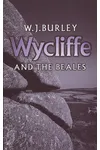
- Wycliffe and the Beales (1983)
- Wycliffe and the Four Jacks (1985)
- Wycliffe and the Quiet Virgin (1986)
- Wycliffe and the Winsor Blue (1987)
- Wycliffe and the Tangled Web (1988)
- Wycliffe and the Cycle of Death (1990)
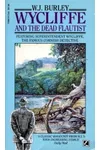
- Wycliffe and the Dead Flautist (1991)
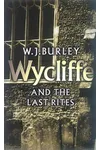
- Wycliffe and the Last Rites (1992)
- Wycliffe and the Dunes Mystery (1994)
- Wycliffe and the House of Fear (1995)
- Wycliffe and the Redhead (1997)
- Wycliffe and the Guild of Nine (2000)
Chronological vs. Publication Order & Continuity Caveats
Unlike some crime series that feature prequels or complex timelines, Wycliffe follows a straightforward, linear progression. There are no prequel novels, short story collections that disrupt the timeline, or co-authored additions. The order of publication is identical to the chronological timeline.
As you progress through the books, you will observe the changing landscape of Cornwall, minor shifts in policing methods, and Wycliffe's own aging process. While Wycliffe begins his career as a highly active investigator, he matures into a deeply contemplative figure who relies heavily on his squad for footwork while he focuses on the psychological motives of the suspects.
The Heart of Wycliffe: Themes and Style
W.J. Burley was a former zoologist and teacher who began publishing novels in his fifties. His scientific background is evident in Wycliffe's methodical, observant approach to crime solving. Burley was also a great admirer of Georges Simenon's Maigret novels, and the comparison is highly accurate. Wycliffe is often described as an 'English Maigret' due to his introspective nature, his habit of walking around the local villages to absorb the atmosphere, and his deep focus on human nature rather than high-tech forensics.
The setting of Cornwall plays a crucial role in the series. The windswept cliffs, isolated coastal communities, and quiet rural villages are more than just backdrops; they shape the culture and the secrets of the suspects Wycliffe investigates. The stories are cozy in terms of their focus on character and absence of graphic violence, yet they carry a psychological depth and a touch of melancholy that elevates them above standard cozy mysteries.
The Wycliffe TV Adaptation
Between 1994 and 1998, the novels were adapted into a highly successful British television series starring Jack Shepherd as Detective Superintendent Charles Wycliffe. The show was filmed on location in Cornwall, capturing the atmospheric essence of Burley's writing. Key roles like DI Doug Kersey (Jimmy Yuill) and DI Lucy Lane (Helen Masters) were expanded to play a larger part in the visual narrative.
While the early episodes adapted Burley's novels directly, the television show eventually branched out into original screenplays and altered several details. For instance, in the books, Wycliffe's children are adults who have moved away, whereas the TV adaptation depicts them as teenagers living at home. Despite these minor creative changes, the show remains a faithful companion to the books and is highly recommended for fans of British television mysteries.
W.J. Burley's Other Work
If you finish the 22 Wycliffe novels and want to read more of Burley's work, he wrote a two-book series featuring Henry Pym, an amateur detective and zoologist, which serves as a fascinating precursor to Wycliffe's methodical style:
- A Taste of Power (1966)
- Death in Willow Pattern (1969)
Additionally, Burley wrote several standalone novels that explore similar themes of suspense, human relationships, and mystery, including The Schoolmaster (1977), The 6th Day (1978), Charles and Elizabeth (1979), and The House of Care (1981).