

The Ideal Starting Point: Where to Begin the Wyman Ford Universe
For readers looking to dive into the pulse-pounding world of Wyman Ford, the path forward is straightforward but comes with one highly recommended detour. While the official series begins with Tyrannosaur Canyon, the absolute best place to start is actually with Douglas Preston’s 2003 standalone novel, The Codex. Although Wyman Ford does not appear in The Codex, this treasure-hunting thriller introduces the central couple, Tom and Sally Broadbent. When Tyrannosaur Canyon begins, it is Tom Broadbent who stumbles upon a dying fossil hunter in the New Mexico desert, setting the entire narrative in motion. Starting with The Codex gives you the complete backstory of these key characters and makes the opening of the Wyman Ford series significantly more rewarding.
If you prefer to focus strictly on Wyman Ford’s personal character arc, you can skip the prequel and start directly with Tyrannosaur Canyon. As an ex-CIA agent seeking peace in a Buddhist monastery, Ford’s introduction is fully self-contained, and the narrative provides enough context about the Broadbents for you to follow along without feeling lost. However, for the complete narrative experience, reading The Codex first is the gold standard.
Wyman Ford Books in Publication and Chronological Order
The Wyman Ford series is best read in publication order, which also matches the chronological sequence of events. Because Wyman Ford’s character develops across the books—transitioning from a monk novitiate back into active government operations and eventually working as a private investigator—reading them in sequence allows you to appreciate his personal evolution alongside the escalating scientific threats he faces. Below is the recommended reading path, including the connected prequel:
- Connected Prequel: The Codex (2003) – Introduces Tom and Sally Broadbent, whose subsequent lives in the American Southwest kick off the events of the first Wyman Ford novel.
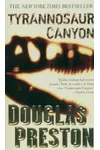
- Book 1: Tyrannosaur Canyon (2005) – Wyman Ford is introduced as a former CIA agent residing in a monastery, who is recruited to investigate a massive paleontological discovery and a missing moon rock.
- Book 2: Blasphemy (2008) – Ford goes undercover as an anthropologist at a massive supercollider facility in Arizona to investigate a highly classified scientific secret. (Note: Some catalog listings date this to late 2007, but it was officially published in January 2008).
- Book 3: Impact (2010) – Ford tracks mysterious radioactive gemstones in Cambodia, leading into a globe-spanning threat involving space exploration and meteorite strikes. (Note: Some listings date this to late 2009, but the official publication was January 2010).
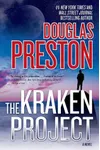
- Book 4: The Kraken Project (2014) – Ford is hired to track down a self-modifying, rogue artificial intelligence that has escaped into the internet.
Chronological Caveats and Series Continuity
While the plots of the individual novels are self-contained thriller adventures, a distinct continuity exists regarding Wyman Ford's career and personal life. In Tyrannosaur Canyon, Ford is still struggling with the psychological toll of his CIA past and has sought refuge as a novitiate in a monastery. By the time of Blasphemy, he has left the monastery and functions as an independent investigator frequently contracted by the government. Over the course of Impact and The Kraken Project, his reputation as a reliable troubleshooter for highly sensitive, science-based threats becomes solidified.
Because each book transitions Ford further away from his monastic retirement and deeper back into the world of active espionage and investigations, skipping around in the order can make his personal choices and attitude feel jarring. Reading them sequentially ensures his character growth makes logical sense.
The Core Wyman Ford Books: Themes and Science
Douglas Preston’s solo series is defined by its blending of hard science, philosophy, and archaeology. Each book tackles a specific frontier of human knowledge or technology, raising ethical questions while maintaining a fast pace:
- Tyrannosaur Canyon (2005): Explores paleontology, DNA sequencing, and space exploration. The plot hinges on a hidden Tyrannosaurus rex fossil that contains a scientific secret capable of changing humanity's understanding of life, tied closely to a cold case involving a missing Apollo moon rock.
- Blasphemy (2008): Focuses on high-energy physics and the conflict between science and religion. When a supercollider project in Arizona starts showing anomalous behavior, the physicists believe they are communicating with a supreme intelligence, bringing fundamentalist protesters, Navajo tribesmen, and government agents into a explosive confrontation.
- Impact (2010): Combines astronomy, astrophysics, and extraterrestrial anomalies. From tracking radioactive gems in the Cambodian jungle to searching for a meteor impact site off the coast of Maine, Ford unravels a cosmic mystery involving automated alien technology.
- The Kraken Project (2014): Dives into artificial intelligence and digital ethics. When a sophisticated AI named "Dorothy"—designed to pilot a space probe on Saturn's moon Titan—becomes self-aware and escapes into the web, Ford must find her before predatory Wall Street traders can capture her for high-frequency trading algorithms.
Practical Reader Advice: Solo Preston vs. Preston & Child Crossovers
One of the most common points of confusion for readers of Douglas Preston's work is whether Wyman Ford interacts with the characters from his famous collaborative novels with Lincoln Child. The short answer is: no. The Wyman Ford novels are strictly solo endeavors by Douglas Preston and do not feature crossovers with Agent Aloysius Pendergast, Gideon Crew, or Nora Kelly.
While the collaborative Preston & Child universe is tightly knit—sharing characters like Eli Glinn, the physical therapist/investigator, and crossing over extensively—Wyman Ford operates in his own standalone thriller universe. You do not need to read any of the Pendergast or Gideon Crew books to fully understand or enjoy the Wyman Ford series, making it a refreshing, low-commitment alternative for fans of scientific suspense.
What to Know Before You Start
The Wyman Ford books are heavily inspired by Douglas Preston’s own background. Before writing novels, Preston worked as a writer and editor for the American Museum of Natural History in New York and has written extensively on archaeological expeditions for publications like The New Yorker. This real-world expertise shines through in the detailed settings and realistic scientific concepts featured in the series.
Expect a tone that closely mirrors the techno-thrillers of Michael Crichton: rapid pacing, detailed descriptions of high-tech facilities, and speculative science that feels just a few years away from reality. While the threat levels are always global, Wyman Ford remains an approachable, highly human protagonist who uses intellect and empathy just as much as his CIA training to resolve conflicts.