

Where to Start Your Xanth Journey
Piers Anthony's massive fantasy series, which began in 1977, now spans nearly 50 books set in the magical land of Xanth. Because the series is so vast, new readers often struggle with where to begin or how far to commit. Fortunately, the reading community has established two highly recommended paths for navigating this pun-tastic universe.
The Foundational Trilogy
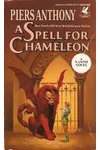
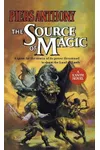
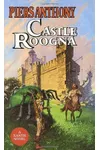
If you want to test the waters, the best starting point is the original trilogy: A Spell for Chameleon (1977), The Source of Magic (1978), and Castle Roogna (1979). Originally, Anthony conceived the first book as a standalone, but its success spawned a trilogy that establishes the core lore of the world, explains how magical talents work, and introduces Bink, Dor, and the mysterious Source of Magic. These three books form a complete story arc and represent the peak of the series' classic fantasy charm.
The First Nine (The Classic Era)
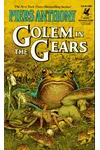
For readers who enjoy the trilogy and want more, the next logical stopping point is the First Nine Books, ending with Golem in the Gears (1986). This era wraps up the generation of Bink and his immediate family. Many fans find that the quality, originality, and humor of the series are at their best in these first nine books, after which the pun-based formula and thematic shifts can become repetitive or polarizing.
Xanth Mainline Publication Order
While the series features standalone stories in almost every volume, the overall timeline of the world moves forward linearly. Reading in publication order ensures that you understand the lineage of the characters, the changing of the Kings, and the evolution of the world's rules. Here is the full publication order of the Xanth novels:
- A Spell for Chameleon (1977)
- The Source of Magic (1978)
- Castle Roogna (1979)
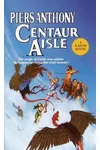
- Centaur Aisle (1981)
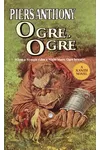
- Ogre, Ogre (1982)
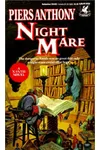
- Night Mare (1982)
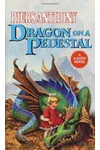
- Dragon on a Pedestal (1983)
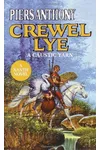
- Crewel Lye (1984)
- Golem in the Gears (1986)
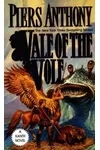
- Vale of the Vole (1987)
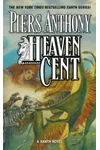
- Heaven Cent (1988)
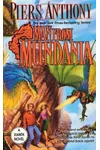
- Man from Mundania (1989)
- Isle of View (1990)
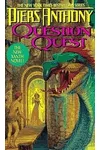
- Question Quest (1991)
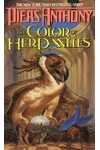
- The Color of Her Panties (1992)
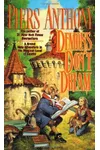
- Demons Don't Dream (1992)
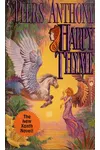
- Harpy Thyme (1993)
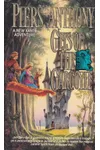
- Geis of the Gargoyle (1994)
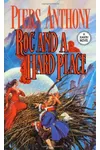
- Roc and a Hard Place (1995)
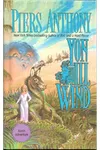
- Yon Ill Wind (1996)
- Faun & Games (1997)
- Zombie Lover (1998)
- Xone of Contention (1999)
- The Dastard (2000)
- Swell Foop (2001)
- Up in a Heaval (2002)
- Cube Route (2003)
- Currant Events (2004)
- Pet Peeve (2005)
- Stork Naked (2006)
- Air Apparent (2007)
- Two to the Fifth (2008)
- Jumper Cable (2009)
- Knot Gneiss (2010)
- Well-Tempered Clavicle (2011)
- Luck of the Draw (2012)
- Esrever Doom (2013)
- Board Stiff (2013)
- Five Portraits (2014)
- Isis Orb (2016)
- Ghost Writer in the Sky (2017)
- Fire Sail (2019)
- Jest Right (2020)
- Skeleton Key (2021)
- A Tryst of Fate (2021)
- Six Crystal Princesses (2022)
- Apoca Lips (2023)
Chronological Ordering, Time Travel, and Graphic Novel Caveats
For the most part, the chronological order of the stories matches their publication order. However, there are two notable exceptions that readers interested in the strict chronology of the universe should keep in mind:
- Castle Roogna (Book 3): In this novel, the young Magician Dor travels 800 years into the past of Xanth to save a zombie's life. While the framing sequence of the book takes place chronologically after The Source of Magic, the bulk of the action occurs in Xanth's distant history. Reading it in publication order remains highly recommended, as it sets up rules and history that become important in later books.
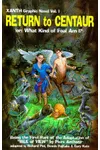
- Return to Centaur (1990 Graphic Novel): This unique graphic novel, adapted by Richard Pini, Dennis Fujitake, and Gary Kato, tells a story that takes place chronologically between the events of Castle Roogna (Book 3) and Centaur Aisle (Book 4). It is a fun addition for completists but is not required to follow the main series' plot.
Companion Books, Spin-offs, and Game Tie-Ins
In addition to the mainline novels, there are a few notable side works that expand on the universe:
- Piers Anthony's Visual Guide to Xanth (1989): Co-authored with Jody Lynn Nye, this illustrated encyclopedia is an official reference guide mapping the geography, landmarks (like the Kiss-Mee River and the Gap Chasm), and flora and fauna of Xanth. It is a fantastic companion for fans who want to dive deep into the world's lore.
- Demons Don't Dream (Book 16): This novel was written as a direct tie-in to the 1993 Legend Entertainment computer adventure game, Companions of Xanth. The plot involves characters playing a computer game that transports them into the real land of Xanth, bridging real-world technology with the magical setting.
What to Know Before You Start
Before diving into Xanth, readers should be prepared for its highly specific style and tone. The entire land is powered by puns—meaning literal translation of idioms (e.g., "storks" delivering babies, plants growing actual pies, or a "night mare" being a literal horse that brings bad dreams). Starting in the late 1980s, Piers Anthony began actively incorporating fan-submitted puns, which became a hallmark of the series.
It is also important to note that the early books were written in the late 1970s and 1980s. Modern readers often note that the gender dynamics, portrayal of female characters, and certain adult humor elements have not aged well. If you find these aspects off-putting, focusing strictly on the first trilogy or first nine books offers a complete and satisfying experience without wading into the later, more polarizing entries.