
Where to Start Reading the Xeelee Sequence
Because the Xeelee Sequence is a massive future history rather than a standard, linear story, picking your first book can feel like trying to navigate a wormhole. Fortunately, the fan community generally recommends two distinct entry points depending on your preferred reading style.
Route A: The Gateway Collection (Highly Recommended)
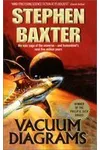
If you want to understand the overarching scale, history, and themes of the universe without committing to a dozen novels immediately, start with the short story collection Vacuum Diagrams (1997). This book serves as a perfect overview. It contains stories spanning the entire timeline—from the early days of human expansion to the ultimate fate of the universe—woven together with a framing narrative. Many readers consider this the single best introduction to Baxter's cosmic vision, and it helps make sense of the novels that follow.
Route B: The Classic Quartet (Publication Order)
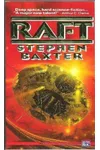
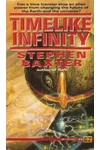
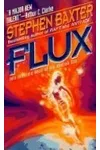
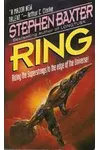
If you prefer traditional novels, begin with the original core books in the order they were published. The easiest way to do this is by picking up Xeelee: An Omnibus, which collects the first four novels: Raft, Timelike Infinity, Flux, and Ring. This route allows you to experience the universe exactly as Baxter developed it, letting the mysteries of the Xeelee and their eternal rivals unfold naturally.
The Core Xeelee Sequence in Publication Order
Reading in publication order is the safest approach for first-time readers. It ensures you aren't spoiled by late-series revelations and helps you appreciate how Baxter's writing and concepts evolved over nearly three decades. Here is the publication sequence for the main novels and companion novellas:
- Raft (1991): The debut novel, set in an alternate universe where gravity is a billion times stronger than our own, forcing human survivors to cling to life in the atmosphere of a nebula near a black hole.
- Timelike Infinity (1992): Introduces key universe concepts, including wormholes, the tyrannical alien Qax, and Michael Poole's struggle to liberate humanity using time travel.
- Flux (1993): A unique hard sci-fi tale following microscopic, genetically engineered humans living inside a highly dense neutron star.
- Ring (1994): The culmination of the original quartet. It reveals the true nature of the Xeelee, the threat of the dark-matter Photino Birds, and an epoch-spanning journey to the Great Attractor.
- Vacuum Diagrams (1997): A crucial collection of short stories that structures the timeline and acts as the narrative glue of the series.
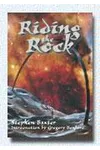
- Riding the Rock (2002): A companion novella following a soldier named Luca during the Coalition's endless galactic war against the Xeelee. Later collected in Resplendent.
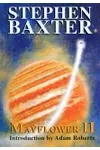
- Mayflower II (2004): A novella about a generation starship embarking on a multi-millennial journey to escape alien occupation. Later collected in Resplendent.
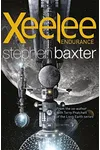
- Xeelee: Endurance (2015): A later collection of short stories and novellas (including pieces originally published around 2005) that expands on key historical eras, including the early expansion of Earth's Coalition.
- Starfall (2009): A novella detailing a rebellion against the long-running Coalition of Earth. Later collected in Xeelee: Endurance.
- Gravity Dreams (2011): A novella set in the far future, focusing on humanity's retreat from the Xeelee and a rescue mission across space-time. Later collected in Xeelee: Endurance.
- Xeelee: Vengeance (2017): The first part of a duology that rewrites and expands on the history of the Million-Year War, bringing back Michael Poole and introducing alternate timelines.
- Xeelee: Redemption (2018): The direct conclusion to Vengeance, following Poole to the center of the galaxy for a final confrontation.
The Destiny’s Children Subseries
Published in the mid-2000s, Destiny’s Children is a distinct four-book arc set within the broader Xeelee universe. Rather than focusing on cosmic warfare, these books deal heavily with human evolution, sociology, and our species' changing destiny. You can read these after the original core novels:
- Coalescent (2003): Begins in the modern day, following a man who discovers a secret, hive-mind human society thriving beneath Rome.
- Exultant (2004): Jumps 25,000 years into the future, exploring the grim reality of a human species bred and conditioned solely to fight the Xeelee.
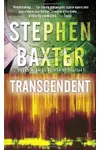
- Transcendent (2005): Explores humanity’s transition into a higher state of consciousness, setting the stage for redemption.
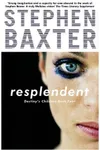
- Resplendent (2006): A collection of stories and novellas that ties together the threads of the Destiny's Children subseries, tracing the long history of human development and survival.
The Chronological Challenge: Why Chronology Fails
Because the Xeelee timeline stretches from the Big Bang to the heat death of the universe (roughly 5 billion years in the future), some readers are tempted to read the series chronologically. However, this is highly discouraged for beginners for several reasons.
First, the tone, technology, and concepts jump wildly. Reading chronologically would force you to start with stories from the Big Bang, jump to modern Rome (Coalescent), hop to near-future space exploration, and skip back and forth between alternate dimensions. Second, reading chronologically spoils the central mysteries of the Xeelee and the Photino Birds, which are designed to be slowly pieced together through the early novels. Save the chronological timeline for a fun reread project once you are already a seasoned fan.
What to Know Before You Start
Before you dive in, it helps to understand what makes Stephen Baxter’s work unique. The Xeelee Sequence prioritizes grand ideas, astrophysics, and vast timescales over intimate character development. Human characters are often used as lenses to view cosmic events rather than the focus of the story itself. The series also carries a distinctly grim tone; humanity is rarely portrayed as a heroic force, but rather as a flawed, stubborn species struggling to survive in a universe ruled by indifferent, godlike powers. If you enjoy hard science, mind-expanding physics, and cosmic scale, this is one of the most rewarding journeys in all of science fiction.