


The Ultimate Guide to Reading the Young Wizards Series
For over four decades, Diane Duane’s Young Wizards series has captivated readers with its unique blend of hard science fiction and high fantasy. Unlike stories of wizarding schools, this series takes its young protagonists, Nita Callahan and Kit Rodriguez, into the far reaches of space and the deepest oceans to protect the universe from the Lone Power—the cosmic embodiment of entropy and death.
As the series has expanded to include eleven novels, several collections of companion novellas, and a feline-focused spin-off series, figuring out the best entry point can be daunting. Adding to the complexity is the existence of the New Millennium Editions (NME), which revised and modernized the first nine books. This guide provides a clear roadmap to help you navigate the universe-spanning saga.
The Core Dilemma: Classic vs. New Millennium Editions
Before buying or borrowing the books, you must decide which version of the text to read. There are two primary formats of the first nine books in circulation:
- The Classic Editions (1983–2010): These are the original versions published by major print houses. Because they were written over a span of nearly thirty years, they suffer from significant technological aging. In the first book, characters use landlines and ancient computer systems; by the later books, smartphones and modern internet have appeared, despite only a few years passing in the characters' lives.
- The New Millennium Editions (2012–2019): Published independently by Diane Duane through her store, Ebooks Direct, these editions are extensively revised. Duane updated the timeline to begin in 2008, replaced outdated technology with modern equivalents (like smartphones and modern laptops), and smoothed out character ages and continuity errors. Most notably, Book 6, A Wizard Alone, was heavily rewritten to align its depiction of autism with modern clinical understandings.
Which should you read? For modern readers and newcomers, the New Millennium Editions are highly recommended. They represent the author's definitive vision, resolve structural timeline issues, and make the reading experience seamless. However, if you prefer the vintage charm and nostalgia of the 1980s and 1990s tech environment, the Classic Editions remain available in print.
The Recommended Reading Order (Timeline Integrated)
The most satisfying way to experience the saga is to follow the chronological development of Nita and Kit’s adventures, weaving in the canonical novellas where they naturally fall in the timeline. Here is the recommended reading order:
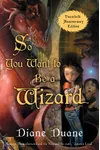
- So You Want to Be a Wizard (Book 1) – Nita and Kit take the Wizard's Oath and venture into a dark, alternate Manhattan to retrieve the Book of Night with Moon.
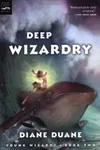
- Deep Wizardry (Book 2) – A summer trip to Long Island turns into an underwater quest where Nita must participate in an ancient, perilous ritual alongside whale wizards.
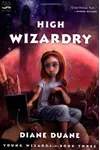
- High Wizardry (Book 3) – Nita’s younger sister, Dairine, takes the Wizard's Oath, and her initiation involves a sentient computer and a journey to the far reaches of the cosmos.
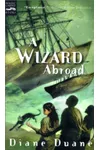
- A Wizard Abroad (Book 4) – Sent to Ireland to get away from wizardly stress, Nita discovers that the old country has its own ancient, folkloric magical problems.
- The Wizard's Dilemma (Book 5) – The stakes become deeply personal when Nita's mother falls ill, forcing Nita to search the universe for a cure, testing her relationship with Kit.
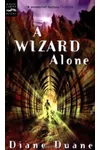
- A Wizard Alone (Book 6) – While Nita grieves, Kit is tasked with helping a newly awakened autistic wizard who is trapped in an ordeal of his own mind.
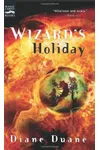
- Wizard's Holiday (Book 7) – Kit and Nita participate in a wizardly exchange program, vacationing on a beautiful alien planet while three alien wizards stay with Nita's family on Earth.
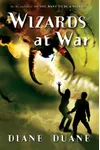
- Wizards at War (Book 8) – The universe is plunged into darkness as the Lone Power launches an all-out assault, forcing the adult wizards to step aside and leaving the defense of reality to the young.
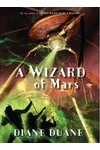
- A Wizard of Mars (Book 9) – Kit and Nita join an archaeological expedition to Mars, where they discover the remnants of an ancient magical civilization and trigger a new crisis.
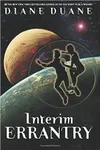
- Interim Errantry: The Transitional Trilogy (Companion Collection) – A compilation of three stories that take place chronologically between Book 9 and Book 10. It contains:
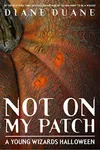
- Not On My Patch: A Halloween-themed novelette.
- How Lovely Are Thy Branches: A Christmas-themed novella focusing on holiday wizardry.
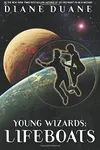
- Lifeboats: A longer novella focusing on an alien refugee crisis.
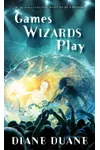
- Games Wizards Play (Book 10) – Nita and Kit serve as mentors at the Invitational Tournament, a high-stakes magical competition held in the solar system.
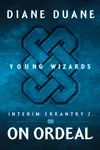
- Interim Errantry 2: On Ordeal (Companion Collection) – A collection of three separate novellas focusing on the individual, life-defining "Ordeals" of secondary characters:
- On Ordeal: Roshaun ke Nelaid (An alien prince's initiation).
- On Ordeal: Mamvish fsh Wimsih (A reptilian wizard's initiation).
- On Ordeal: Ronan Nolan Jnr (An Irish teenager's initiation).
- Owl Be Home for Christmas (Novella) – A standalone holiday story inspired by the real-life discovery of a tiny saw-whet owl in the Rockefeller Center Christmas tree, set in the New Millennium timeline.
The Feline Wizards Spin-Off
In addition to the main series, Diane Duane has written a companion series called Feline Wizards. This spin-off takes place in the same universe, exploring the magical operations of the world's cat wizards, who specialize in maintaining the Gates that connect different dimensions. Because the characters cross paths, reading these books adds significant flavor to the main series.
The Feline Wizards books should be read in this order:
- The Book of Night with Moon (1997) – Best read anytime after A Wizard Abroad.
- To Visit the Queen (1999) – Published in the UK as On Her Majesty's Wizardly Service. Best read after The Wizard's Dilemma.
- The Big Meow (2011) – A novel set in the feline wizarding community of New York, best read after Wizards at War.
Publication Order vs. Chronological Order
While the chronological order matches the publication sequence of the main ten novels, the companion novellas were written and published years after the books they sit between. If you prefer to read exactly in the order Diane Duane released the books to the public, you can follow this layout:
- So You Want to Be a Wizard (1983)
- Deep Wizardry (1985)
- High Wizardry (1990)
- A Wizard Abroad (1993)
- The Book of Night with Moon (Feline Wizards, 1997)
- To Visit the Queen (Feline Wizards, 1999)
- The Wizard's Dilemma (2001)
- A Wizard Alone (2002)
- Wizard's Holiday (2003)
- Wizards at War (2005)
- A Wizard of Mars (2010)
- Not On My Patch (Novella, 2011)
- The Big Meow (Feline Wizards, 2011)
- Lifeboats (Novella, 2015)
- How Lovely Are Thy Branches (Novella, 2015)
- Interim Errantry (Collection, 2015)
- Games Wizards Play (2016)
- On Ordeal: Mamvish fsh Wimsih (Novella, 2016)
- On Ordeal: Roshaun ke Nelaid (Novella, 2016)
- Interim Errantry 2: On Ordeal (Collection, 2017)
- Owl Be Home for Christmas (Novella, 2020)
What to Know Before You Start
The Young Wizards books stand out for their deep, philosophical approach to magic. Magic in this universe is not a series of whimsical incantations; it is expressed in the "Speech," a cosmic language that describes things as they truly are. Spelling out a command in the Speech requires math, geometry, and a deep understanding of physics, meaning wizards must study hard to be effective.
Additionally, the tone of the series matures alongside the characters. While the first few books have the adventurous feel of middle-grade fantasy, later books grapple with heavy themes such as grief, chronic illness, cosmic responsibility, and the ethical implications of using power. Because of this, it is highly recommended to read the books in order rather than trying to read them as standalone novels.