





Where to Start Reading Diane Duane
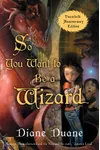
For the vast majority of readers, the definitive gateway into Diane Duane's work is her famous Young Wizards series. The absolute best starting point is the very first novel, So You Want to Be a Wizard (originally published in 1983). Unlike many fantasy series where you can jump in midway, the Young Wizards books follow a continuous character arc and chronological progression for the lead characters, Nita Callahan and Kit Rodriguez, making a sequential reading order essential.
Before you begin, however, you must make a crucial choice: do you read the original editions or the revised New Millennium Editions?
The Great Edition Choice: Original vs. New Millennium
Because the series began in the early 1980s and stretched into the 2010s, the timeline of the original books suffered from a temporal stretch. Characters who only aged a year or two in-universe experienced decades of technological change in our world—moving from landlines and dial-up to smartphones and modern internet over the course of the story. To fix this, Duane undertook a massive revision project, releasing the New Millennium Editions (NME) of the first nine novels between 2012 and 2019.
Here is what changes in the New Millennium Editions:
- Modernized Technology: Outdated references are replaced. The story is reframed to begin in 2008 rather than 1983, allowing characters to use modern computers and cell phones naturally.
- Smoothed Continuity: Character ages are slightly adjusted (such as Nita and Kit being the same age rather than a year apart in certain early books) to ensure a cohesive, tight timeline leading directly into the tenth book, Games Wizards Play.
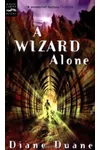
- Polished Prose: Duane polished the writing style of her early works and restored deleted or expanded scenes. Notably, the sixth book, A Wizard Alone, was heavily revised to reflect modern, respectful understandings of autism.
Recommendation: If you are a new reader, starting with the New Millennium Editions (available digitally on the author's store, Ebooks Direct) offers the most seamless, modernized experience. However, readers seeking nostalgic 1980s charm and the historical context of the original publications will still enjoy the classic editions.
Young Wizards Main Sequence Reading Order
Whether you choose the original publications or the New Millennium Editions, the mainline novels should be read in this exact order:
- So You Want to Be a Wizard (1983)
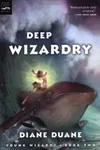
- Deep Wizardry (1985)
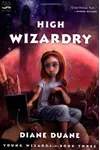
- High Wizardry (1990)
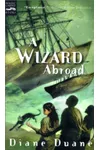
- A Wizard Abroad (1993)
- The Wizard's Dilemma (2001)
- A Wizard Alone (2002)
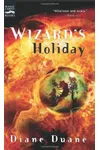
- Wizard's Holiday (2003)
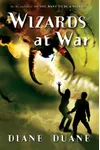
- Wizards at War (2005)
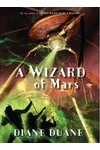
- A Wizard of Mars (2010)
- Games Wizards Play (2016)
The Transitional Stories: Interim Errantry
Between the events of A Wizard of Mars (Book 9) and Games Wizards Play (Book 10), Diane Duane wrote several canonical novellas and short stories that fill in the chronological gap. These are collected in two volumes and are highly recommended for the best series continuity:
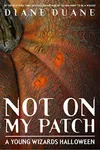
- Interim Errantry: This volume collects three stories set between Books 9 and 10: Not On My Patch (a Halloween novella), How Lovely Are Thy Branches (a Christmas novelette), and Lifeboats (a full-length novel tracking a massive wizardly evacuation project).
- Interim Errantry 2: On Ordeal: This collection focuses on the Ordeals (the trial periods for new wizards) of secondary and alien characters. It includes the stories On Ordeal: Mamvish fsh Wimsih and On Ordeal: Roshaun ke Nelaid, alongside other tales.
For the complete timeline experience, read the contents of both Interim Errantry volumes after finishing A Wizard of Mars and before starting Games Wizards Play.
The Feline Wizards Crossover (Cats of Grand Central)
Set within the exact same universe and sharing the same magical laws, the Feline Wizards series focuses on wizardly cats who manage the hidden Worldgate network underneath Grand Central Station in New York. While these books feature adult tones and themes, they enrich the lore of the Young Wizards universe. You can read them independently or alongside the main series (ideally anytime after Book 3, High Wizardry, which introduces the concept of non-human wizards).
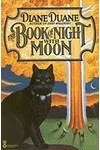
- The Book of Night with Moon (1997)
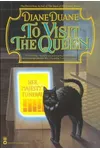
- To Visit the Queen (1998) (Published in the UK under the title On Her Majesty's Wizardly Service)
- The Big Meow (2011)
The Middle Kingdoms (The Tale of the Five)
If you want to step away from modern-day wizardry, Duane's epic fantasy series The Middle Kingdoms (often referred to by fans as The Tale of the Five) is a groundbreaking work. Written long before diverse representation became common in mainstream fantasy, the series features complex themes of bisexuality, non-traditional relationships, and deep mythology. The series should be read in publication order:
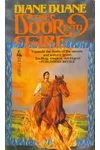
- The Door Into Fire (1979)
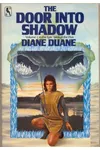
- The Door Into Shadow (1984)
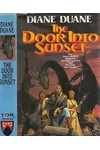
- The Door Into Sunset (1992)
Note on completeness: A long-awaited fourth novel, tentatively titled The Door Into Starlight, remains forthcoming. Duane has released bridging short fiction and drafts through her digital store to keep fans engaged with the lore of the Five while the final volume is in development.
Star Trek: The Rihannsu Saga and Standalones
Diane Duane is widely celebrated in the sci-fi community for her extensive contributions to the Star Trek expanded universe. In particular, her work on Romulan culture—which she named the Rihannsu—redefined how fans viewed the classic antagonists. Her five-part Rihannsu saga should be read in this order:
- My Enemy, My Ally (1984)
- The Romulan Way (1987) (Co-authored with her husband, Peter Morwood)
- Swordhunt (2000)
- Honor Blade (2000)
- The Empty Chair (2006)
Note: The first four books are also collected in the omnibus edition Rihannsu: The Bloodwing Voyages (2006).
In addition to the Rihannsu books, Duane wrote several beloved standalone Star Trek novels that can be read in any order:
- The Wounded Sky (1983)
- Spock's World (1988) (A classic bestseller blending Vulcan history with a modern political trial)
- Doctor's Orders (1990) (A humor-filled adventure where Dr. McCoy is left in command of the Enterprise)
- Dark Mirror (1993) (A Next Generation novel exploring the Mirror Universe)
- Intellivore (1997)
- Sand and Stars (2004) (Co-authored with A.C. Crispin)
Collaborative Franchises and Standalones
Duane's versatility spans many other collaborative fictional universes. Here is how to approach them:
Spider-Man: The Venom Factor Trilogy
Duane penned a highly regarded, action-packed Spider-Man prose novel trilogy in the mid-1990s. These should be read sequentially:
- Spider-Man: The Venom Factor (1994)
- Spider-Man: The Lizard Sanction (1995)
- Spider-Man: The Octopus Agenda (1996)
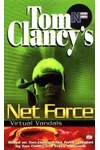
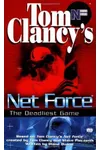
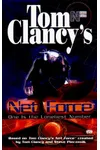
Tom Clancy's Net Force Explorers
While the YA spin-off series *Net Force Explorers* features dozens of books by various authors, Diane Duane was one of its core contributors. You do not need to read the entire series to appreciate her work, but you should read her specific contributions, which include:
- Book 1: Virtual Vandals (1998)
- Book 2: The Deadliest Game (1998)
- Book 3: One is the Loneliest Number (1999)
- Book 6: End Game (1999)
- Book 10: Safe House (2000)
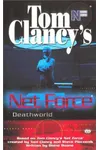
- Book 13: Deathworld (2000)
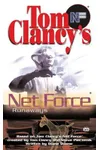
- Book 16: Runaways (2001)
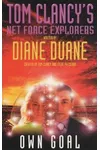
- Book 18: Own Goal (2002)
Space Cops
Co-authored with Peter Morwood, this trilogy blends science fiction with gritty police procedural elements. Read them in publication order:
- Mindblast (1991)
- Kill Station (1992)
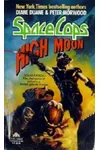
- High Moon (1992)
Omnitopia
A virtual-reality sci-fi duology exploring massive multiplayer online games:
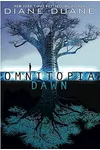
- Omnitopia: Dawn (2010)
- Omnitopia: East Wind (2011)
X-COM: UFO Defense
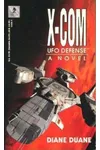
Published in 1995, this standalone tie-in novel is based on the legendary 1994 tactical video game. It remains a cult favorite for its literal translation of game mechanics (like base budgets and layout logistics) into a tense military science fiction story.