
How to Read Aanchal Malhotra: Recommended Reading Paths
Aanchal Malhotra is an oral historian and author whose work revolves around the legacy of the 1947 Partition of India. Because her bibliography consists of standalone projects—two non-fiction oral histories and one historical novel—there is no strict continuity to follow. However, depending on your interests, there are two distinct entry points we recommend for navigating her catalog.
The Historian's Entry (Chronological & Recommended)
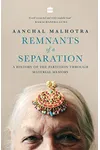
If you want to understand Malhotra's development as a researcher and writer, it is best to read her books in publication order. This path begins with physical objects carried across borders, moves to the inherited memories of descendants, and culminates in a fictional romance that builds on her years of interviews. Under this path, start with Remnants of a Separation (2017), follow it with In the Language of Remembering (2022), and finish with her novel, The Book of Everlasting Things (2022).
The Novelist's Entry
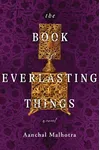
If you prefer narrative fiction, you can dive straight into Malhotra's debut novel, The Book of Everlasting Things. This book offers a lush, sensory-rich story of love and separation in Lahore. While it stands completely on its own, reading it first will give you a taste of the author's evocative prose and historical depth before you explore the real-life testimonies that inspired her storytelling style.
Aanchal Malhotra Books in Order of Publication
For readers who want to follow her literary career step-by-step, here is the publication order of her works:
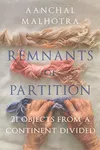
- Remnants of a Separation: A History of the Partition through Material Memory (2017) – The author's debut non-fiction book, detailing the human stories of the 1947 Partition of India through the lens of physical objects carried by refugees. (Published internationally in 2019 as Remnants of Partition: 21 Objects from a Continent Divided).
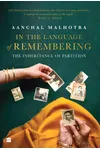
- In the Language of Remembering: The Inheritance of Partition (2022) – Her second non-fiction work, exploring the psychological inheritance, trauma, and memories passed down to the descendants of survivors across India, Pakistan, Bangladesh, and the diaspora.
- The Book of Everlasting Things (2022) – Her debut historical fiction novel, tracing the love story of a Hindu perfumer's apprentice and a Muslim calligrapher's daughter separated by the lines of Partition.
Deep Dive: The Partition Non-Fiction Duology
Malhotra's non-fiction works are widely celebrated for shifting the focus of Partition studies from macro-political events to intimate, human-centric narratives. Here is what to expect from each of these ground-breaking oral history collections.
Remnants of a Separation / Remnants of Partition
Originating from Malhotra’s MFA thesis, this book profiles 21 specific objects carried by refugees across the newly formed borders in 1947. Malhotra uses these ordinary household items as keys to unlock long-repressed memories. Notable objects discussed in the book include:
- The Gaz (Yardstick): A metal yardstick used for measuring fabric, inherited by Malhotra's own family, which links her grandfather to his pre-Partition mercantile life in Lahore.
- The Ghara: A metallic water vessel carried from Lahore to Amritsar, used for churning milk, which serves as a tactile bridge to domestic life before displacement.
- The Maang-Tikka: A traditional head ornament worn by Bhag Malhotra (the author's grandmother), which serves as a centerpiece for stories of beauty, survival, and identity amid chaos.
- Phulkari and Pashmina Shawls: Heavily embroidered textiles that carried family genealogies and maternal warmth across borders, standing as physical proof of homes left behind.
In the Language of Remembering: The Inheritance of Partition
Published five years after her debut, this massive collection of interviews takes Malhotra's research to the next logical step. Instead of focusing on the first-generation survivors, she interviews their children and grandchildren. This book documents how displacement, grief, silence, and cultural pride are inherited. Malhotra shows that Partition is not merely an event frozen in 1947, but an ongoing intergenerational dialogue that continues to shape identities across South Asia and the global diaspora.
Historical Fiction: The Book of Everlasting Things
In her debut novel, Malhotra blends her historical expertise with narrative fiction. Set in 1938 Lahore, the story follows Samir Vij, a Hindu boy apprentice to his uncle in the art of making ittar (traditional Indian perfume), and Firdaus Khan, the daughter of a talented Muslim calligrapher. Their romance is deeply tied to their crafts, with the sensory world of scents and the beauty of ink binding them together.
When the Partition of 1947 strikes, Lahore becomes part of Pakistan, forcing Samir's family to flee to Delhi and tearing the lovers apart. Samir's subsequent exile leads him to the battlefields of World War I through his late Uncle Vivek's journals, and eventually to the historic perfumeries of Grasse, France. The novel is a profound meditation on the power of memory, the weight of national borders, and the fragrances and letters that survive long after homes are lost.
What to Know Before You Start
Before diving into Aanchal Malhotra's books, it is helpful to understand the background and tone she brings to her writing:
- A Family of Booksellers: Malhotra was born in New Delhi into the family behind Bahrisons Booksellers, a legendary bookstore founded in 1953 by her grandfather, Balraj Bahri, a Partition survivor. This environment fostered her lifelong love for literature and oral histories.
- Sensory and Meticulous Writing: Malhotra has a background in fine arts, holding a BFA in printmaking and art history from the Ontario College of Art & Design (Toronto) and an MFA from Concordia University (Montréal). This background is evident in the highly visual and sensory details of her writing, from descriptions of aged papers to the complex notes of perfumes.
- The Museum of Material Memory: In 2017, Malhotra co-founded the Museum of Material Memory, a digital, crowdsourced repository that documents family heirlooms and histories from the Indian subcontinent. Her non-fiction works share the exact same spirit as this digital archive.