






Where to Start Reading Abdulrazak Gurnah
Because Abdulrazak Gurnah's novels are entirely standalone works with no recurring character rosters or direct chronological sequels, you can technically pick up any of his books in any order. However, jumping in completely at random might mean missing how his stylistic treatment of displacement and postcolonial memory matures over time. For the best experience, we recommend choosing one of the following curated reading paths.
Path 1: The Acclaimed Masterpieces (Recommended)
If you want to experience Gurnah at the height of his storytelling powers right away, this is the path for you. It groups his most celebrated and historically immersive works:
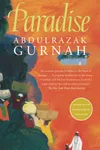
- Paradise (1994): Widely considered his breakout masterpiece and shortlisted for the Booker Prize, this coming-of-age story is set in East Africa on the eve of World War I. It follows Yusuf, a young boy sold into servitude to pay off his father's debt. It is the perfect entry point to Gurnah’s exploration of pre-colonial and early colonial dynamics.
- By the Sea (2001): Longlisted for the Booker Prize, this novel shifts focus to the modern refugee experience. It follows Saleh Omar, an elderly asylum seeker from Zanzibar arriving in England, whose past intertwines with a younger Zanzibari intellectual. It is Gurnah's most profound exploration of memory, exile, and the pain of lost homelands.
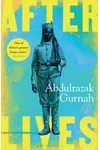
- Afterlives (2020): Published shortly before he was awarded the Nobel Prize, this sweeping historical novel returns to early 20th-century East Africa to examine the brutal legacy of German colonial rule and the lives of those caught in its wake. It is exceptionally polished and offers a highly emotional, character-driven resolution to themes he has explored throughout his career.
Path 2: The Chronological Publication Order
For readers who want to watch Gurnah's voice develop and trace his evolving perspective on migration and the postcolonial state, reading in order of publication is highly rewarding. You will watch his early, raw depictions of young men escaping oppressive systems evolve into mature, multi-generational family sagas. This path follows his novels from 1987 through his latest release in 2025.
Publication Order of Standalone Novels
Here is the complete list of Abdulrazak Gurnah's novels in order of publication, along with what to expect from each book:
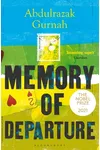
- Memory of Departure (1987): Gurnah's debut novel focuses on a young man named Hassan trying to escape the poverty and political tension of his coastal East African town by visiting a wealthy uncle in Nairobi, only to find new struggles.
- Pilgrim's Way (1988): This novel follows Daud, a Zanzibari student struggling to find his footing and cope with the pervasive racism and isolation of provincial England in the 1970s.
- Dottie (1990): The only novel by Gurnah set entirely in England that centers on a female protagonist. Dottie is a young woman of mixed heritage navigating the harsh realities of working-class post-war London while trying to protect her fractured family.
- Paradise (1994): Set in East Africa before the outbreak of World War I, this rich and layered narrative functions as both a tragic coming-of-age story and a critique of the German colonial presence.
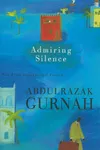
- Admiring Silence (1996): An unnamed narrator lives a double life, working as a teacher in England with an English family, while hiding his painful past and the reality of his homeland in Zanzibar. When he finally returns home, he is forced to confront the gaps between memory and reality.
- By the Sea (2001): A poetic, dual-narrated exploration of two Zanzibari men who meet in a small English seaside town, unraveling a shared history of betrayal, family feuds, and colonial displacement.
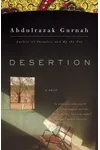
- Desertion (2005): A multi-generational saga that begins in 1899 with a forbidden love affair between an Englishman and a local woman on the East African coast, tracing the ripples of that relationship through the decades to the eve of Zanzibar's independence.
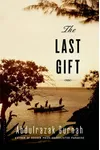
- The Last Gift (2011): A companion of sorts to Admiring Silence, this book follows Abbas, an aging refugee in England who suffers a stroke and is forced to finally reveal the long-held secrets of his past to his adult children.
- Gravel Heart (2017): This coming-of-age novel focuses on Salim, a young boy in Zanzibar whose family is torn apart by political upheaval. He later moves to London for university, only to find himself trapped in a quiet state of exile and emotional displacement.
- Afterlives (2020): A powerful historical novel that details the human cost of German colonial rule in East Africa, focusing on the schutztruppe (askari soldiers) and the long-term psychological impacts of the colonial war on ordinary families.
- Theft (2025): Gurnah's eleventh novel chronicles the lives of three young Tanzanians—Karim, Fauzia, and Badar—coming of age in Zanzibar and Dar es Salaam during the 1990s and 2000s, exploring class, aspirations, and the fallout of a false accusation of theft.
Publication Order of Anthologies
While Gurnah is best known for his novels, he has also edited and contributed to anthologies highlighting African writing and stories of displacement:
- The Granta Book of the African Short Story (2011): Edited by Gurnah, this collection brings together contemporary short stories from across the African continent, showcasing a diverse range of voices and themes.
- Road Stories (2012): A collection of stories centering on journeys, physical movement, and migration, reflecting the core themes of Gurnah's own fiction.
What to Know Before You Start
To fully appreciate Gurnah's novels, it is helpful to keep a few key contexts in mind:
The Zanzibar Revolution of 1964
Many of Gurnah's works are haunted by the Zanzibar Revolution of 1964, which overthrew the Sultan of Zanzibar and led to the persecution and displacement of citizens of Arab and Asian descent. Gurnah himself fled Zanzibar as an 18-year-old refugee in the wake of this upheaval, arriving in England in 1968. This personal history of displacement heavily informs the backgrounds of his characters in books like Memory of Departure, Admiring Silence, and Gravel Heart.
The German Colonial Presence
While many postcolonial novels in English focus on British or French rule, Gurnah frequently examines German East Africa (Deutsch-Ostafrika). Novels like Paradise and Afterlives specifically confront the brutal suppression of local rebellions by German forces and the complex role of local askari troops who fought under German officers.
Stylistic and Linguistic Influences
Gurnah writes in English, but his prose is deeply textured by his mother tongue, Swahili, as well as Arabic literary traditions. He frequently incorporates Swahili and Arabic terms without italicizing or translating them, resisting the idea that non-Western concepts must be translated for the convenience of Western readers. His narratives also frequently draw comparisons to Western classics, notably referencing William Shakespeare's plays (such as Othello) and Joseph Conrad’s Heart of Darkness, reframing these familiar stories from the perspective of the colonized.