
The Recommended Reading Order for Adam Brookes
If you are looking for realistic, high-stakes espionage fiction grounded in modern geopolitics, Adam Brookes is an author you cannot miss. Drawing directly on his two decades of experience as a foreign correspondent, Brookes has crafted a tight, highly acclaimed spy series alongside a remarkable historical non-fiction work. To get the absolute best experience out of his books, you should follow the order detailed below.
The Philip Mangan Trilogy (Recommended Order)
The core of Adam Brookes' fiction is the Philip Mangan trilogy. This series must be read in publication order. The books follow a continuous character arc and a chronological timeline that carries the political consequences and personal traumas of the characters from one novel to the next. The recommended order is:
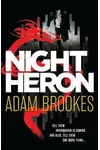
- Night Heron (2014)
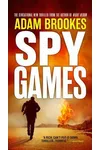
- Spy Games (2015)
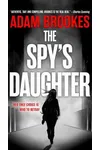
- The Spy's Daughter (2017)
Narrative Non-Fiction
After finishing the trilogy, readers should dive into Brookes' transition to narrative history:
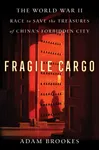
- Fragile Cargo: The World War II Race to Save the Treasures of China's Forbidden City (2023)
Inside the Philip Mangan Series
Unlike the polished, super-spy tropes common in the thriller genre, Philip Mangan is a realistic protagonist. He is a tall, red-haired, slightly disorganized British journalist who is driven by restlessness and a desire to be at the center of the news stories he covers. His decisions are flawed, his motives are human, and the danger he faces feels incredibly real.
Night Heron (2014)
Set in Beijing and the surveillance-heavy corridors of China, the debut novel kicks off when a man code-named 'Peanut' escapes a remote labor camp after twenty years. Carrying invaluable military and cyber intelligence secrets, Peanut needs a way to contact Western intelligence. He reaches out to Philip Mangan, a struggling freelance journalist. Mangan, tempted by the scoop of a lifetime, gets drawn into a complex web of espionage involving SIS officer Trish Patterson, the CIA, and the Chinese state security services. It is a paranoia-fueled introduction to the series that was nominated for the CWA John Creasey Dagger.
Spy Games (2015)
Following the traumatic events of his first foray into espionage, Mangan is trying to keep a low profile in East Africa. However, when a devastating terrorist attack occurs, the ripples shake the international intelligence community. Mangan is pulled back into the shadows, forced to collaborate once again with Trish Patterson. This installment expands the geopolitical chessboard to include Chinese influence in Africa and the complex relationships between intelligence agencies, earning a nomination for the prestigious CWA Ian Fleming Steel Dagger.
The Spy's Daughter (2017)
The final book in the trilogy shifts focus slightly while masterfully tying together Mangan's narrative. It introduces Pearl Tao, a nineteen-year-old math prodigy living in Washington, D.C., who discovers her parents are secretly deep-cover Chinese intelligence agents. When her life is threatened, her escape route brings her into contact with a now-discredited Philip Mangan and Trish Patterson. Together, they embark on a final, incredibly dangerous flight to survive. The novel was named one of the 50 Best Books of 2017 by The Telegraph for its emotional resonance and high-stakes conclusion.
The Non-Fiction Shift: Fragile Cargo
In 2023, Adam Brookes released Fragile Cargo: The World War II Race to Save the Treasures of China's Forbidden City (originally published in the UK in late 2022). This work of narrative history details the monumental 16-year effort by a small group of museum curators to protect China's imperial art collection from the invading Japanese forces and the subsequent Chinese Civil War.
Led by Palace Museum director Ma Heng, the curators packed and evacuated nearly twenty thousand wooden crates filled with priceless porcelain, silk paintings, and ancient Stone Drums. They transported these delicate treasures over 15,000 miles across mountains, rivers, and war zones. Brookes uses diaries, letters, and official records to structure this history like a thriller, capturing the immense human sacrifice and determination required to preserve a nation's cultural heritage.
What to Know Before You Start
The hallmark of Brookes' writing is its absolute authenticity. While working as a BBC foreign correspondent in Beijing, Brookes was personally approached on multiple occasions by individuals offering to sell him military secrets. Recognizing the high likelihood that these were entrapment attempts (known in intelligence circles as a 'dangle'), Brookes declined, but the intense paranoia of those encounters directly inspired the premise of Night Heron.
Because of this background, the trilogy avoids far-fetched action sequences in favor of bureaucratic infighting, the cold calculus of intelligence agencies, and the real-world operational challenges of operating in high-surveillance states. Reading the books in order allows you to see how Mangan's initial naivety is systematically stripped away, leaving a stark look at the human cost of espionage.