
The Best Reading Pathways for Adam Ehrlich Sachs
Because Adam Ehrlich Sachs has written three distinct, standalone books that do not share a single continuous narrative universe or recurring characters, you do not need to follow a strict chronological or sequential path. Instead, the best way to approach his bibliography is by matching your personal reading preferences to the specific structural format of each book. Here are three recommended entry points:
The Novelist Route (Start with The Organs of Sense)
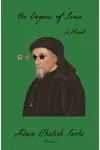
If you prefer a sustained, singular narrative arc rather than short vignettes or nested stories, start with Sachs's first full-length novel, The Organs of Sense (2019). While the book is highly digressive, it centers on a single premise: a meeting between a young Gottfried Wilhelm Leibniz and a blind astronomer in 1666. It is the perfect introduction to Sachs's signature style of manic, nested monologue and philosophical comedy without the fragmented nature of his other works.
The Fairy-Tale Puzzle Route (Start with Gretel and the Great War)
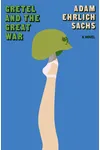
If you love historical settings, puzzle-box structures, and folklore motifs, start with Gretel and the Great War (2024). Set in 1919 Vienna, this book uses a clever abecedarian framework (A to Z) to tell a series of bedtime stories that slowly piece together a larger mystery. It offers a wonderful balance between the brevity of his debut and the historical richness of his first novel.
The Flash Fiction Route (Start with Inherited Disorders)
If you prefer quick, punchy, and highly absurd flash fiction, start with his debut collection, Inherited Disorders: Stories, Parables, and Problems (2016). Containing 117 ultra-short vignettes, this book is ideal for readers who want to experience Sachs's wit in bite-sized, satirical pieces that read like modern philosophical fables.
Adam Ehrlich Sachs Books in Publication Order
For readers who wish to witness the evolution of Sachs's narrative voice and his transition from flash fiction to complex, nested novels, reading in order of publication is highly recommended. The list below outlines his primary works in chronological order of their release:
- Inherited Disorders: Stories, Parables, and Problems (2016) – A debut collection of 117 short parables dissecting the complex, fraught, and often hilarious relationships between fathers and sons.
- The Organs of Sense (2019) – A historical comedy of ideas set in 1666, following a teenage Gottfried Wilhelm Leibniz as he investigates a blind astronomer's prediction of a solar eclipse.
- Gretel and the Great War (2024) – A novel set in early 20th-century Vienna, framed as 26 letters containing bedtime stories sent to a mute young woman in a sanatorium.
Understanding Sachs's Narrative Structures
To fully appreciate Sachs's work, it helps to understand the highly specific, constraint-driven structures he uses to build his stories. Rather than writing traditional, linear narratives, Sachs relies on structural limitations to generate his comedy and thematic depth:
- The Abecedarian Framework: In Gretel and the Great War, the narrative is built around the 26 letters of the alphabet, with each chapter representing a bedtime story corresponding to a letter (from "The Architect" to "The Zionist"). While each story functions as a standalone fable, characters and events overlap to construct a unified picture of pre-war Vienna.
- Nested Monologues: In The Organs of Sense, Sachs employs a style reminiscent of Austrian author Thomas Bernhard, using pages-long paragraphs and complex, indirect speech (e.g., "he said that she said that he believed"). The story of the blind astronomer is delivered through layers of retellings, challenging the reader to question who is narrating and how reliable their perception of truth is.
- Miniature Parables: In Inherited Disorders, Sachs uses the extreme brevity of the parable format to explore the theme of generational legacy. By repeating the father-son dynamic across 117 distinct scenarios, the book acts as a series of variations on a single theme, magnifying the absurdity of family expectations.
What to Know Before You Start
Before diving into Sachs's bibliography, readers should prepare for a writer who heavily prioritizes ideas, philosophy, and dark comedy over conventional plot progression. Having a background in the history of science (which Sachs studied at Harvard), he frequently integrates real historical figures, scientific theories, and philosophical concepts into his fiction. However, you do not need a degree in philosophy to enjoy his books; the intellectual references are always used as a springboard for surreal humor and emotional truths.
His tone is heavily influenced by European absurdist writers like Franz Kafka, Thomas Bernhard, and Daniil Kharms, as well as classic Jewish humor. If you enjoy intellectual games, dry humor, and characters who are hilariously obsessed with intellectual pursuits, Sachs's library will be a deeply rewarding read.