
The Recommended Starting Point
Because Adam Higginbotham writes standalone works of narrative nonfiction, there is no chronological storyline or recurring cast of characters to follow. You can read his books in any order you choose. However, for the best experience, we recommend starting with his most celebrated work:
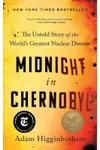
- Midnight in Chernobyl (2019): This is Higginbotham's masterwork and the ideal entry point. It showcases his signature ability to blend forensic research, complex science, and deeply personal human stories into a narrative that reads like a tense political thriller.
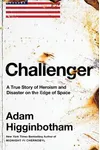
- Challenger: A True Story of Heroism and Disaster on the Edge of Space (2024): After experiencing his writing style in Chernobyl, move on to this comprehensive, minute-by-minute account of the 1986 space shuttle disaster. It highlights how organizational arrogance and technical oversights lead to tragedy.
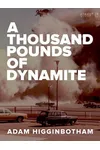
- A Thousand Pounds of Dynamite (2014): Conclude with this shorter, true-crime narrative. It serves as a fascinating quick read that highlights his early long-form investigative style before his massive bestselling books.
Publication Order of Non-Fiction Works
If you prefer to follow the author's development and see how his investigative scope evolved from shorter digital journalism to sprawling, award-winning history books, you can read them in order of release:
- A Thousand Pounds of Dynamite (2014)
- Midnight in Chernobyl: The Untold Story of the World’s Greatest Nuclear Disaster (2019)
- Challenger: A True Story of Heroism and Disaster on the Edge of Space (2024)
Chronological Order and Caveats
For readers who want to match the historical chronology of the events themselves, the order shifts slightly. Here is how the subjects of his works line up in history:
- 1980 (The Tahoe Bombing): Detailed in A Thousand Pounds of Dynamite.
- January 1986 (The Space Shuttle Disaster): Detailed in Challenger.
- April 1986 (The Nuclear Catastrophe): Detailed in Midnight in Chernobyl.
While the Challenger disaster and the Chernobyl explosion occurred only months apart in 1986, they represent completely different political, cultural, and technological environments. Reading them back-to-back offers a stark comparison of how two different superpowers—the United States and the Soviet Union—dealt with massive engineering failures and public accountability in the final years of the Cold War.
Deep Dive into the Books
A Thousand Pounds of Dynamite (2014)
Originally published as a digital single by The Atavist Magazine, this true-crime story recounts the bizarre 1980 extortion plot at Harvey's Resort Hotel in Stateline, Nevada. A bankrupt businessman named John Birges planted a highly complex, 1,000-pound bomb inside the casino, demanding $3 million for its safe removal. Higginbotham utilizes FBI records and direct interviews to reconstruct the tense standoff, the failed attempt by federal agents to disarm the device, and the subsequent explosion that ripped through the building.
Midnight in Chernobyl (2019)
This New York Times bestseller is the definitive account of the April 26, 1986, disaster at the Chernobyl Nuclear Power Plant. Drawing on more than a decade of research, declassified archives, and dozens of personal interviews, Higginbotham reconstructs the disaster from the perspectives of the design engineers, local fire crews, Soviet bureaucrats, and everyday citizens. The book went on to win the 2020 Andrew Carnegie Medal for Excellence in Nonfiction and the William E. Colby Award.
Challenger: A True Story of Heroism and Disaster on the Edge of Space (2024)
In this book, Higginbotham turns his attention to the American space program. He delivers a comprehensive, character-driven history of the Space Shuttle Challenger disaster. The narrative details the lives of the seven astronauts, the engineers who tried to warn management about the faulty O-rings, and the bureaucratic pressures that led to the launch. It won the 2024 Kirkus Prize for Nonfiction and the National Book Critics Circle Award, establishing itself as a companion piece to his Chernobyl history.
What to Know Before You Start
Before diving into Higginbotham's catalog, it is helpful to understand his background and style. He is a British journalist who previously served as the editor-in-chief of the style magazine The Face and wrote for publications like The New Yorker, The New York Times Magazine, and Wired. This editorial background shapes his writing: he does not write dry academic textbooks. Instead, he utilizes narrative journalism, which treats real-world history with the pacing, character development, and narrative arc of a novel.
His works are highly detailed and contain technical explanations of nuclear physics, aerospace engineering, and bomb mechanics. However, he always translates these complex topics into accessible terms by focusing on the human elements—the pride, the errors, the heroism, and the system failures that define these historic moments.