

How to Read Adam Johnson’s Books
Adam Johnson is an acclaimed American novelist, short story writer, and Stanford University professor whose fiction explores the boundaries of human connection, technology, trauma, and political oppression. Because all of his novels and short story collections are entirely standalone works set in different universes, periods, and settings, there is no chronological continuity or narrative storyline linking them. You can read his bibliography in any order without worrying about spoilers or missed plot threads.
However, navigating his catalog can be daunting because of the sheer stylistic shift between his satirical early work, his deeply researched historical and political fiction, and his recent epic narratives. We recommend two main reading pathways depending on your preference for long-form novels or bite-sized, high-concept short stories.
Recommended Starting Points
Pathway 1: The Novel Journey (Start with The Orphan Master’s Son)
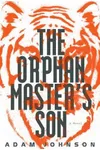
If you prefer to dive straight into a masterpiece, start with his sophomore novel, The Orphan Master’s Son (2012). This Pulitzer Prize-winning epic is widely considered Johnson's magnum opus. Set in the totalitarian state of North Korea, it follows Pak Jun Do as he rises from a state-run orphanage to a professional kidnapper, a military radio operator, and ultimately a rival to the regime. It is intense, harrowing, and deeply empathetic, making it the perfect showcase of Johnson’s ability to find human warmth in the coldest settings.
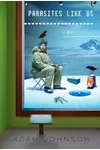
After finishing it, step back to his debut novel, Parasites Like Us (2003), for a more comedic and speculative pre-apocalyptic tale, before moving on to his major 2025 epic, The Wayfinder.
Pathway 2: The Short Story Route (Start with Fortune Smiles)
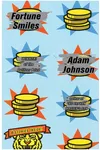
If you want to sample Johnson's range before committing to a full novel, start with Fortune Smiles (2015). This collection won the National Book Award and showcases his mature style, blending dark humor with poignant emotional truths. You will encounter defectors adjusting to life in Seoul, a programmer building a hologram of a president to soothe his ailing wife, and a former Stasi warden confronting his past.
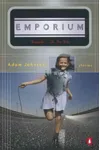
If you enjoy this collection, go back to his debut collection, Emporium (2002), which has a more surreal, speculative, and high-concept tone reminiscent of early cyberpunk and postmodern satire.
Publication Order of Standalone Novels
If you prefer to follow the evolution of Johnson’s voice, reading his novels in order of publication is a rewarding experience. Here is the chronological publication list of his novels:
- Parasites Like Us (2003): Johnson's debut novel is a dark, satirical academic comedy. The story revolves around Hank Hannah, an eccentric archeologist excavating Clovis tools in South Dakota. When Hank and his students inadvertently unleash a ancient, highly contagious plague, the novel transforms into an apocalyptic survival story that explores memory, history, and the things humans leave behind.
- The Orphan Master’s Son (2012): A sweeping, meticulously researched novel set in North Korea. To write this book, Johnson spent years researching defectors' accounts and even traveled to Pyongyang undercover. The resulting novel is a rare literary triumph that combines a thriller's pacing with a profound exploration of identity, love, propaganda, and state-sponsored terror.
- The Wayfinder (2025): A massive historical and ecological epic set during the height of the Tu'i Tonga Empire in the South Pacific. Grounded in oral storytelling and indigenous perspectives, the book follows Kōrero, a young woman embarking on a seafaring voyage to save her starving island, juxtaposed with the deadly politics of the imperial Tongan court.
Publication Order of Short Story Collections
Johnson is as celebrated for his short fiction as he is for his novels. His collections represent some of his most imaginative and daring work:
- Emporium (2002): This debut collection introduced readers to Johnson's signature style. It features nine speculative, near-future, and darkly funny stories. Notable pieces include "Teen Sniper," which follows a young sniper navigating teenage angst and state duty, and "The Canadanaut," which details a surreal space race.
- Fortune Smiles (2015): A collection of six stories that won the National Book Award for Fiction. It features "Nirvana," a story about a programmer coping with his wife's illness through a digital hologram of an assassinated president, and the title story, "Fortune Smiles," which follows two North Korean defectors trying to build new lives in modern South Korea.
Anthologies and Edited Volumes
In addition to his standalone fiction, Adam Johnson has edited and contributed to several literary anthologies and handbooks:
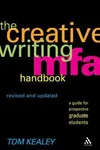
- The Creative Writing MFA Handbook (2005): A guide containing advice, insights, and resources for aspiring creative writing students.
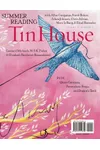
- Tin House: Summer Issue 2008 (2008): A compilation of contemporary fiction and essays.
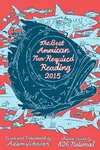
- The Best American Nonrequired Reading 2015 (2015): An anthology edited by Johnson featuring a curated selection of the year's best alternative and indie writing.
- Secret Santa (2021): A holiday-themed literary anthology containing short fiction.
What to Know Before You Start
Before diving into Adam Johnson's works, it helps to understand his unique thematic focus. As an enrolled member of the Cheyenne River Sioux Tribe and a longtime creative writing professor at Stanford, Johnson draws heavily on themes of oral storytelling, indigeneity, and marginalization. His works frequently center on characters who are isolated—whether by totalitarian regimes, technology, physical distance, or personal grief—and explores how they use narratives to survive. While some of his topics can be dark or emotionally challenging, his stories are ultimately driven by a deep belief in the resilience of the human spirit.