




Where to Start with Adam Morris
Before diving into a reading order, it is essential to clear up a major piece of literary confusion: there are two distinct authors publishing under the name Adam Morris. The first is an American scholar, essayist, and award-winning translator who specializes in Latin American literature. The second is an Australian novelist, musician, and filmmaker. Because their bibliographies are frequently grouped together online, readers often struggle to make sense of the sudden leap from gritty Australian realism to academic translations of Brazilian modernism.
For the primary subject of this guide—the American author and translator Adam Morris—your best starting point depends on whether you prefer narrative non-fiction or translated fiction:
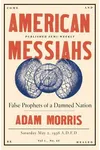
- For Non-Fiction Readers: Start with American Messiahs: False Prophets of a Damned Nation (2019). It is his most accessible, widely acclaimed, and engagingly written book. It serves as a perfect entry point into his style, combining meticulous historical research with sharp, dark humor.
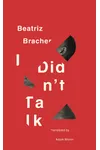
- For Fiction & Translation Seekers: Start with Beatriz Bracher's I Didn't Talk (2018). Morris's translation is highly acclaimed, and the novel's structure—dealing with the legacy of the Brazilian military dictatorship—provides a powerful, atmospheric narrative that is easier to follow than some of the more surreal Brazilian avant-garde works he has translated.
Decoding the Two Authors Named Adam Morris
To avoid choosing the wrong book, let's look at how these two writers differ. Keeping this distinction in mind will help you navigate online catalogs that mix their works together.
Adam Morris (The American Author & Translator)
Born in Harrisburg, Pennsylvania, in 1983, this Adam Morris earned a PhD in Latin American Literature from Stanford University and resides in San Francisco. He is a literary translator who has brought challenging, experimental Portuguese-language works from Brazil to English-speaking audiences. His original writing focuses on history, culture, and religious movements. His primary books, essays, and translations include:
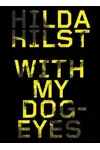
- With My Dog-Eyes by Hilda Hilst (Translation, 2014)
- Quiet Creature on the Corner by João Gilberto Noll (Translation, 2016)
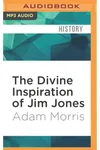
- "The Divine Inspiration of Jim Jones" (Long-form Essay/Journalism, 2016)
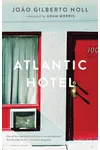
- Atlantic Hotel by João Gilberto Noll (Translation, 2017)
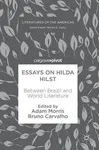
- Essays on Hilda Hilst: Between Brazil and World Literature (Co-edited, 2017)
- I Didn't Talk by Beatriz Bracher (Translation, 2018)
- American Messiahs: False Prophets of a Damned Nation (Non-Fiction, 2019)
Adam Morris (The Australian Novelist & Filmmaker)
This Adam Morris is based in Western Australia and writes gritty, character-driven fiction focusing on Australian identity, masculinity, and social struggles. If you find references to the following book, it belongs to his separate bibliography:
- My Dog Gave Me the Clap (2011/2012) – A novel following a protagonist navigating unemployment, alcoholism, and isolation in Australia.
Additionally, books like Love Thy Food (2012) and the Big Organic Gardening Book (2017) are often attributed to "Adam Morris" in standard metadata feeds but are written by different individuals entirely. For the purposes of this guide, we focus primarily on the cohesive body of work produced by the American translator and author.
The Translations: A Guide to Brazilian Avant-Garde
As a translator, Adam Morris has worked with some of the most challenging and rewarding voices in contemporary and mid-century Brazilian literature. Reading these in order of accessibility is highly recommended, rather than strictly by translation publication date or their original Portuguese release dates.
1. Beatriz Bracher: I Didn't Talk (Translated in 2018)
Originally published in Portuguese in 2004 as Não Falei, this novel is an excellent starting point for Morris's translated catalog. It tells the story of Gustavo, an aging teacher in Brazil who was arrested and tortured during the military dictatorship in 1970. Decades later, rumors persist that he was the informant who betrayed his brother-in-law and fellow activist. The book is structured around Gustavo's internal monologue and letters, offering a gripping psychological study of memory, guilt, and political trauma.
2. João Gilberto Noll: Atlantic Hotel (Translated in 2017)
Originally published in Portuguese as Hotel Atlântico in 1989, this short novel is a brilliant introduction to João Gilberto Noll's surreal, dreamlike style. The story follows an unnamed narrator who drifts from one bizarre, often violent encounter to another across Brazil, adopting different identities along the way. It reads like a noir fever dream and showcases Morris's ability to capture Noll's spare, hypnotic prose.
3. João Gilberto Noll: Quiet Creature on the Corner (Translated in 2016)
Originally published in Portuguese as O quieto animal de canto in 1991, this was the first of Noll's works that Morris translated. It follows a young, unpublished poet who, after a bizarre series of events, is confined to a countryside manor where he is expected to write while being taken care of by a mysterious family. The narrative is highly surreal and deals with themes of alienation, sexuality, and artistic captivity.
4. Hilda Hilst: With My Dog-Eyes (Translated in 2014)
Originally published in Portuguese as Com meus olhos de cão in 1986, this novella is a masterpiece of avant-garde fiction, but it is also the most challenging of Morris's translations. The story follows Amos Kerej, a mathematics professor who experiences a sudden, existential awakening that alienates him from his family, his colleagues, and sanity itself. Hilst's prose shifts rapidly between philosophical introspection, poetry, and stream-of-consciousness, requiring active, patient reading.
Non-Fiction and Scholarly Works
If you prefer to read Adam Morris's original non-fiction, you can follow his progression from long-form investigative essays to comprehensive historical books.
1. "The Divine Inspiration of Jim Jones" (2015/2016)
Before publishing his major book on American messianism, Morris wrote this deep-dive article for The Believer. It details how Jim Jones, the leader of the Peoples Temple, drew inspiration and techniques from Father Divine, a charismatic African American spiritual leader who ran the Peace Mission movement. The essay serves as a thematic precursor to his later book, introducing readers to the complex social and spiritual dynamics that Morris excels at analyzing.
2. Essays on Hilda Hilst: Between Brazil and World Literature (2017)
Co-edited with scholar Bruno Carvalho, this academic collection is perfect for readers who want to understand the cultural and literary context of Hilda Hilst's work. It features essays from various scholars exploring her radical approach to language, gender, and religion, making it an indispensable companion to Morris's translation of With My Dog-Eyes.
3. American Messiahs: False Prophets of a Damned Nation (2019)
Morris's landmark non-fiction book explores the long history of messianic figures in the United States, stretching from the Shakers and Jemima Wilkinson in the 18th century to Cyrus Teed and Jim Jones in the 20th century. Morris argues that these figures were not merely isolated eccentrics; instead, their movements arose as direct reactions against the mainstream American capitalist economy and social injustices of their eras. Written with an engaging, narrative flow, it is a must-read for anyone interested in alternative American histories.
What to Know Before You Start
To get the most out of your reading experience, keep the following tips in mind:
- Understand the Style: The Brazilian translations are highly experimental. If you expect a standard, linear plot, you might find João Gilberto Noll or Hilda Hilst disorienting. Approach them as mood pieces and psychological explorations rather than plot-driven novels.
- Context Matters: Reading Morris's essays on Hilda Hilst or looking up the historical background of the Brazilian military dictatorship will greatly enhance your reading of With My Dog-Eyes and I Didn't Talk.
- Standalone Nature: None of these books are part of an ongoing series. You can read them completely out of order without worrying about spoilers or missed continuity.