




Where to Start Reading Aditi Khorana
For readers new to Aditi Khorana’s writing, the best place to start is with one of her standalone novels. Because her two solo books belong to completely different genres—one speculative science fiction, the other folklore-inspired fantasy—your starting point depends on what you enjoy reading most:
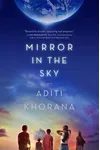
- For speculative sci-fi and contemporary drama: Start with her debut, Mirror in the Sky (2016). It is a slow-burn, philosophical story about identity and alternate realities.
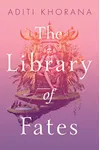
- For high fantasy and mythology: Start with her second novel, The Library of Fates (2017). This book is a lush, romantic quest story deeply rooted in Indian folklore and feminist themes.
If you are looking for an action-packed, fast-paced adventure, you might also consider the collaborative science fiction series Horizon. Khorana wrote the fifth and final installment, Liferaft (2019), but you must read the first four books in the series to understand the story.
The Standalone YA Novels
Aditi Khorana’s solo novels are praised for their lyrical prose, rich atmosphere, and focus on characters who feel out of place—reflecting the author's own global upbringing across India, New England, and Denmark. These two books are completely independent of each other and can be read in any order.
1. Mirror in the Sky (2016)
Set in a prep school in Connecticut, the story follows Tara Krishnan, an Indian-American junior navigating the social hierarchies of her school. Her life, and the rest of the world, changes overnight when scientists discover a "mirror planet" named Terra Nova that appears to be an alternate version of Earth. Rather than focusing on space battles or alien invasions, this speculative novel uses the sci-fi premise to explore deep questions about choice, regrets, race, and identity. It is a quiet, character-driven story that fits as much into contemporary YA as it does into speculative fiction.
2. The Library of Fates (2017)
Khorana's second novel shifts gears into the realm of fantasy and mythology. Heavily inspired by Indian folklore, it follows Princess Amrita as her kingdom is conquered by the ruthless Emperor Sikander. In a bid to save her people and reclaim her destiny, she escapes with Thala, a mysterious library oracle, to find the fabled Library of All Things—a place where one can rewrite history. It is a lushly built standalone fantasy with a strong emphasis on female friendship, agency, and sacrifice.
The Collaborative Horizon Series
In addition to her standalone work, Aditi Khorana participated in Scholastic's multi-platform sci-fi project, the Horizon series. This collaborative effort was conceived and outlined by Scott Westerfeld, with different prominent YA authors writing individual books to continue the overarching plot. The story begins when Aero Horizon Flight 16 crashes, leaving a group of teenage survivors stranded in a strange, dangerous world full of rifts, physical anomalies, and deadly predators.
How Liferaft Fits In
Khorana wrote Liferaft (2019), which serves as the fifth book in the series. In this installment, the survivors make their way to a mysterious structure known as the Spires, where they hope to uncover the truth behind the rift and find a way back home. Because the plot is highly serialized and features a continuous narrative arc, you cannot read Liferaft as a standalone. Readers must start with Scott Westerfeld's book one and read through the series in publication order.
The Discontinuation of the Horizon Series
One important caveat for readers diving into the Horizon books is that the project was originally announced and planned as a seven-book series. However, publication stopped after Khorana's Liferaft, meaning the series wraps up prematurely at Book 5. While it leaves some lingering questions, Book 5 acts as the final destination for the printed novels.
Aditi Khorana Books in Order of Publication
Standalone Novels
- Mirror in the Sky (2016)
- The Library of Fates (2017)
The Horizon Series (Collaborative)
- Horizon by Scott Westerfeld (2017)
- Deadzone by Jennifer A. Nielsen (2017)
- A Warp in Time by Jude Watson (2018)
- Apex Predator by M.T. Anderson (2018)
- Liferaft by Aditi Khorana (2019)
What to Know Before You Start
Before diving in, keep in mind that Aditi Khorana’s writing style is highly atmospheric and lyrical. Mirror in the Sky is widely noted by readers for its slower, contemplative pace, focusing heavily on internal teenage angst, cultural displacement, and philosophical questions about the universe rather than fast-paced science-fiction action. On the other hand, The Library of Fates offers classic high-fantasy quest tropes but stands out because of its beautiful Indian cultural influences, offering a refreshing alternative to traditional Eurocentric YA fantasy worlds.