



How to Start Reading Adrian J. Walker's Books
If you are looking to dive into Adrian J. Walker’s unique brand of post-apocalyptic survival, dark humor, and deep human emotion, there is one obvious place to start: The End of the World Running Club. Published in 2014, this breakout novel remains his most famous and beloved book, offering a fast-paced, emotional journey that showcases his strength in creating highly flawed but relatable protagonists fighting to survive against all odds.
From there, you can follow two distinct paths depending on what you enjoyed most:
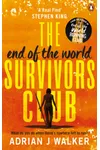
- The Direct Sequel Path: Read The End of the World Survivors Club (2019), which shifts the perspective to the wife of the first book's protagonist, offering a fresh, action-oriented look at maternal survival in the same collapsed world.
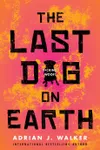
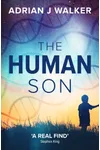
- The Standalone Speculative Path: If you prefer self-contained stories with different premises, pick up The Last Dog on Earth (2017) for a humorous yet poignant animal-led apocalypse, or The Human Son (2020) for a thought-provoking, philosophical science fiction experiment about the future of humanity.
Adrian J. Walker Books in Publication Order
While most of Adrian J. Walker's novels are standalone stories that do not require any background knowledge, reading them in publication order lets you see how his style evolved from his early self-published suspense thriller to his massive post-apocalyptic hits and recent psychological horror. Here is the chronological list of his books:
- From the Storm (2012)
- The End of the World Running Club (2014)
- Colours (2015)
- The Last Dog on Earth (2017)
- The Other Lives (2018)
- The End of the World Survivors Club (2019)
- The Human Son (2020)
- This Does Not End Well (2025)
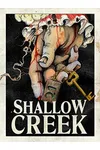
Note: Walker also contributed a short story titled "Backwards" to the horror anthology Shallow Creek, published in 2019.
Understanding the Series and Universes
The End of the World Running Club Duology
This is the only multi-book narrative in Walker’s bibliography. The first book, The End of the World Running Club, introduces Edgar Hill, a self-admitted lazy father who must run 550 miles across a post-apocalyptic Britain to reunite with his family after a cataclysmic asteroid strike. The second book, The End of the World Survivors Club, is set in the same timeline but shifts the spotlight to Edgar’s wife, Beth, focusing on her struggle to protect her children and find a safe haven. Reading these two in order is essential for following the overarching narrative and character arcs.
Earth Incorporated: Colours
Published in 2015, Colours was originally envisioned as the first installment in a dystopian science fiction trilogy. The story takes place in a world completely governed by a massive corporate entity where human worth is determined by color-coded status. Although it was planned as a trilogy, no subsequent books have been published, meaning Colours currently functions as a standalone dystopian novel.
The Standalone Speculative Novels
Outside of his main duology, Walker has built a reputation for standalone speculative fiction that mixes existential questions with high-stakes survival. These can be read in any order:
From the Storm (2012)
Walker's self-published debut is a tense, atmospheric suspense thriller. Set during a fierce blizzard in the French Alps, it follows a young man seeking shelter in a remote mountain farm, only to find a diary from the past that reveals dark secrets. It is less sci-fi focused than his later books but showcases his early interest in isolation and survival.
The Last Dog on Earth (2017)
This post-apocalyptic novel is set in a near-future London that has collapsed after a nuclear attack. It is uniquely narrated through alternating chapters between an agoraphobic writer, Reginald "Reg" Hardy, and his foul-mouthed but fiercely loyal mongrel dog, Lineker. When they encounter an abandoned young girl, they are forced to leave their secure high-rise apartment and navigate the dangers of the ruined city. The book is celebrated for its mix of pitch-black comedy and genuine emotional depth.
The Other Lives (2018)
A dive into speculative science fiction, The Other Lives follows Elliot, a protagonist who possesses the unusual ability to perceive other people's thoughts. The story navigates alternate identities, reincarnation, and human connection, offering a distinct and philosophical perspective on empathy and change.
The Human Son (2020)
Set 500 years in the future, this science fiction novel takes place on an Earth where humanity went extinct and a genetically modified, emotionless race called the Erta took over to repair the environment. When the Erta decide to raise a single human child, Reed, to see if humanity is worth saving, a scientist named Ima is tasked with raising him. The book explores nature versus nurture, parenthood, and what it truly means to be human.
This Does Not End Well (2025)
Walker’s psychological horror novel moves away from the post-apocalyptic genre into domestic terror. It follows a man named Adam who relocates his family, including his dementia-suffering father, from London to an isolated farmhouse in rural France. A massive storm traps them inside, and as the isolation deepens, their reality begins to unravel in terrifying ways.
Practical Reader Advice and Reading Caveats
When starting your Adrian J. Walker journey, keep these tips in mind:
- Standalone Flexibility: Except for the Running Club duology, you do not need to worry about order. You can pick up any standalone book based on its premise.
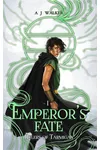
- The "Emperor's Fate" Misattribution: Several online book databases and lists incorrectly attribute the 2022 novel Emperor's Fate to Adrian J. Walker. In reality, this historical military fiction novel was written by Alex Gough. Walker has not published any book under this title, so you can safely ignore it when building your reading list.
- Tonal Shifts: While all of Walker's books focus on survival and human resilience under pressure, their tones vary wildly. If you want humor, go with The Last Dog on Earth. For philosophical sci-fi, choose The Human Son. For psychological horror, choose This Does Not End Well.