







Where to Start Reading Adrian Wooldridge
Adrian Wooldridge’s writing combines the deep-rooted context of an Oxford-educated historian with the punchy, engaging style of a veteran journalist at The Economist and Bloomberg. Because his books are works of analytical non-fiction, you do not need to follow a strict narrative continuity. However, diving into his catalog without a plan can feel overwhelming given the breadth of his subjects.
For the best starting experience, we recommend beginning with his most celebrated modern work:
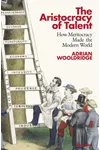
- The Aristocracy of Talent: How Meritocracy Made the Modern World (2021): This is Wooldridge’s solo masterpiece. It offers a sweeping history of how society transitioned from hereditary privilege to talent-based status, defending the core ideal of meritocracy while diagnosing how modern systems have corrupted it. It is the perfect showcase of his ability to synthesize history with urgent contemporary issues.
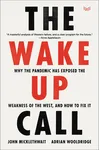
- The Wake-Up Call: Why the Pandemic Exposed the Weakness of the West (2020): If you prefer to start with his famous collaborative works, this short, sharp book co-authored with John Micklethwait is an excellent entry point. It explains how global crises expose institutional decay and argues for a major overhaul of Western governance.
The Micklethwait Collaborations
A significant portion of Adrian Wooldridge’s bibliography was co-authored with John Micklethwait, the former editor-in-chief of The Economist and current editor-in-chief of Bloomberg News. Together, they formed a highly productive writing partnership that spanned more than two decades. Reading their collaborations in order allows you to see how their thinking on globalization, governance, and management evolved:
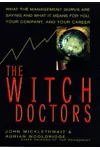
- The Witch Doctors: Making Sense of the Management Gurus (1996): A witty and critical dissection of management theory, separating genuine wisdom from corporate buzzwords.
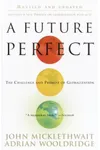
- A Future Perfect: The Challenge and Hidden Promise of Globalization (2000): An optimistic yet balanced exploration of the mechanics, benefits, and local pushbacks of global integration.
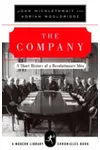
- The Company: A Short History of a Revolutionary Idea (2003): A concise history of the joint-stock corporation and how it shaped the modern economic landscape.
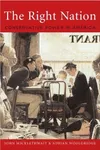
- The Right Nation: Conservative Power in America (2004): An outside-in look at the rise of American conservatism and what makes it distinct from European political traditions.
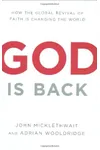
- God Is Back: How the Global Rise of Faith Is Changing the World (2009): An analysis of how modernization has unexpectedly fueled a global religious resurgence rather than secularism.
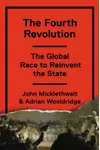
- The Fourth Revolution: The Global Race to Reinvent the State (2014): A history of the state’s evolution, arguing that Western democracies must radically reform their governments to compete with rising systems like China’s state capitalism.
- The Wake-Up Call: Why the Pandemic Exposed the Weakness of the West and How to Fix It (2020): A direct continuation of the themes of governance and state capacity explored in The Fourth Revolution.
Solo Masterpieces and Column Collections
When writing on his own, Wooldridge tends to focus heavily on historical structures, education, and institutional shifts. His solo books and column collections include:
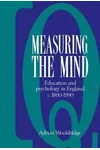
- Measuring the Mind: Education and Psychology in England c.1860–1990 (1994): Wooldridge's academic debut, analyzing the historical relationship between psychological testing and the development of the English educational system.
- Masters of Management: How the Business Gurus and Their Ideas Have Changed the World (2011): An updated, expanded evolution of The Witch Doctors, continuing the critical history of management theory.
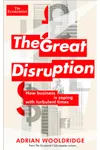
- The Great Disruption: How Business is Coping with Turbulent Times (2015): A curated compilation of his popular "Schumpeter" columns from The Economist, examining the digital revolution, technological displacement, and business adaptation.
- The Aristocracy of Talent (2021): His landmark study on the historical rise, social benefits, and current crisis of meritocracy.
- The Revolutionary Center: The Lost Genius of Liberalism (2026): Published by Pegasus Books, this work traces the history of liberalism, arguing it is a dynamic, practical framework that must rediscover its radical, problem-solving roots to fight modern populism and autocracy.
What to Know About the "Modern Library Chronicles" Listing
If you search for Adrian Wooldridge’s books online, you will often find him linked to a massive list of historical books under the series title Modern Library Chronicles. It is important to clarify that Wooldridge did not write these other books.
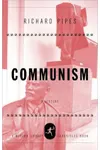
The Modern Library Chronicles is an editorial series of short-form history books published by the Modern Library imprint, featuring titles by various scholars (such as Richard Pipes on Communism or Karen Armstrong on Islam). Adrian Wooldridge and John Micklethwait contributed a single volume to this series: The Company: A Short History of a Revolutionary Idea (2003), which is listed as volume 15 in the series. You do not need to read the other titles in this series to understand or enjoy Wooldridge’s work.
Practical Reader Advice and Disagreements
Because Wooldridge writes non-fiction, there is no narrative continuity to disrupt. You can safely read his books standalone. However, readers interested in specific themes will benefit from reading them in thematic pairs:
- The Management Track: Read The Witch Doctors (or its update, Masters of Management) followed by The Great Disruption. This path gives you a comprehensive view of how management practices shifted from the mid-20th-century corporate model to the era of digital disruption.
- The State and Governance Track: Read The Fourth Revolution followed by The Wake-Up Call and The Revolutionary Center. This sequence shows how the authors’ early warnings about Western state decay in 2014 directly set the stage for their critique of the pandemic response in 2020 and their call for a liberal revival in 2026.
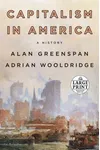
- The Capitalism Track: Pair The Company (his history of the corporation) with Capitalism in America (2018), which he co-authored with former Federal Reserve Chairman Alan Greenspan to trace the history of American economic dynamism and creative destruction.