







Where Should You Start with A.J. Cronin?
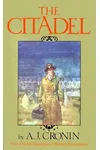
For readers new to A.J. Cronin, the best starting point is his 1937 masterpiece, The Citadel. This standalone novel is not only his most famous work but also one of the most culturally significant books of the 20th century. Drawing directly from Cronin's own experiences as a physician in Welsh mining towns and London's prestigious Harley Street, it follows the struggles, ethical compromises, and redemption of a young doctor. It is a page-turning drama that famously served as a major catalyst for the creation of Britain's National Health Service (NHS).
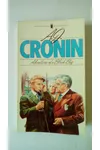
If you prefer a lighter, more episodic format to start, begin with Adventures of a Black Bag (1947). This collection of short stories introduces his iconic character Dr. Finlay, offering a charming and heartwarming entry point into early 20th-century rural medical practice.
The Dr. Finlay Series
Dr. Finlay is arguably Cronin's most famous character, thanks to decades of popular BBC television and radio adaptations under the name Dr. Finlay's Casebook. The publication history of these stories can be confusing because they were originally written as magazine stories in the late 1930s and later repackaged across several collections. They are episodic in nature, meaning they can be read in any order, but the publication order of the primary collections is as follows:
- Adventures of a Black Bag (1947) – The collection that first introduced Dr. Finlay and Dr. Cameron to book readers, set in the fictional Scottish town of Tannochbrae.
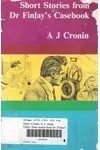
- Short Stories From Dr Finlay's Casebook (1978) – A collection compiled to align with the massive popularity of the television adaptation.
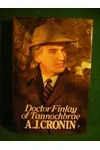
- Doctor Finlay of Tannochbrae (1985) – Published posthumously, this volume collects additional classic tales of the Tannochbrae practice.
The Robert Shannon Duology
Cronin wrote two highly autobiographical novels tracing the life, struggles, and medical ambitions of a young protagonist named Robert Shannon. Unlike his episodic collections, these two novels must be read in order:
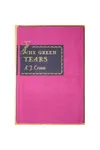
- The Green Years (1944) – Introduces Robert Shannon as an Irish orphan sent to live with his maternal grandparents in Scotland. It is a classic coming-of-age story focusing on his childhood and his dream of studying medicine despite deep financial and family obstacles.
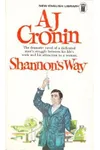
- Shannon's Way (1948) – Follows Robert into adulthood as he struggles to establish himself in the highly competitive world of medical research, navigating both professional setbacks and a complex romance.
The Laurence Carroll Duology
Another pair of deeply personal, autobiographical novels follows protagonist Laurence Carroll. These should be read in chronological and publication order:
- A Song of Sixpence (1964) – Set in Scotland, this novel chronicles Laurence's youth, his early education, and the struggles of growing up in a home divided by religious differences.
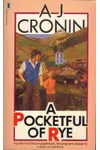
- A Pocketful of Rye (1969) – The direct sequel, which finds Laurence working as a doctor in Switzerland, dealing with disillusioned adulthood and searching for meaning in his career and life.
A Note on Titles
Both books in the Laurence Carroll series take their titles from the traditional nursery rhyme "Sing a Song of Sixpence." Readers should be careful not to confuse Cronin's A Pocketful of Rye (1969) with Agatha Christie's Miss Marple mystery A Pocket Full of Rye (1953), as they are completely unrelated works.
Chronological Publication Order of Standalone Novels
Cronin was a prolific writer, and the vast majority of his bibliography consists of powerful standalone novels. These do not share continuity or characters, meaning you can read them in any order you choose. Reading them in publication order allows you to experience Cronin's evolution as a writer, from his dark, gothic debut to his later, more reflective works:
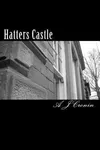
- Hatter's Castle (1931) – Cronin's sensational debut novel, focusing on a tyrannical hatmaker in Scotland and the tragic destruction of his family.
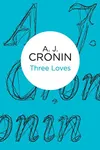
- Three Loves (1932) – A character study of a woman whose devotion to her husband, her son, and her faith leads to her isolation.
- Grand Canary (1933) – A story of redemption set on a voyage to the Canary Islands, following a disgraced doctor who finds love and a new purpose.
- The Stars Look Down (1935) – A sweeping social epic set in a Northern England coal-mining community, highlighting industrial exploitation and political struggle.
- The Citadel (1937) – His seminal work detailing the commercialization of medicine and the need for systemic healthcare reform.
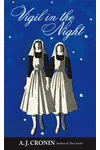
- Vigil in the Night (1939) – A dramatic tribute to the nursing profession, focusing on two sisters working in a hospital during a critical epidemic.
- Beyond This Place (1940) – A gripping mystery and social drama about a young man attempting to clear his father's name of a murder charge.
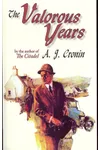
- The Valorous Years (1940) – The story of a young man who overcomes a physical disability to achieve his dream of becoming a doctor.
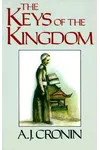
- The Keys of the Kingdom (1941) – A deeply moving story of a humble Scottish Catholic missionary priest, Father Francis Chisholm, serving in China.
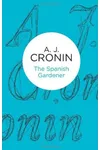
- The Spanish Gardener (1950) – A tense psychological drama about a possessive American diplomat and the young Spanish gardener who befriends his lonely son.
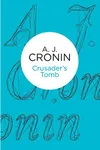
- Crusader's Tomb (1955) – Also published under the title A Thing of Beauty, this novel follows a young man who defies his family's expectations to pursue a career as an artist.
- A Thing Of Beauty (1956) – Alternate title/edition of the artist's struggle story.
- The Northern Light (1958) – A story about a dedicated newspaper editor fighting to protect his independent local paper from being swallowed by a sensationalist national syndicate.
- The Judas Tree (1961) – A tragic psychological portrait of a retired doctor whose selfishness and vanity lead to the ruin of the women who love him.
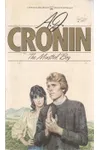
- The Minstrel Boy (1975) – A story of a young priest and singer dealing with personal and spiritual identity crises.
- Desmonde (1975) – A tale of a charismatic but flawed priest navigating temptation and his commitment to his faith.
- Lady with Carnations (1976) – A charming romance set in the antiques trade of London and New York.
- Gracie Lindsay (1978) – One of Cronin's final novels, returning to a Scottish setting to tell a story of family secrets, social judgment, and personal redemption.
Non-Fiction, Plays, and Novellas
Beyond his novels, Cronin wrote in several other formats that showcase his versatile voice:
Plays
- Jupiter Laughs (originally performed and published in 1940) – A dramatic play set in a medical research institute, exploring themes of scientific ambition, ethics, and faith. It was adapted into the 1941 film Shining Victory.
Short Stories and Novellas
- The Innkeeper's Wife (1958) – A heartwarming Christmas novella.
Non-Fiction
- Great Unsolved Crimes (1975) – A collection exploring historical real-life mysteries.
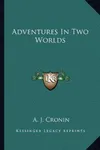
- Adventures In Two Worlds (originally published in 1952, reissued in 2010) – Cronin's captivating autobiography, mapping his journey from the world of medicine to the world of literature.
What to Know Before You Start
Cronin's novels are famous for their strong moral compass, vivid realism, and deep empathy for the working class. Because he spent years working as a doctor in industrial towns, his descriptions of mining communities and medical procedures carry an authenticity that few other writers of his era could match. Readers should expect emotional depth, critiques of institutional corruption, and stories that focus on personal integrity and resilience. While some books contain tragic elements, they almost always offer a sense of hope and human dignity.