


Where to Start with A.K. Blakemore
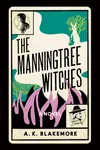
If you are new to A.K. Blakemore's work, the absolute best starting point is her stunning debut novel, The Manningtree Witches (2021). It showcases her signature style: a rich, atmospheric blend of dark historical realism and lush, poetic prose. Because her novels are standalones, you can read them in any order, but starting with her debut lets you see how her background as an award-winning poet seamlessly transitions into historical fiction.
Publication Order of Standalone Novels
For readers who want to follow the progression of Blakemore’s prose, here is the order of her published and upcoming novels:
- The Manningtree Witches (2021) – A fierce and feminist reimagining of the 17th-century Essex witch trials, focusing on Rebecca West and the notorious Witchfinder General, Matthew Hopkins.
- The Glutton (2023) – A visceral, dark, yet deeply empathetic novel set in 18th-century France, fictionalizing the life of Tarare, a peasant boy cursed with a legendary, insatiable appetite.
- Doom Painting (Forthcoming, 2026) – A highly anticipated historical novel detailing the turbulent sixteen days of the Peasants' Revolt of 1381 from the perspectives of commoners, royalty, and Wat Tyler.
Publication Order of Poetry Collections & Pamphlets
Before writing novels, Blakemore established herself as a brilliant voice in contemporary British poetry. Reading her poetry provides excellent context for the lyrical intensity of her prose:
- Amy's Intro (2012) – Her debut pamphlet.
- Humbert Summer (2015) – Her first full-length poetry collection.
- pro ana (2016) – A pamphlet exploring modern body image and digital spaces.
- Fondue (2018) – Winner of the 2019 Ledbury Forte Prize, highly praised for its sensory and bold verses.
- Shia LaBeouf (2020) – A surreal, fragmented poetry collection published by Makina Books.
Co-Authored Translations
- My Tenantless Body (2019) – A translation of works by the Sichuanese poet Yu Yoyo, co-translated with Dave Haysom.
What to Know Before You Start
Blakemore’s historical fiction is not your typical polite period drama. Her writing is highly sensory, visceral, and often deals with bodily functions, hunger, and physical decay. She focuses heavily on the marginalized figures of history—poor women accused of witchcraft, starving peasants, and outcasts. If you enjoy authors like Hilary Mantel, Maggie O'Farrell, or Michel Faber, you will find yourself right at home in Blakemore's beautifully dark and urgent worlds.