
The Recommended Reading Path
Because A.K. Larkwood's bibliography is focused on a tightly structured, continuous narrative, there is only one way to experience it: publication order. This also doubles as the chronological order of the narrative, making it very straightforward for new readers.
Here is the recommended reading order for The Serpent Gates:
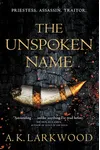
- The Unspoken Name (2020)
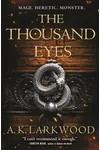
- The Thousand Eyes (2022)
The Serpent Gates Duology: A Deep Dive
1. The Unspoken Name (2020)
The story begins with Csorwe, an Oshaaru (orc-like) priestess who is raised in a grim shrine, destined to be sacrificed to her deity—the Unspoken One—on her fourteenth birthday. Instead of submitting to her fate, she is offered an escape by Belthandros Sethennai, a charming and manipulative wizard who arrives at the shrine. Accepting his hand, Csorwe flees her home and becomes Sethennai's personal assassin, spy, and loyal helper.
As Csorwe grows, she is sent across the Echo Maze—a trans-dimensional network of portals connecting distinct worlds—to recover a powerful relic called the Reliquary of Pentravasse. Along the way, she crosses paths with Qanwa Shuthmili, a powerful young mage (Adept) bound to the House of Silence, and Talasseres Charossa (Tal), Sethennai's arrogant and competitive nephew. The book combines intense action, complex moral choices, and a budding romance between Csorwe and Shuthmili, setting a grand stage for the characters' personal agency and liberation.
2. The Thousand Eyes (2022)
Set twenty years after the dramatic conclusion of the first book, The Thousand Eyes finds the characters dealing with the long-term consequences of their choices. Csorwe is no longer an assassin running errands; she is trying to live a quiet life alongside Shuthmili. However, their peace is shattered when an ancient, long-buried threat from the precursor empire of Echentyr resurfaces, putting the entire portal network at risk.
This installment shifts from the fast-paced adventure of the first book to a slightly darker, more grand-scale conflict. It introduces new points of view and explores themes of aging, trauma, long-term relationships, and the cost of breaking free from ancient gods. It serves as the definitive and satisfying conclusion to the duology, wrapping up Csorwe's story arc.
What to Know Before You Start
A Blend of Epic Fantasy and Space Opera
While the setting of the Serpent Gates features wizards, swords, divine entities, and magic, the structure of the universe mirrors a classic sci-fi space opera. Rather than travelling by spaceship, characters navigate between diverse, distinct planets using the Echo Maze—ancient stone portals that act as gates. You will find ghost ships, bustling multi-world trade ports, and cosmic ruins, making the series a perfect fit for fans who love both genres.
Key Influences and Comparisons
Larkwood has noted that her childhood reading of fantasy books, particularly Ursula K. Le Guin's The Tombs of Atuan, heavily inspired the opening shrine sequence of Csorwe's youth. The series is frequently compared to Tamsyn Muir's The Locked Tomb series (beginning with Gideon the Ninth) due to its blending of dark magic, complex queer characters, and slightly irreverent, character-driven tone. Other noted influences include the vast space operas of Iain M. Banks and Ann Leckie.
Queer Representation
At the heart of the series is the relationship between Csorwe and Shuthmili. Their romance is treated as a core element of the plot, influencing major character decisions and driving the narrative forward. The series is celebrated in speculative fiction communities for its casual, normalized inclusion of LGBTQ+ themes and diverse, non-traditional fantasy races.