












Where to Start with Alan Dean Foster
With a career spanning more than half a century and a bibliography exceeding one hundred books, Alan Dean Foster can feel intimidating to approach. His work is generally divided into two main categories: his original science fiction and fantasy universes (most notably the Humanx Commonwealth and the Spellsinger series) and his legendary movie novelizations and media tie-ins. For new readers, the choice of where to start depends largely on what type of story you enjoy most:
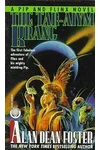
- For Classic Space Opera & Character-Driven Sci-Fi: Start with the Pip & Flinx series. You can begin with the first published book, The Tar-Aiym Krang (1972), or the chronological prequel, For Love of Mother-Not (1983).
- For World-Building & First Contact: Start with Nor Crystal Tears (1982), which details the first contact between humanity and the insectoid Thranx. It functions beautifully as a standalone novel and serves as the perfect introduction to the Humanx Commonwealth.
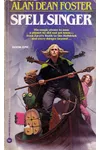
- For Humorous Portal Fantasy: Start with Spellsinger (1983), a fun fantasy adventure about a college student transported to a world of talking animals where music translates to magic.
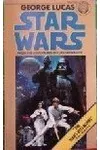
- For Movie Buffs: Read his novelizations of Alien (1979) or the original Star Wars novelization (1976), which Foster ghostwrote for George Lucas.
The Humanx Commonwealth Universe
The Humanx Commonwealth is Foster's signature space opera setting. In this future, humanity has united with the highly intelligent, insectoid Thranx to form a peaceful, prosperous interstellar alliance. Unlike many science fiction universes defined by galactic war, the Commonwealth focuses on cooperation, scientific exploration, ecology, and peaceful coexistence (though threats still arise).
Because the Commonwealth spans dozens of books written across multiple decades, readers often struggle with the best path forward. The universe is primarily made up of the Pip & Flinx subseries, the Founding of the Commonwealth prequel trilogy, several standalone novels, and the Icerigger trilogy. The books can be read in publication order, but a chronological approach is highly recommended to appreciate the growth of the characters and the history of the galaxy.
Pip & Flinx: Chronological vs. Publication Order
The Pip & Flinx books follow Philip "Flinx" Lynx, a young man with unstable empathic abilities, and Pip, his highly venomous, flying minidrag. Together, they travel the galaxy, uncovering Flinx's mysterious origin story and eventually confronting an ancient, universe-threatening danger.
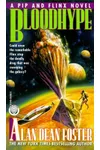
Because Foster did not write these stories in chronological sequence, reading them in publication order can be disorienting. For instance, the fifth published book, For Love of Mother-Not (1983), is actually the chronological start of the series, showing Flinx as a young child. Additionally, Bloodhype (1973) was originally written as a standalone novel in the Commonwealth; Flinx and Pip only appear in the final third of the book, but chronologically it fits late in the series (just before Trouble Magnet).
Here is the recommended chronological reading order for the Pip & Flinx books:
- For Love of Mother-Not (1983) - Flinx's childhood and how he met Pip.
- The Tar-Aiym Krang (1972) - The first published book, where Flinx discovers an ancient alien relic.
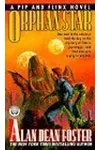
- Orphan Star (1977) - Flinx searches for clues about his parentage.
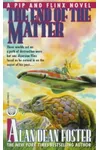
- The End of the Matter (1977) - Flinx confronts his past on a dying planet.
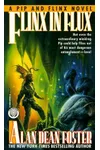
- Flinx in Flux (1988) - Flinx rescues a woman on a hostile world, shifting the series arc.
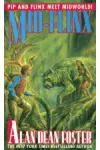
- Mid-Flinx (1995) - Flinx is stranded on the jungle world of Midworld.
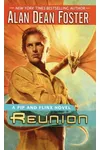
- Reunion (2001) - Flinx finally tracks down his genetic creators.
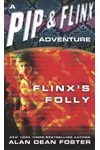
- Flinx's Folly (2002) - Flinx begins to realize the cosmic threat facing the galaxy.
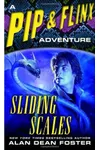
- Sliding Scales (2004) - A side adventure on a swampy world as Flinx tries to avoid his destiny.
- Running from the Deity (2005) - Flinx is worshipped as a god on a primitive planet.
- Bloodhype (1973) - Originally written as a standalone; Flinx appears late to help resolve a bioweapon threat.
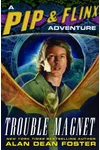
- Trouble Magnet (2006) - Flinx builds his own spaceship and faces new threats.
- Patrimony (2007) - Flinx seeks out his biological father.
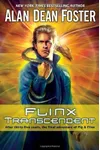
- Flinx Transcendent (2009) - The epic climax to Flinx's long-running story arc.
- Strange Music (2018) - A follow-up adventure set after the main conflict.
Founding of the Commonwealth Prequels
If you want to understand how the Humanx Commonwealth came to be, Foster wrote a prequel trilogy detailing the historical union of humans and the Thranx. These books should be read in order:
- Phylogenesis (1999) - The initial, accidental meeting between a human criminal and a Thranx poet.
- Dirge (2000) - First official contact and the discovery of a tragic alien threat.
- Diuturnity's Dawn (2002) - The final steps toward formal political union.
Standalone Commonwealth Novels
Several of Foster's standalone novels take place within the Humanx Commonwealth. They can be read at any time, but they add rich detail to the universe:
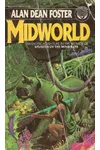
- Midworld (1975) - A fan-favorite novel about a lush, dangerous jungle planet. Flinx visits this world later in Mid-Flinx.
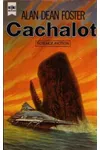
- Cachalot (1980) - Set on an ocean planet where Earth's cetaceans (dolphins and whales) have been relocated.
- Nor Crystal Tears (1982) - Tells the first contact story from the perspective of a Thranx.
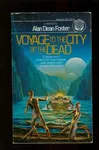
- Voyage to the City of the Dead (1984) - An expedition down a massive river system on a planet with extreme weather.
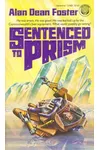
- Sentenced to Prism (1985) - A researcher is sent to a planet where life is based on silicon and crystals rather than carbon.
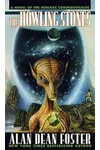
- The Howling Stones (1997) - A diplomatic mission on a planet where local life is controlled by mystical stones.
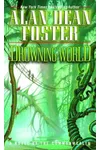
- Drowning World (2003) - Features a bio-crises on a wet, swampy planet, serving as a companion to Flinx's Folly.
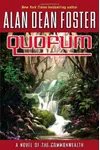
- Quofum (2008) - An exploration story set on a strange planet with rapidly mutating ecology.
The Icerigger Trilogy
Also set in the Humanx Commonwealth, this trilogy follows Ethan Frome Fortune, a mild-mannered salesman, who gets stranded on Tran-ky-ky, a freezing, ice-covered planet inhabited by sail-sporting natives. This subseries should be read in publication order:
- Icerigger (1974)
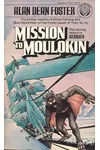
- Mission to Moulokin (1979)
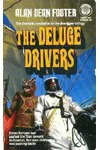
- The Deluge Drivers (1987)
Spellsinger: Portal Fantasy Adventures
In addition to science fiction, Foster is well-known for his Spellsinger series. The story follows Jonathan Thomas Meriweather, a janitor and aspiring musician who is pulled into a fantasy world by a wizard turtle named Clothahump. Jonathan discovers that by playing his guitar (a duar), he can cast powerful spells based on the lyrics of classic rock songs.
The series features a cast of anthropomorphic animal companions and is celebrated for its humor, creativity, and lighthearted adventure. The publication and chronological orders are identical:
- Spellsinger (1983)
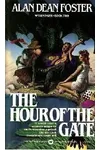
- The Hour of the Gate (1984)
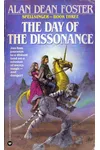
- The Day of the Dissonance (1984)
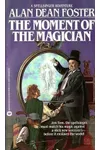
- The Moment of the Magician (1984)
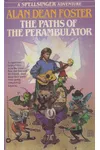
- The Paths of the Perambulator (1985)
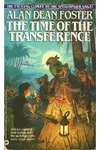
- The Time of the Transference (1986)
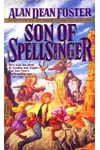
- Son of Spellsinger (1993)
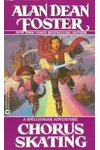
- Chorus Skating (1994)
The Damned & Taken Trilogies
Foster has written several other standalone trilogies that showcase his range in science fiction:
The Damned Trilogy
This military sci-fi trilogy centers on an ancient war between the Amplitur (who use telepathy to force other races into their alliance) and the Weave (a coalition of peaceful species). Because most Weave members are incapable of violence, they recruit humanity as their soldiers. The books must be read in order:
- A Call to Arms (1991)
- The False Mirror (1992)
- The Spoils of War (1993)
The Taken Trilogy
A fun, fish-out-of-water story about Marcus Walker, a commodities trader who is abducted by aliens to be sold as a pet. Along with a talking dog named George, Marcus tries to find his way back to Earth. Read them in this order:
- Lost and Found (2004)
- The Light-Years Beneath My Feet (2005)
- The Candle of Distant Earth (2006)
The Movie Novelization Master
Alan Dean Foster holds an esteemed position in film history as one of the premier writers of movie novelizations. Far from quick cash-ins, Foster's novelizations are known for adding depth, lore, and deleted scenes back into the stories:
- Star Wars: Foster ghostwrote the novelization of the original film, Star Wars: From the Adventures of Luke Skywalker (1976), which was credited to George Lucas. He also wrote Splinter of the Mind's Eye (1978), which was commissioned as a low-budget sequel option before the film became a massive hit, making it the very first Star Wars Expanded Universe novel. Decades later, he returned to write the novelization for The Force Awakens (2015).
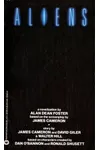
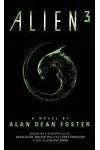
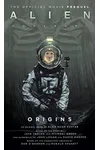
- Alien: Foster novelized the first three films (Alien, Aliens, and Alien³) as well as the prequel Alien: Covenant (2017) and its original tie-in prequel novel, Alien: Covenant Origins (2017).
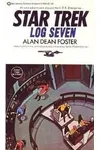
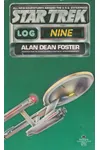
- Star Trek: Foster adapted episodes of Star Trek: The Animated Series into ten volumes known as the Star Trek Logs (1974-1978), and later wrote novelizations for the J.J. Abrams reboot films.
- Other Film Novelizations: Foster has adapted a wide range of iconic films, including Dark Star (1974), The Black Hole (1979), The Thing (1982), Krull (1983), Starman (1984), The Last Starfighter (1984), and The Chronicles of Riddick (2004).