

Where to Start Reading Alan Hollinghurst
Alan Hollinghurst is widely regarded as one of the finest stylists of contemporary British fiction. Because all of his novels are standalones rather than sequential series, you can technically read them in any order you choose. However, depending on what type of reader you are, there are two primary entry points that offer the best introduction to his lush prose and sharp social observation.
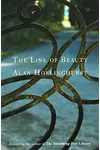
For the Masterpiece Experience: Start with The Line of Beauty (2004). This Booker Prize-winning novel is his most famous and celebrated work. Set in the mid-1980s under the shadow of Margaret Thatcher's administration, it follows Nick Guest, a young gay Oxford graduate living in the grand home of a Tory MP. It is a stunning, tragic, and often satirical exploration of class, politics, aesthetics, and the early years of the AIDS crisis. If you want to experience Hollinghurst at the absolute height of his literary powers, start here.
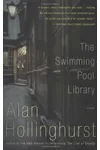
For the Historical Groundbreaker: Start with The Swimming-Pool Library (1988). If you prefer to watch an author's style evolve from the very beginning, his debut novel is the perfect choice. Published in 1988, it was a landmark moment for queer literature in mainstream Britain. Set in the hot summer of 1983—just before the AIDS epidemic changed the landscape of gay life forever—it juxtaposes the hedonistic lifestyle of young William Beckwith with the hidden, historical diaries of an elderly peer. It is vibrant, bold, and sets the thematic groundwork for all the novels that followed.
Alan Hollinghurst Books in Publication Order
Since his novels are independent stories, reading them in publication order allows you to appreciate how his writing style has shifted from the sharp, immediate hedonism of the late 1980s to the expansive, melancholic multi-generational sweeps of his later career.
The Standalone Novels
- The Swimming-Pool Library (1988) – A vibrant portrait of gay life in pre-AIDS London, contrasting modern youth with 20th-century history.
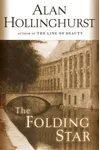
- The Folding Star (1994) – A dark, romantic, and obsessive tale of a tutor in Belgium infatuated with his young student, rich with atmospheric prose.
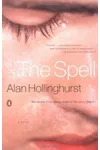
- The Spell (1998) – A lighter, more comedic social comedy focusing on the relationships and escapades of four gay men in the English countryside.
- The Line of Beauty (2004) – The Booker Prize-winning masterpiece exploring class, greed, art, and intimacy in Thatcherite Britain.
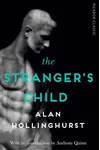
- The Stranger's Child (2011) – An ambitious literary mystery that begins in the Edwardian era on the eve of World War I and traces the legacy of a young poet across a century.
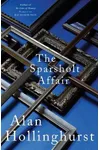
- The Sparsholt Affair (2017) – A multi-generational novel starting with a group of friends in wartime Oxford in 1940 and following the social ripples of a scandal into the 21st century.
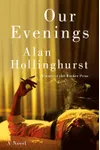
- Our Evenings (2024) – A deeply moving chronicle of the life of Dave Win, an actor of mixed heritage, spanning from his school days in the 1960s to the pandemic era.
Poetry and Anthologies
Before achieving fame as a novelist, Hollinghurst began his writing career as a poet. While these works are less common in reading discussions, they offer crucial insight into his lyrical phrasing and early themes.
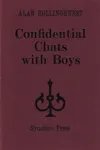
- Confidential Chats with Boys (1982) – A rare, early poetry pamphlet published by Sycamore Press, taking its title from a 1911 sex education book.
- Poems (1988) – A slim collection of poetry published the same year as his debut novel.
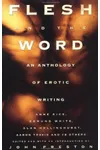
- Flesh and the Word: An Anthology of Erotic Writing (1992) – Edited by John Preston, this landmark anthology of gay male erotica featured short fiction and contributions from Hollinghurst alongside writers like Edmund White.
Chronological Settings and Historical Eras
Although there is no shared continuity or recurring characters linking Hollinghurst's novels, they are all deeply rooted in specific periods of British history. Reading them with an understanding of their historical settings can enrich your experience of the shifting social and legal landscape of gay life in Britain.
If we arrange his novels not by when they were published, but by the eras they explore, the timeline reveals a fascinating evolution:
- Wartime and Post-War Britain: The opening sections of The Sparsholt Affair (set in 1940 Oxford) and the early Edwardian/WWI sections of The Stranger's Child (beginning in 1913) capture the secrecy and coded language of gay relationships in eras when homosexuality was heavily criminalized.
- The 1960s and 1970s: The early parts of Our Evenings explore the challenges of class, race, and sexuality in the mid-20th century boarding school system and the subsequent decriminalization of homosexuality in 1967.
- The 1980s: Both The Swimming-Pool Library and The Line of Beauty are quintessential 1980s novels. They capture the brief, vibrant window of liberation in the early part of the decade, followed by the devastating impact of the AIDS epidemic and the political polarization of the Thatcher era.
- The 1990s to the 2020s: The Spell, the latter half of The Sparsholt Affair, and the concluding eras of The Stranger's Child and Our Evenings examine how memory, aging, and social progress play out across the turn of the millennium.
What to Know Before You Start
Hollinghurst is not a writer of fast-paced thrillers or plot-driven mysteries. His books are slow-burn, atmospheric character studies written with dense, highly polished prose. If you enjoy the psychological depth of Henry James, the detailed social observations of Marcel Proust, or the architectural elegance of E.M. Forster, you will feel right at home.
Many of his novels also deal with the passage of time and the unreliability of memory. Novels like The Stranger's Child and The Sparsholt Affair feature sudden jumps in time, leaving the reader to piece together what happened to the characters during the missing years. This technique highlights how reputations change, how histories are rewritten, and how people fade from memory.
Lastly, be prepared for explicit depictions of sexuality and desire. Hollinghurst's work has been praised for bringing unapologetic, frank descriptions of queer intimacy into the mainstream literary landscape without compromising on high-art styling or intellectual complexity.