











Where to Start Reading Alan LeMay
For readers looking to dive into the works of Alan LeMay, there is no need to fret over rigid chronological order. Almost all of LeMay's books are standalone novels. Because of this, the best entry point is undoubtedly his mid-century masterpieces, which represent the peak of his literary power and psychological depth.
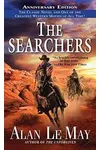
- The Searchers (1954): This is LeMay's most famous and critically acclaimed work. Drawing from extensive research of historical Texas child abduction cases, it tells the story of an obsessive frontier veteran searching for his kidnapped niece. It serves as a perfect introduction to LeMay's gritty realism and moral ambiguity.
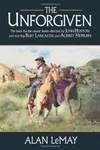
- The Unforgiven (1957): Another spectacular starting point, this novel explores intense racial tensions and family secrets in a remote frontier community. It is deeply atmospheric and showcases LeMay's talent for building suspense.
The Standalone Novels: Publication vs. Reprint Timelines
When compiling a list of Alan LeMay's work, readers often run into publishing date discrepancies. Many of his early novels, originally published in the late 1920s and 1930s, were reprinted under different dates in the late 1940s, 1950s, or even as modern e-book editions in the 2000s. To prevent confusion, the list below details both the original publication dates and their alternate or reprint releases:
- Painted Ponies (1927 / Reprint: 1956): LeMay's debut Western novel, following a fugitive cowboy caught in a turf war.
- Old Father of Waters (1928): A historical novel set along the Mississippi River in the 1850s, highlighting the steamship era.
- Pelican Coast (1929 / Reprint: 2004): An early historical adventure set in 1811, featuring privateer Jacque Durossac and the famous pirate Jean Lafitte.
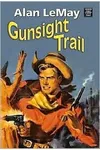
- Gunsight Trail (1931 / Reprint: 1949): A classic range feud novel centering on the battle for control of Buckhorn Valley.
- Winter Range (1932 / Reprint: 1938): A gritty tale of a power struggle in the Wolf Bench territory following a prominent cattleman's death.
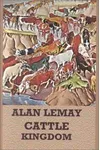
- Cattle Kingdom (1933 / Reprint: 1948): A mystery-infused Western following Billy Wheeler as he investigates a murder on a lawless ranch.
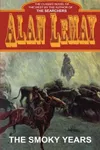
- The Smoky Years (1935 / Reprint: 1948): A cattle-feud story about partners Dusty King and Lew Gordon fighting to protect their grazing land.
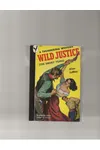
- Wild Justice (1935 / Reprint: 1948): A revenge-driven Western focused on frontier retribution.
- Thunder in the Dust (1936): A dramatic novel centering on cattle ranching and clashes in Baja California.
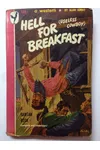
- Useless Cowboy (1943 / Reprint: 1944): A humorous, lighter Western where a peaceful cowboy is mistaken for a deadly gunfighter. It was later reprinted under the title Hell for Breakfast (1947).
- The Searchers (1954): LeMay's legendary masterpiece about a relentless quest for vengeance and rescue.
- The Unforgiven (1957): Sometimes published simply as Unforgiven, this book focuses on a family defending their home against both Kiowa raiders and suspicious neighbors.
- By Dim and Flaring Lamps (1962): Set in Civil War-era Missouri, this novel follows a mule drover's personal vendetta against a wealthy landowner's son.
Non-Western Rarities and Screenplay Work
While Alan LeMay is remembered almost exclusively for his Westerns, he also ventured into other genres. One of his rarest and most sought-after books is One of Us Is a Murderer (1930), a classic closed-room mystery set in a remote South American jungle camp where survivors are picked off one by one. His early historical novels like Old Father of Waters and Pelican Coast also show his range beyond the typical cowboy setting.
LeMay was also a highly successful Hollywood screenwriter. He wrote or co-wrote screenplays for major films, including Cecil B. DeMille's North West Mounted Police (1940) and Reap the Wild Wind (1942), bringing the same cinematic pacing and sharp dialogue to his screenplays that defined his prose.
Posthumous Short Story Collections
LeMay was a prolific short story writer for pulp magazines like Collier's and The Saturday Evening Post during the 1920s and 1930s. Long after his death in 1964, these stories were compiled into collections for modern readers:
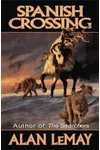
- Spanish Crossing (1998): A collection containing some of his finest short frontier fiction.
- The Wolf Hunter (1999): A chapbook showcasing his short-form survival narratives.
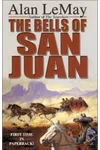
- The Bells of San Juan (2001): A gathering of classic Western tales.
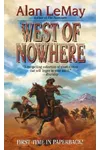
- West of Nowhere (2002): An anthology highlighting early pulp stories.
- Tonopah Range (2006): A compilation of tales detailing the lawless expansion of the West.
What to Know Before You Start
Readers should prepare themselves for a very different kind of Western. Alan LeMay was a pioneer of the "revisionist" Western. Instead of the simplistic, romanticized "good guys vs. bad guys" tropes common in early 20th-century pulps, LeMay wrote about the grueling realities, extreme weather, psychological trauma, and deep moral gray areas of frontier life. His prose is stark, atmospheric, and character-driven, focusing heavily on human obsession and survival.