







Where to Start Your Alan Moore Journey
Alan Moore is widely regarded as one of the most influential writers in comic book history. Known for his dense scripts, political themes, and complex characters, his work can sometimes feel intimidating to approach. If you are new to his bibliography, there are a few primary entry points that showcase his genius without requiring deep knowledge of massive, multi-part continuities.
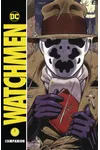
Watchmen (1987): This is the absolute starting point for most readers. Co-created with artist Dave Gibbons, this self-contained 12-issue masterpiece deconstructs the superhero genre. While DC Comics has since released prequels and sequels (such as Before Watchmen and Doomsday Clock), these were created without Moore's involvement and are not considered part of his personal bibliography. Focus on the original graphic novel first.
V for Vendetta (1990): Originally serialized in the UK before being completed and collected by DC Comics, this dystopian story follows a masked anarchist named "V" in a fascist future Britain. It is a completely standalone work and is perfect for readers who appreciate political thrillers and dark, atmospheric storytelling.
Batman: The Killing Joke (1988): For fans of mainstream superheroes, this iconic one-shot graphic novel provides one of the definitive Joker origin stories. It is short, impactful, and easily read in a single sitting.
Saga of the Swamp Thing (1983–1987): If you want to tackle a longer, serialized run, Moore's groundbreaking run on Swamp Thing (starting with issue #20) revitalized the character and laid the foundations for what would eventually become the Vertigo imprint. It blends environmental horror, gothic romance, and philosophical inquiry.
The League of Extraordinary Gentlemen Reading Order
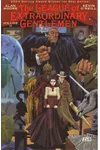
One of Moore's most ambitious projects is The League of Extraordinary Gentlemen, co-created with artist Kevin O'Neill. The series imagines a shared universe where characters from classic Victorian literature (and later, 20th-century pop culture) interact. To follow the narrative development and complex world-building, you should read these in order of publication:
- The League of Extraordinary Gentlemen, Vol. 1 (2000): Introduces the core team assembled by Mina Murray, including Allan Quatermain, Captain Nemo, Dr. Jekyll, and the Invisible Man.
- The League of Extraordinary Gentlemen, Vol. 2 (2003): Follows the team as they face an alien invasion inspired by H.G. Wells's The War of the Worlds.
- The League of Extraordinary Gentlemen: Black Dossier (2007): A companion sourcebook and narrative bridge filled with custom prose, maps, and illustrations detailing the history of the League across centuries.
- The League of Extraordinary Gentlemen, Vol. 3: Century (2009–2012): A trilogy of stories set in different eras: 1910, 1969, and 2009, tracking the long-term consequences of the League's actions.
- The Nemo Trilogy (2013–2015): A spin-off series focusing on Captain Nemo's daughter, Janni Dakkar. It consists of three graphic novels: Heart of Ice (2013), The Roses of Berlin (2014), and River of Ghosts (2015). These can be read right after Volume 2 or after Century, but reading them before Volume 4 is highly recommended.
- The League of Extraordinary Gentlemen, Vol. 4: The Tempest (2018–2019): The final volume of the series, wrapping up the entire League saga and serving as Moore and O'Neill's farewell to the comic book medium.
The Lovecraft / Cthulhu Cycle Reading Order
Moore has written a series of deeply connected, dark horror stories that pay homage to and critique the works of H.P. Lovecraft. Illustrated by Jacen Burrows, these stories must be read in their specific release order to make sense of the overarching plot:
- Alan Moore's The Courtyard (2003): Originally a prose short story published in 1994, this was adapted into a two-issue comic series. It introduces FBI agent Aldo Sax investigating ritual murders.
- Alan Moore's Neonomicon (2010): A direct four-issue sequel to The Courtyard, following two new FBI agents who fall down a disturbing cultist rabbit hole. Note: This book contains highly graphic and controversial content.
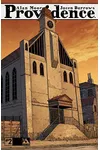
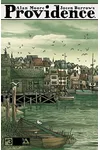
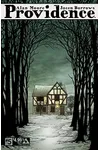
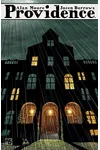
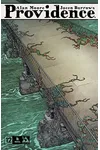
- Providence (2015–2017): A massive 12-issue series that acts as both a prequel and a sequel to the previous books. It is widely considered Moore's Lovecraftian magnum opus, exploring the roots of cosmic horror in early 20th-century New England.
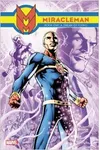
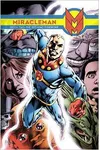
Miracleman: The Forgotten Masterpiece
Moore's work on Miracleman (originally published as Marvelman in the UK) is one of the earliest examples of the realistic deconstruction of superheroes, predating Watchmen. Due to complex rights disputes, these books were out of print for decades but have since been re-released. The recommended reading order for Moore's run is:
- Book One: A Dream of Flying (1990): Introduces Michael Moran as he remembers his superpowered alter ego.
- Book Two: The Red King Syndrome (1990): Explores the alien origins of Miracleman's powers and the return of his former sidekick, Kid Miracleman.
- Book Three: Olympus (1991): The final act of Moore's run, showing the transformation of the world under the rule of superhumans. Neil Gaiman took over the series following this volume.
The Long London Quintet (Prose Novels)
In addition to his graphic novels, Alan Moore is an accomplished prose writer. His latest major project is The Long London Quintet, a planned five-book historical fantasy series about a magical, alternate version of London. Readers should follow these in publication order:
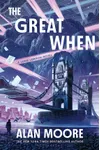
- The Great When (2024): The first installment, set in post-WWII London, introducing young Dennis Knuckleduster and a bizarre, impossible book that shouldn't exist.
- I Hear a New World (Expected 2026): The second book in the quintet, continuing the historical fantasy saga.
Plotted and Co-Authored Projects: Albion & Crossed +100
Moore has occasionally lent his plotting talents to other creators or written scripts in pre-existing universes:
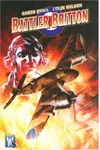
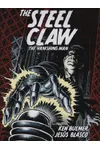
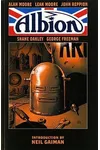
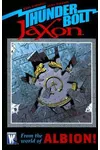
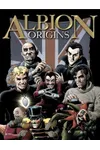
Albion (2006): Plotted by Alan Moore and written by his daughter Leah Moore alongside John Reppion, this six-issue series was designed to revive classic British comic book characters owned by IPC. The main series is self-contained. Associated titles like Battler Britton (2006), The Steel Claw (2006), Thunderbolt Jaxon (2007), and the archival collection Albion: Origins (2007) are standalone companion pieces or character histories that do not require a strict reading order.
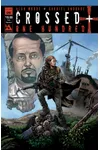
Crossed +100 (2014): Set in the post-apocalyptic, hyper-violent world of Garth Ennis's Crossed, this series takes place 100 years after the initial outbreak. Alan Moore wrote the first six issues (collected as Volume 1), creating a unique future dialect and society. Because of the century-long time jump, it is entirely self-contained and can be read without any prior knowledge of the main Crossed series.
Standalone Masterpieces
If you prefer single graphic novels or prose works that do not belong to a larger continuity, Moore has several high-profile standalones:
- From Hell (1999): Co-created with Eddie Campbell, this massive, meticulously researched graphic novel explores the Jack the Ripper murders and Victorian society.
- Promethea (2000): A highly philosophical and visual series co-created with J.H. Williams III that explores magic, mysticism, and the occult.
- Top 10 (2000): A police procedural set in a city where everyone—from the police officers to the citizens—has superpowers.
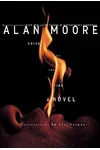
- Voice of the Fire (1996): Moore's debut prose novel, a collection of interconnected stories set in his hometown of Northampton across thousands of years.
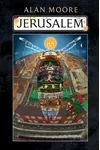
- Jerusalem (2016): An enormous, experimental prose novel that blends family history, fantasy, and physics, also set in Northampton.