
Where to Start with Alex Grecian
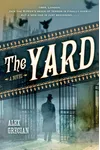
If you are new to Alex Grecian’s work, your starting point depends entirely on your preferred genre. For fans of gritty, atmospheric historical mysteries, the clear entry point is The Yard (2012), the brilliant debut novel that kicked off the Scotland Yard’s Murder Squad series. It introduces the core cast of characters and establishes the fog-drenched, post-Jack the Ripper Victorian London setting that defines the series.
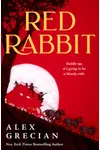
However, if your tastes lean more toward supernatural horror, folklore, and dark fantasy, you should start with Red Rabbit (2023). This critically acclaimed weird western functions as a fantastic standalone entry into Grecian’s newer horror-centric bibliography, showing off his versatility outside of traditional crime fiction.
Scotland Yard’s Murder Squad Series in Reading Order
Grecian’s signature series is the Murder Squad, which follows the detectives of London’s newly formed Metropolitan Police Murder Squad in the late 19th century. To get the full character arcs of Inspector Walter Day, Sergeant Nevil Hammersmith, and forensic pioneer Dr. Bernard Kingsley, you should read these in order. While the main cases are wrapped up in each installment, the interpersonal relationships and overarching subplots carry over directly from one book to the next.
Here is the recommended reading order for the Murder Squad books:
- The Yard (2012): The novel that introduces the squad as they investigate the murder of one of their own detectives, found stuffed inside a trunk.
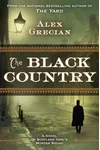
- The Black Country (2013): The team travels outside London to a soot-covered coal mining town in the Midlands to investigate the disappearance of a prominent family.
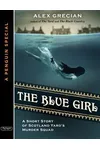
- The Blue Girl (2013): A digital-exclusive novella (often numbered as Book 2.5) focusing on Constable Colin Pringle and Dr. Kingsley as they investigate a bride who mysteriously turned blue.
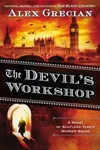
- The Devil's Workshop (2014): The squad faces chaos in London when a prison break releases some of the city's most notorious criminals back onto the streets.
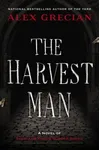
- The Harvest Man (2015): The squad hunts down a terrifying serial killer who remodels his victims' homes while they are still inside them.
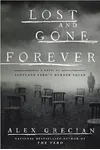
- Lost and Gone Forever (2016): The final novel in the main sequence, where Inspector Walter Day has gone missing, and Nevil Hammersmith must go to extreme lengths to find him.
The Chronological Caveat: Where to Place 'The Blue Girl'
While The Blue Girl was published in 2013, it acts as a companion piece rather than a vital main entry. It is chronologically set between The Black Country and The Devil's Workshop. However, because the main protagonists—Walter Day and Nevil Hammersmith—do not appear in this story, you do not need to read it to follow the main plot. It is a highly recommended side-story for readers who want to spend more time with the series' secondary characters and enjoy Dr. Kingsley's forensic deductions.
The frontier Horror Duology (Red Rabbit Universe)
In 2023, Alex Grecian shifted his focus to the American frontier with Red Rabbit, a weird western that reads like a dark folk-horror road trip. The success of this world prompted a follow-up, expanding the supernatural lore of his historical American landscape.
- Red Rabbit (2023): A ragtag group of bounty hunters, a silent child, and a witch hunter travel across Kansas in a wagon, carrying a suspected witch to her trial while being hunted by supernatural forces.
- Rose of Jericho (2025): A companion novel set in the same universe, taking place in 19th-century New England in the eerie, isolated village of Ascension, where the dead refuse to stay dead.
The Graphic Novel Roots: Proof and Rasputin
Before achieving success as a prose novelist, Alex Grecian was already an established voice in the comic book industry. Working alongside co-creator and artist Riley Rossmo, he produced highly imaginative graphic novels that are well worth exploring for fans of mystery and historical fantasy.
Proof Graphic Novels
Grecian's most famous comic series is Proof, which centers on John "Proof" Prufrock, a civilized Sasquatch who works for a secret government agency called the Lodge to track down and protect cryptids. The trade paperbacks should be read in order:
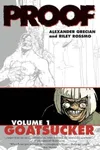
- Proof, Volume 1: Goatsucker (2008)
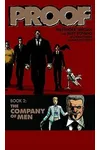
- Proof, Volume 2: The Company of Men (2008)
- Proof, Volume 3: Thunderbirds Are Go! (2009)
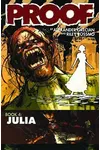
- Proof, Volume 4: Julia (2010)
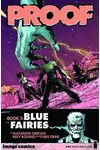
- Proof, Volume 5: Blue Fairies (2010)
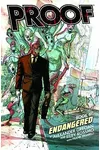
- Proof, Volume 6: Endangered (2011)
Note that for comic collectors, Image Comics also released a massive Proof Compendium in 2025, which collects the entire 28-issue run along with the 5-issue Endangered miniseries in a single volume, making it the easiest way to read the complete story today.
Rasputin Graphic Novels
Grecian also collaborated with Rossmo on a dark historical fantasy series reimagining the life and supernatural abilities of Grigori Rasputin. The collected trade paperbacks are:
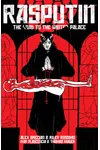
- Rasputin, Volume 1: Rebirth (2015)
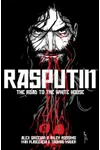
- Rasputin, Volume 2: The Road to Tsarskoe Selo (2016)
Standalone Novels and Other Projects
For readers who want to experience Grecian's storytelling without committing to a series, he has written several standalone books spanning different eras and genres:
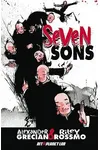
- Seven Sons (2006): An early graphic novel project that showcases Grecian's initial steps into visual storytelling.
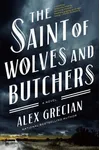
- The Saint of Wolves and Butchers (2018): Published in some international markets simply as The Wolf, this gripping contemporary thriller follows an FBI profiler tracking an aging Nazi war criminal hiding in a small town in Kansas.
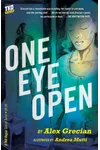
- One Eye Open (2022): A suspenseful horror novella that plays with isolation and tension.
- The Boatman (2026): A slow-burn supernatural horror novella set aboard a cruise ship, where the passengers find themselves stalked by a mysterious entity rowing alongside them.
What to Know Before You Start
Alex Grecian's novels are celebrated for their thick, atmospheric settings and a willingness to explore the darker corners of human nature. Whether it is the muddy, disease-ridden alleys of Victorian London or the vast, unforgiving plains of the American West, the environment itself acts as a character in his stories. While his Murder Squad books lean heavily on historical forensics and procedural mystery, his standalone works and graphic novels frequently cross over into the supernatural. Be prepared for a distinct shift in tone if you move from the grounded detective work of The Yard to the magic and monsters of Red Rabbit or Proof.