

Where to Start Reading Alex Rutherford
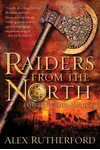
If you are looking to dive into the sweeping, battle-scarred historical fiction written under the pen name Alex Rutherford, your best starting point is clear: start at the very beginning of the Empire of the Moghul series with Raiders from the North (2009). Because the series is chronological, following successive generations of the Moghul dynasty, reading the books in publication order is highly recommended. Each book builds on the triumphs, failures, and political landscape left behind by the previous ruler.
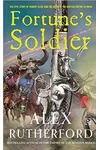
For readers who prefer 18th-century colonial intrigue and the early rise of the British East India Company, you can also start directly with the Ballantyne Chronicles, beginning with Fortune's Soldier. These two distinct series do not overlap in characters or directly impact each other's plots, meaning you can choose the historical era that fascinates you the most. However, the six-book Moghul epic remains the authors' signature achievement and is where most readers fall in love with their style.
The Moghul Empire Saga: Publication and Chronological Reading Order
The Empire of the Moghul series is a grand, multi-generational saga spanning over two centuries of Indian history, starting in 1494. Because the narrative progresses chronologically from father to son, the publication order and chronological order are identical. Here is the recommended reading path for the series:
1. Raiders from the North (2009)
Set in 1494, the first book introduces Babur, a twelve-year-old prince in the Ferghana Valley (modern-day Kyrgyzstan and Uzbekistan) who inherits his father's unstable throne. Forced into exile by rival clans, Babur dreams of reclaiming Samarkand and eventually marches his armies south through the Khyber Pass to lay the foundations of the Moghul Empire in northern India. This novel establishes the brutal warfare, fragile loyalties, and shifting alliances that define the entire saga.
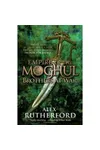
2. Brothers at War / A Kingdom Divided (2010)
The second novel focuses on Babur's son and successor, Humayun. Unlike his father, Humayun is a more reflective ruler whose reign is plagued by internal rebellion and, most dangerously, the fierce rivalries of his own half-brothers. Exiled from his own kingdom, Humayun must fight his way back to Delhi. Note that this book was released under the title Brothers at War in the UK and European markets, but published as A Kingdom Divided in some international markets, including the US.
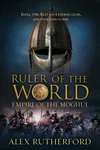
3. Ruler of the World (2011)
Widely considered one of the highlights of the series, this book chronicles the life of Akbar the Great, who ascended the throne at age thirteen. Akbar expands the empire through military genius while striving to unite his diverse subjects through religious tolerance and administrative reform. However, as the title suggests, absolute power brings personal tragedy, and Akbar faces defiance from his own son, Jahangir.
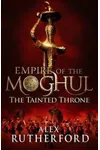
4. The Tainted Throne (2012)
Following the reign of Jahangir, this fourth installment dives deep into the dark side of Moghul opulence. Jahangir struggles to maintain his father's vast empire while battling opium addiction and navigating the political intrigues of his ambitious wife, Nur Jahan. The conflict shifts to the next generation, setting the stage for a bloody civil war among his sons for the throne.
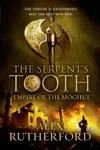
5. The Serpent's Tooth (2013)
This novel centers on Shah Jahan, the emperor celebrated for commissioning the Taj Mahal as a monument of love for his wife, Mumtaz Mahal. Behind the architectural grandeur, however, lies a tragic reign defined by immense grief and a bitter, ruthless power struggle between his sons. The title refers to the betrayal of Shah Jahan by his fiercely orthodox son, Aurangzeb, who eventually imprisons his father to seize control.
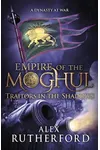
6. Traitors in the Shadows (2015)
The final book in the Moghul sextet follows the long and controversial reign of Aurangzeb. Under his rule, the Moghul Empire reaches its greatest territorial extent, but the seeds of its ultimate decay are sown through constant warfare and religious intolerance. As Aurangzeb grows old, he faces rising rebellions and the realization that his descendants lack the strength to preserve the empire he spent his life defending.
The Ballantyne Chronicles: 18th-Century Indian Epics
After wrapping up their Mughal saga, the authors launched a new series under the Alex Rutherford pseudonym, shifting forward in time to mid-18th-century India during the expansion of European colonial powers.
1. Fortune's Soldier (2018)
Set in 1744, this novel introduces Nicholas Ballantyne, a young Scotsman who leaves his homeland to seek his fortune in India as a writer (clerk) for the British East India Company. As the rivalry between the British and French East India Companies escalates into open warfare, Nicholas is drawn into the military conflict, forming a close but complex friendship with the historic figure Robert Clive. This book was originally published in late 2018 in India before receiving wider international releases.
2. Fortune's Heir (2021)
The sequel continues Nicholas Ballantyne's journey through the turbulent decade of the 1750s. The story explores the political intrigue leading up to the Battle of Plassey and the changing landscape of Bengal. As the East India Company transitions from a trading enterprise into a ruling power, Nicholas must navigate the moral ambiguities, greed, and escalating tensions that threaten to tear the subcontinent apart.
Publication vs. Chronological Order: Are They Different?
Fortunately for readers, there is no confusing timeline debate when it comes to Alex Rutherford's bibliography. The authors wrote both series in chronological order. Reading Empire of the Moghul from Book 1 to Book 6 ensures you experience the rise, peak, and decline of the dynasty as it unfolded historically. Similarly, the Ballantyne Chronicles should be read starting with Fortune's Soldier before proceeding to Fortune's Heir.
If you want to read the authors' entire historical fiction catalog in a grand, chronological sweep of Indian history, you should read the six books of the Empire of the Moghul series first (covering 1494 to the early 1700s), followed by the Ballantyne Chronicles (covering the mid-1700s onward).
What to Know Before You Start Reading
The Faces Behind the Pseudonym
Alex Rutherford is the shared pen name of Diana and Michael Preston, a British husband-and-wife writing team. Both studied at Oxford University (Diana read History, while Michael read English). Before pivoting to historical fiction, they spent decades writing acclaimed, highly researched narrative non-fiction under their own names, including books on the Boxer Rebellion, the sinking of the Lusitania, and a history of the Taj Mahal titled A Teardrop on the Cheek of Time. They adopted the gender-neutral pseudonym to prevent confusion with their academic non-fiction catalogs.
Historical Realism and Sources
The Prestons' fiction stands out for its high level of historical grounding. The couple traveled extensively—visiting over 140 countries—and personally retraced the footsteps of the Moghul emperors, traveling from the Ferghana Valley in Kyrgyzstan, across the mountains of Afghanistan, and through the plains of India. They drew heavily from primary sources, including the Baburnama (the autobiographical memoirs of Babur), the court chronicles of Akbar, and European travelogues from the 17th century. This research gives their battle scenes and descriptions of court life a sensory, authentic feel.
The TV Adaptation: "The Empire"
In 2021, the first book of the series, Raiders from the North, was adapted into a major Indian television drama series titled The Empire, released on Disney+ Hotstar. Developed by Nikkhil Advani and starring Kunal Kapoor as Babur, the show brought the visual scale of Rutherford's battle scenes to the screen. While the adaptation took some creative liberties with the historical details, it introduced a new generation of readers to the series.