

Where to Start Reading Alexandra Ripley
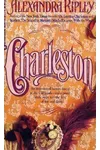
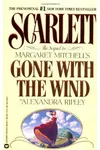
For readers looking to dive into the lush historical worlds of Alexandra Ripley, there are two ideal starting points depending on your literary interests. If you are a fan of sprawling family sagas with deep roots in Southern history, start with her breakthrough bestseller, Charleston (1981). This book introduces her most famous original setting and establishes the storytelling style that defined her career. If you are a fan of classic literature and want to see how Ripley tackled one of the most famous romances in fiction, you can start directly with Scarlett (1991), her massive, authorized sequel to Margaret Mitchell's Gone with the Wind. Because her other books are standalones, you can read them in any order once you have explored these key works.
The Charleston Series
Although Alexandra Ripley did not write a traditional multi-book series, her two signature novels set in her South Carolina hometown form a closely linked family saga. Often referred to by readers as the Charleston Series or the Tradd Family Saga, these books should be read in order of publication to fully appreciate the generational shift and historical progression.
1. Charleston (1981)
Set against the backdrop of the American Civil War, Reconstruction, and the late 19th century, this novel follows the life of Elizabeth Tradd. As the city of Charleston struggles to rebuild itself from the ashes of war, Elizabeth navigates the rigid expectations of Southern high society, personal tragedy, and a complex marriage. Ripley uses her own deep family roots and Charleston upbringing to paint an authentic, unvarnished portrait of the city's unique social codes and historical evolution.
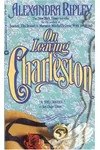
2. On Leaving Charleston (1984)
This direct sequel shifts the focus to the early 20th century, specifically the Roaring Twenties. The story follows Garden Tradd, the headstrong grandniece of Elizabeth Tradd. As modern times collide with old Southern traditions, Garden struggles to find her independence, leading to a dramatic journey from the social circles of Charleston to the fast-paced world of New York and back. Reading this immediately after Charleston is highly recommended to follow the generational legacy of the Tradd family.
Scarlett: The Gone with the Wind Sequel
Published in 1991, Scarlett was Ripley’s most high-profile and commercially successful project. Commissioned by the Margaret Mitchell estate, this authorized sequel picks up right where the 1936 classic left off, attempting to answer the question of whether Scarlett O'Hara and Rhett Butler would ever reconcile. The narrative begins in Atlanta during Melanie Wilkes's funeral, moves through Charleston, and eventually takes Scarlett to her ancestral home in Ireland.
While critics at the time panned the book for failing to match the precise tone of Margaret Mitchell's original masterpiece, readers embraced it. The novel sold over eight million copies worldwide and was adapted into a highly rated 1994 television miniseries starring Joanne Whalley and Timothy Dalton. For readers, this book stands on its own and requires no connection to Ripley's other works, though reading Margaret Mitchell's original Gone with the Wind first is essential for proper context.
Other Historical Standalone Novels
Outside of her Charleston books and her famous sequel, Ripley penned several historical novels that transport readers to different eras and geographical settings. These can be read completely independently:
- Who's That Lady in the President's Bed? (1972): Published under the pseudonym B.K. Ripley, this debut novel is a humorous, satirical mystery that stands apart from the earnest historical romances of her later career. It is a fun curiosity for completionists.
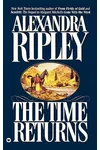
- The Time Returns (1985): Shifting focus away from the American South, this novel is set in 15th-century Renaissance Florence. It chronicles the passionate, star-crossed romance between Lorenzo de' Medici and Ginevra de' Pazzi, set against a backdrop of political intrigue, rivalry, and blood feuds.
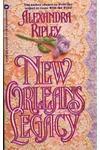
- New Orleans Legacy (1987): Set in 1851, this historical romance follows Mary MacAlistair, a young woman who discovers a mysterious box of mementos after being orphaned. Her quest to uncover her true identity leads her from a Pennsylvania convent to the opulent and dangerous high society of antebellum New Orleans, where she becomes entangled with the dashing Valmont Saint-Brévin.
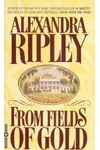
- From Fields of Gold (1994): Set in late 19th-century Virginia and North Carolina, this book centers on Francesca "Chess" Standish, a spinster who holds a valuable patent for a tobacco-processing machine. She enters a marriage of convenience with the ambitious, younger Nathaniel "Nate" Richardson, embarking on a turbulent path to wealth during the rise of the Gilded Age tobacco barons.
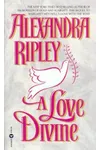
- A Love Divine (1996): Ripley's final standalone novel is an ambitious piece of biblical fiction detailing the life of Joseph of Arimathea. The story follows Joseph from his youth in Palestine through his travels in Rome and ancient Britain, charting his personal struggles, his love for a woman named Sarah, and his fateful encounter with Jesus of Nazareth.
Collaborations and Anthologies
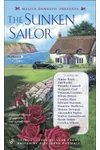
In 2004, the year of her death, Ripley contributed to a unique collaborative project titled The Sunken Sailor. Edited by Elizabeth Foxwell, this book is a round-robin mystery novel where fourteen different suspense and historical fiction writers each contributed a single chapter. Alexandra Ripley wrote Chapter 11, titled "Journey into Fear." While not a typical Ripley novel, it offers an interesting look at her collaborative writing style alongside authors like Simon Brett and Deborah Crombie.
What to Know Before You Start
When reading Alexandra Ripley, it helps to understand that her writing style is deeply research-driven and character-focused. Her heroines are frequently flawed, stubborn, and determined to survive in societies that seek to limit their independence. If you plan to read her entire bibliography, doing so in publication order is the most satisfying approach, as it allows you to see how her prose matured from satirical mystery to sweeping historical epics. However, reading by sub-genre or starting with her two Charleston books is just as rewarding for casual historical romance fans.