












Where to Begin: The Best Entry Points
Alexandre Dumas was one of the most prolific French authors of the 19th century, writing hundreds of novels, plays, and travelogues (often with collaborators like Auguste Maquet). For most readers, there are two premier starting points:
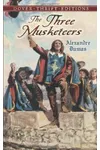
- The Three Musketeers (1844): The ultimate starting point. It introduces d'Artagnan, Athos, Porthos, and Aramis, and launches the famous d'Artagnan Romances. It has unmatched energy, witty dialogue, and classic adventure.
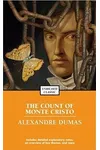
- The Count of Monte Cristo (1845): A standalone epic of betrayal, escape, and meticulous vengeance. If you want a darker, deeply emotional, and sprawling singular story rather than a multi-book series, start here.
1. The d'Artagnan Romances (Three Musketeers Cycle)
The d'Artagnan Romances follow the life of d'Artagnan from a hot-headed young Gascon to a seasoned marshal of France. While the first novel is self-contained, the sequels build directly upon the characters' lives and political intrigues.
In English publishing, the massive final volume, Le Vicomte de Bragelonne, was historically split into three, four, or even five separate books due to its length. Here is the recommended reading order, incorporating both the classic sequence and modern expansions:
- The Three Musketeers (1844) – The adventure begins as d'Artagnan arrives in Paris and joins the King's Musketeers.
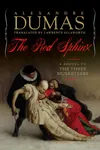
- The Red Sphinx (Published 1844, also known as The Count of Moret) – An immediate, optional sequel to The Three Musketeers featuring Cardinal Richelieu, which Dumas left unfinished but was later completed by researchers.
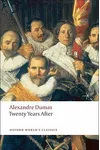
- Twenty Years After (1845) – The musketeers reunite as middle-aged men on opposing sides of the Fronde civil war in France and the revolution in England.
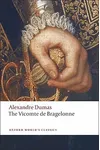
- The Vicomte de Bragelonne (1847) – The start of the massive concluding saga.
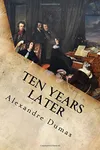
- Ten Years Later (1847) – The continuation of the saga, dealing with court intrigue under Louis XIV.
- Louise de La Vallière (1845 / serialized later) – The romantic and political conflicts reach a boiling point.
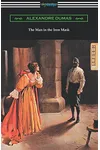
- The Man in the Iron Mask (1850) – The legendary, tragic conclusion to the d'Artagnan Romances.
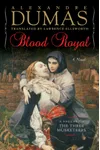
- Blood Royal (2020) – A modern translation/adaptation of the transitional sections of the late musketeer saga.
Note: If you purchase a modern unified edition of The Vicomte de Bragelonne, it may contain the text of Ten Years Later, Louise de La Vallière, and The Man in the Iron Mask as a single giant volume. Check your edition's table of contents to avoid missing sections.
2. The Valois Trilogy (The Last Valois)
Set during the French Wars of Religion in the 16th century, this dark, dramatic sequence covers the end of the Valois dynasty and the rise of Henri IV. While the books were published in one order, the internal chronology differs slightly because of a late-written prequel, The Horoscope.
Chronological Reading Order:
- The Horoscope (Written late in Dumas' career, published posthumously) – Set in 1559, this serves as a historical prequel to the Valois court conflicts.
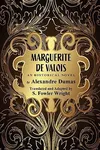
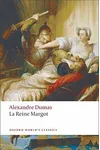
- Marguerite de Valois (1845, also known as Queen Margot or La Reine Margot) – Set around the St. Bartholomew's Day massacre of 1572. This is the best place to start the trilogy.
- Chicot the Jester (1846, also known as La Dame de Monsoreau) – Focuses on the witty royal jester Chicot during the reign of Henri III.
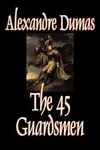
- The Forty-Five Guardsmen (1847) – The dramatic conclusion detailing the political conspiracies threatening the crown.
3. The Marie Antoinette Romances (Memoirs of a Physician)
This series chronicles the decline of the French monarchy, starting before the affair of the diamond necklace and concluding with the French Revolution and the execution of Marie Antoinette. It features the enigmatic occultist Joseph Balsamo (Alessandro Cagliostro).
As with the Valois books, publication order differs slightly from chronological order. We recommend reading chronologically to follow the historical collapse of the French court step-by-step.
Chronological Reading Order:
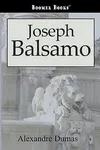
- Joseph Balsamo (1846, sometimes published as Memoirs of a Physician) – Introduces the magical and conspiratorial elements underpinning the revolution.
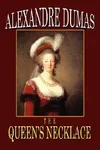
- The Queen's Necklace (1850) – Based on the real-world Diamond Necklace scandal that destroyed Marie Antoinette's reputation.
- Taking the Bastille (1846, also published as Ange Pitou) – Moves into the active revolution with the storming of the Bastille.
- The Countess de Charny (1853) – Depicts the desperate flight of the royal family and the slide into the Reign of Terror.
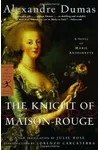
- The Knight of Maison-Rouge (1845, also known as The Red House) – Chronologically the final piece, following a royalist plot to rescue the queen from prison. Note: While written first, this acts as an epilogue. It has a different cast of characters, so reading it last is highly recommended.
4. The Sainte-Hermine Cycle
This trilogy spans the French Revolution and the rise of Napoleon Bonaparte, following the tragic fates of three noble brothers. Because of the publication dates, the story makes the most sense read chronologically rather than by publication year.
Chronological Reading Order:
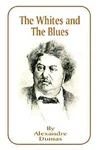
- The Whites and the Blues (1867) – Set during the Reign of Terror (1793–1799).
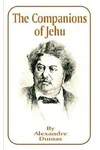
- The Companions of Jehu (1857) – Set during the Directory era starting in 1799.
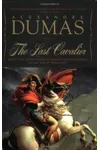
- The Last Cavalier (Written in 1869, lost and officially published in 2005) – Dumas' final, unfinished masterpiece that rounds out the trilogy during the Napoleonic wars.
5. Standalone Masterpieces and Adaptations
Beyond his primary historical cycles, Dumas wrote several notable standalone novels, plays, and translations:
- The Black Tulip (1850): A lighter, shorter romance set in 17th-century Holland during the tulip mania, focusing on a prisoner trying to grow a rare black tulip.
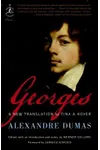
- Georges (1843): A pioneering novel exploring racism, slavery, and colonial rebellion on Mauritius, heavily reflecting Dumas' own heritage.
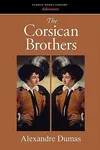
- The Corsican Brothers (1844): A novella about conjoined twins who feel each other's physical sensations even when separated.
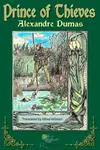
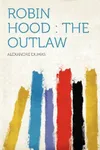
- Tales of Robin Hood: Dumas adapted the English legend in The Prince of Thieves (1862) and The Outlaw (1863), popularizing the mythology in France.