
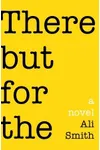


Where to Begin Your Ali Smith Journey
Ali Smith’s writing is famous for breaking traditional rules of time, gender, and structure, but her warm voice ensures readers never feel lost. If you are new to her work, we recommend two distinct starting paths depending on what style of storytelling you prefer:
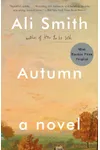
- The Contemporary Route (The Seasonal Quartet): Start with Autumn (2016). Written and published at breakneck speed, this series captures the immediate post-Brexit atmosphere in the UK. It is the perfect introduction to how Smith weaves real-time political anxieties with deeply personal human connections.
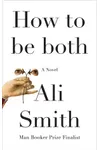
- The Literary Playbook Route: Start with her award-winning novel How to Be Both (2014). This dazzling novel is divided into two parts—one telling the story of a modern-day teenage girl grieving her mother, and the other detailing the life of a 15th-century Italian Renaissance fresco painter. Because physical copies of the book were printed with the halves randomly shuffled, you will start with either the historical or modern segment depending on which copy you purchase. It is a fantastic showcase of her structural brilliance.
The Seasonal Quartet and Companion Piece
Constructed as a major literary chronicle of modern Britain, the Seasonal Quartet is a set of four interconnected novels that reflect the shifting political and environmental landscapes of our times:
- Autumn (2016)
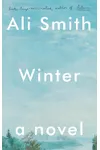
- Winter (2017)
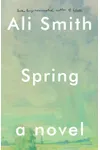
- Spring (2019)
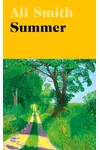
- Summer (2020)
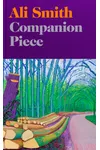
Do you need to read them in order? While each book stands on its own with separate characters and scenarios, there are subtle overlapping threads, characters who reappear, and a cumulative emotional weight. Reading them in calendar sequence is highly recommended. After finishing the quartet, proceed to Companion Piece (2022). Though not a formal fifth volume, it acts as a thematic postscript, written in response to the COVID-19 pandemic and lingering post-Brexit tensions.
The Twin Sibling Novels: Gliff and Glyph
In her later work, Smith introduced a new structural experiment: two linked sibling novels that act as companion pieces to one another:
- Gliff (2024) – A dystopian story about children trying to survive in a surveillance state. The title comes from a Scottish word meaning a fleeting glance or sudden fright.
- Glyph (2026) – A companion novel that tells a story "hidden" inside the fabric of the first. In typical Smith fashion, the characters in Glyph even discuss reading Gliff, creating a dialogue between the two texts. They can be read as standalones, but reading Gliff first provides the richest reading experience.
Standalones and Literary Collaborations
Smith’s standalone catalog contains some of her most celebrated works, including her haunted tragicomedy Hotel World (2001) and the home-invasion classic The Accidental (2005). She has also engaged in creative retellings of myths and classics:
- Girl Meets Boy (2007) – A contemporary reimagining of Ovid’s myth of Iphis, published as part of the international Canongate Myth Series.
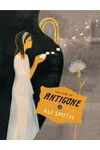
- The Story of Antigone (2011) – A playful retelling of Sophocles' classic tragedy designed for younger readers.
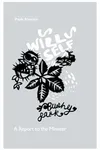
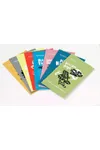
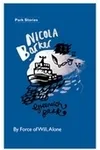
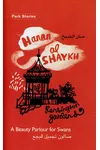
A Quick Warning on "Park Stories": The 2009 Park Stories project listed in some bibliographies was a multi-author commission by Alma Books to celebrate London's Royal Parks. While the series includes works like A Report to the Minister: Bushy Park (by Will Self) and A Beauty Parlour for Swans (by Hanan al-Shaykh), Ali Smith’s specific contribution is the short story "The Definite Article" (which is set in Regent’s Park).
The Short Fiction and Non-Fiction
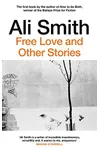
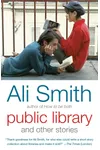
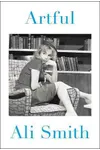
If you prefer to sample Smith’s lyrical prose in shorter bursts, start with her debut collection, Free Love and Other Stories (first published in 1995, and widely reprinted in 2001), which won the Saltire First Book of the Year Award. For book lovers, Public Library and Other Stories (2015) is an absolute must-read that celebrates the vital importance of community spaces and reading. For her non-fiction, Artful (2012) compiles her lectures at Oxford into a hybrid form of essay and novelistic narrative.