

Recommended Reading Path: Where to Start with Alina Bronsky
For readers diving into Alina Bronsky's literature, there is no single overarching continuity to worry about. Nearly all of her work translated into English consists of standalone novels. However, their sharp wit, cultural displacement themes, and unique humor are best appreciated when read in an order that highlights her evolution as a writer.
The Best Starting Point
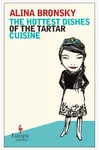
We highly recommend starting with The Hottest Dishes of the Tartar Cuisine (2010). It is arguably her most famous and critically acclaimed work in the English-speaking world. The novel features one of the most memorably monstrous, funny, and uncompromising matriarchs in modern fiction, Rosa Achmetowna. This book perfectly showcases Bronsky's signature blend of dark, satirical humor and emotional complexity.
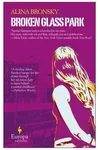
If you prefer a contemporary, gritty coming-of-age story, your alternative starting point should be her debut, Broken Glass Park (2008). It offers a raw, fast-paced look at a young Russian immigrant teenager navigating trauma and identity in Germany.
Can These Books Be Read Standalone?
Yes. All of Alina Bronsky's English-translated novels are entirely standalone works. You do not need to worry about cliffhangers or missing backstories between books. You can pick up any of her translated titles and enjoy a complete, self-contained story.
Alina Bronsky Books in Publication Order
If you want to read Alina Bronsky's work in the exact order it was released, follow the German publication sequence below. This list focuses on the major novels that have been translated into English, primarily published by Europa Editions and translated by Tim Mohr.
1. Broken Glass Park (2008)
Originally published in German as Scherbenpark, this debut novel put Bronsky on the literary map and was nominated for the prestigious Ingeborg Bachmann Prize. The story follows Sascha Naimann, a brilliant but angry seventeen-year-old Russian immigrant living in a German housing project. After witnessing her stepfather murder her mother, Sascha is consumed by two goals: killing her stepfather and writing a book about her mother. It is a harsh, realistic, yet deeply empathetic portrayal of youth under extreme pressure.
2. The Hottest Dishes of the Tartar Cuisine (2010)
Published in German as Die schärfsten Gerichte der tatarischen Küche, this novel is a dark family saga spanning three generations. Rosa Achmetowna is a Tatar woman living in the Soviet Union who is convinced she is the smartest, most capable person in her family—and she will stop at nothing to control the lives of her daughter, Sulfia, and her granddaughter, Aminat. Bronsky uses Rosa's unreliable, hilarious, and tyrannical narration to paint a vivid picture of late-Soviet and post-Soviet life.
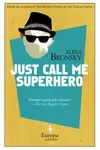
3. Just Call Me Superhero (2013)
Known in German as Nenn mich einfach Superheld, this novel shifts focus to a male protagonist. After being severely scarred in a dog attack, teenager Marek struggles to reconnect with the world and his family. He reluctantly joins a support group for young people with physical disabilities, where he meets the charismatic and enigmatic Janne. The book avoids sentimental clichés, offering a cynical, humorous, and ultimately uplifting exploration of trauma, physical vulnerability, and friendship.
4. Baba Dunja's Last Love (2015)
Originally titled Baba Dunjas letzte Liebe, this novel is set in the radioactive exclusion zone of Chernobyl. Baba Dunja, a retired nurse, decides to return to her former home in the contaminated village of Tschernowo. Along with a quirky group of fellow elderly returnees, she builds a quiet, peaceful life growing strange vegetables and dodging inspectors. However, their sanctuary is disrupted when a stranger arrives with a young girl, forcing Dunja to defend her home. It is a heartwarming and mordantly funny look at aging, resilience, and community.
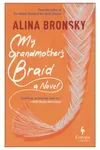
5. My Grandmother's Braid (2019)
Published in German as Der Zopf meiner Großmutter, this novel returns to the theme of the tyrannical, larger-than-life matriarch. Max lives in a German refugee home with his grandparents, who immigrated from Russia. His grandmother, Maria, is a force of nature—brutal, superstitious, and deeply protective, while constantly berating her husband and grandson. When an unconventional relationship develops between the grandfather and another woman in the building, the family dynamic is turned upside down. The book explores the complex bonds of love, trauma, and adaptation in a new country.
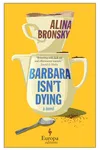
6. Barbara Isn't Dying (2021)
Originally titled Barbara stirbt nicht, this novel focuses on Walter Schmidt, a retired German man of the old school who has never boiled an egg or run a washing machine in his life. When his wife, Barbara, suddenly collapses and is hospitalized, Walter is forced to navigate the domestic world for the first time. Guided by late-night cooking shows and unexpected helpers, Walter undergoes a late-in-life transformation while re-evaluating his decades-long marriage. It is a gentle, humorous, and touching character study.
7. Easy As Pi (2024 / English Translation Pending)
Her latest major German novel, Pi mal Daumen, was published in late 2024. The story centers on an unlikely friendship at a university between a brilliant but socially awkward young mathematics prodigy and an elderly grandmother who decides to study math. The English translation rights have been acquired by Europa Editions, with translation duties handled by Tim Mohr, though a formal English publication date is still pending.
Untranslated Works and Young Adult Fiction
While Alina Bronsky is best known in English for her literary fiction, she has also written several books for young adults and children in German that have not yet received wide English translations. Knowing these exists helps round out a reader's understanding of her bibliography.
The Spiegel Dilogy (YA Urban Fantasy)
In the early 2010s, Bronsky wrote a young adult fantasy series centered on a secret society of immortal, gifted beings called the Phee. Although originally planned as a trilogy, only two books were released:
- Spiegelkind (2012) – Introduces fifteen-year-old Juli, who discovers her missing mother belongs to the Phee, forcing Juli to navigate a hidden, dangerous world.
- Spiegelriss (2013) – The sequel following Juli's struggles to survive on the streets after losing access to the Phee world.
Other Untranslated German Titles
- Mein Bruder soll nicht Pepsi heißen (2014) – A humorous children's book about a family that cannot afford a standard name for their new baby, risking having to name him after a corporate sponsor.
- Die Abschaffung der Mutter (2016) – A controversial non-fiction polemic co-authored with Denise Wilk, examining societal pressures and the medicalization of motherhood.
- Schallplattensommer (2020) – A young adult contemporary novel (translating to "Vinyl Summer") about youth, music, and relationships, frequently used in German-language learning programs.
- Das Geschenk (2021) – A lighthearted Christmas novella detailing a couple's chaotic holiday plans when unexpected guests arrive.
What to Know Before You Start
Alina Bronsky's novels belong to a literary movement sometimes described as the "Eastern Turn" (Osteuropäische Wende) in German literature. Writing under a pseudonym to protect her family's privacy, Bronsky draws heavily on her own experience of moving from Russia to Germany at the age of thirteen. Her books explore themes of cultural displacement, the immigrant experience, and the psychological impact of leaving one's homeland, all without falling into tragedy or cliché.
A critical component of her success in the English-language market is her close collaboration with translator Tim Mohr and publisher Europa Editions. Mohr's translations preserve the biting, colloquial, and highly rhythmic style of Bronsky's original German prose, ensuring her dark humor translates perfectly to global audiences.