

How to Navigate Alton Brown's Books
Alton Brown is not your average celebrity chef. With a background in cinematography and a degree from the New England Culinary Institute, he built a career by explaining the why of cooking rather than just the how. Because his books range from science-heavy technique manuals to TV show companions and personal essay collections, your starting point depends entirely on what you want to learn in the kitchen.
For readers trying to decide where to begin, here is the recommended reading path:
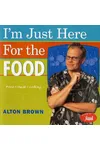
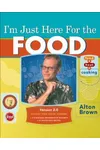
- For the Culinary Science Enthusiast: Start with I'm Just Here for the Food: Food + Heat = Cooking (2002). This is the book that established his signature method-based approach to cooking, breaking down processes like searing, braising, and frying.
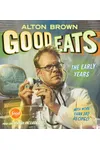
- For Fans of the TV Show: Start with Good Eats: The Early Years (2009). It is the perfect companion to his hit Food Network series, offering behind-the-scenes details, science diagrams, and updated show recipes.
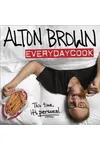
- For Everyday Cooking: Pick up EveryDayCook (2016). This book presents the meals Alton actually cooks at home, featuring unique, dark-hued photography and a highly personal tone.
- For the Storyteller: Read his latest release, Food for Thought: Essays and Ruminations (2025). This is a pure collection of personal essays rather than a cookbook, making it perfect for fans who want to know about his career, philosophy, and life behind the camera.
The Good Eats Series in Publication Order
The Good Eats books are the physical extension of Alton Brown’s legendary television show. Rather than standard recipe compilations, these massive volumes are packed with transcripts, scientific explanations, gear recommendations, and visual guides. They should be read in order of publication, as they follow the chronological development of the show and its subsequent reboots:
- Good Eats: The Early Years (2009): Covers the first 80 episodes of the show, spanning seasons 1 through 6. It introduces the core cast of characters, basic science concepts, and early show trivia.
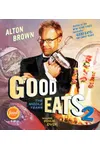
- Good Eats 2: The Middle Years (2010): Covers seasons 7 through 11. This volume details the peak era of the original series, diving deeper into complex techniques and ingredients.
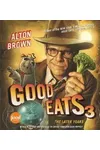
- Good Eats 3: The Later Years (2011): Covers seasons 12 through 14. This book marks the end of the show's original run, reflecting a highly polished culinary style.
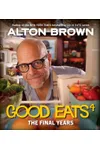
- Good Eats 4: The Final Years (2022): Published over a decade after Volume 3, this book acts as a companion to Good Eats: Reloaded and the reboot series Good Eats: The Return. It features revamped classic recipes and entirely new ones developed for the modern era.
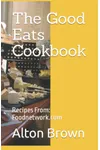
Note on The Good Eats Cookbook (2022): Readers should not confuse this title with the main four-volume series. This is a condensed, recipe-focused compilation sourced from Foodnetwork.com, focusing heavily on direct recipe instructions rather than the extensive science commentary and behind-the-scenes stories found in the official numbered volumes.
The Culinary Science Trilogy (The "I'm Just Here" Series)
Before his TV show companion books took off, Alton Brown wrote a trilogy of books centered on fundamental culinary science. These are highly instructional and focus on the physics and chemistry of the kitchen:
- I'm Just Here for the Food: Food + Heat = Cooking (2002): This groundbreaking book won the James Beard Foundation Award for Best Reference and Scholarship Book in 2003. It arranges recipes not by course or ingredient, but by heating method (such as roasting, grilling, braising, boiling, and frying). A revised edition, I'm Just Here for the Food: Version 2.0, was released in 2011 with updated science and new recipes.
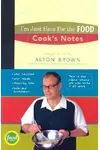
- I'm Just Here for the Food: Cook's Notes (2003): A companion journal designed for home cooks to write down their own observations, recipe adjustments, and kitchen experiments. It functions as a structured workbook to accompany the main textbook.
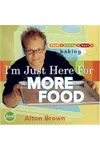
- I'm Just Here for More Food: Food x Mixing + Heat = Baking (2004): The logical successor to his first book, this volume focuses entirely on the science of baking. By categorizing baking into mixing methods (such as the muffin method, creaming method, and biscuit method), Brown demystifies the chemistry of yeast, flour, and leavening agents.
Standalone Non-Fiction and Personal Essays
Outside of his major series, Alton Brown has published several standalone books that highlight his unique interests, including travel, kitchen organization, and personal reflections:
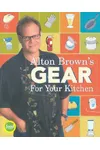
Alton Brown's Gear for Your Kitchen (2003)
This book is the ultimate manifestation of Brown's famous crusade against "unitaskers"—kitchen tools that serve only a single purpose (like garlic presses or quesadilla makers). Instead, he teaches readers how to analyze kitchen gear, choose multi-functional equipment, and arrange a highly functional kitchen workspace.
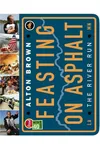
Feasting on Asphalt: The River Run (2008)
Serving as a companion to his Food Network travel series, this book chronicles his motorcycle journey along the Mississippi River. It is a mix of travelogue, local history, and regional American recipes, showcasing his love for roadside culinary culture.
EveryDayCook (2016)
This cookbook represents a departure from the educational format of Good Eats. Designed for the everyday home cook, the recipes reflect Brown’s personal eating habits. Notably, all the photos in the book were shot from a direct overhead angle against a black background using an iPhone, giving the book a modern, rustic aesthetic.
Food for Thought: Essays and Ruminations (2025)
Released in early 2025, this New York Times bestseller is a collection of personal stories rather than a recipe book. Brown reflects on his childhood, his career transitions, behind-the-scenes struggles on television sets, and his philosophical relationship with food and dieting. It is a must-read for fans seeking a deeper, autobiographical look at his career.
What to Know Before You Start
When diving into Alton Brown’s bibliography, it is helpful to keep a few key concepts in mind. First, his cookbooks are highly educational. If you are looking for quick, 15-minute weekday meals without any explanation, his style might feel overwhelming. However, if you want to understand the chemical reactions that make a chocolate chip cookie chewy versus crispy, his books are unmatched.
Second, his tone is distinctively conversational, filled with sarcastic humor, pop-culture references, and hand-drawn diagrams. It is best to treat his books as food science textbooks written by a friendly, eccentric teacher. Standalones like EveryDayCook offer a more relaxed, modern experience, while the Good Eats series remains the definitive encyclopedia of his television legacy.