


The Recommended Amanda Brown Reading Path
If you are looking to dive into the work of American novelist Amanda Brown, the best path is exceptionally straightforward: read her books in order of their publication. Because Brown's catalog consists of distinct, standalone contemporary chick-lit and satirical novels rather than an ongoing serialized saga, you do not need to worry about complex chronological timelines or character crossovers. Starting with her famous debut is the most rewarding route, as it establishes her signature style of blending high-society satire, female empowerment, and bubbly humor.
We recommend starting with Legally Blonde (2001) to experience the cultural phenomenon in its original form. From there, move on to her second novel, Family Trust (2003), which shifts the satirical lens from the classrooms of elite law schools to the high-stakes battlegrounds of Wall Street and elite preschool admissions. Finally, finish with School of Fortune (2007), a hilarious co-authored adventure featuring a cast-out heiress fighting to regain her trust fund. This pathway allows you to see how Brown's comedic tone and character archetypes evolved during her novel-writing career.
Amanda Brown Books in Publication Order
Amanda Brown's publishing career was highly concentrated in the early to mid-2000s, during which she released three standalone novels. The publication order is identical to the chronological order, as each story takes place in its own independent universe. Here is the publication sequence:
- Legally Blonde (2001) – The debut novel that introduced the world to Elle Woods, a fashion-focused sorority president who attends Stanford Law School to win back her ex-boyfriend.
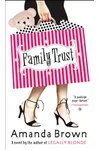
- Family Trust (2003) – A romantic comedy focusing on an ambitious corporate partner and a wealthy playboy who are unexpectedly appointed co-guardians of their late friends' young daughter.
- School of Fortune (2007) – Co-authored with Janice Weber, this novel follows Pippa Walker, a wealthy Texas oil heiress who is cut off by her family and must earn a university degree to reclaim her inheritance.
Deep Dive: Amanda Brown's Standalone Novels
Legally Blonde (2001)
Amanda Brown's debut novel, Legally Blonde, is widely recognized as her most influential work. The story was famously inspired by Brown's own experiences at Stanford Law School. Like her heroine, Elle Woods, Brown entered the prestigious institution with a love for fashion and pop culture, which frequently set her apart from her more traditional, career-obsessed classmates. She began writing humorous letters home detailing her interactions, which eventually formed the basis of the manuscript.
In the novel, Elle Woods is the president of her University of Southern California sorority, Delta Gamma. When her boyfriend Warner Huntington III dumps her because she is "too blonde" and not serious enough for his political aspirations, Elle decides to prove him wrong by following him to Stanford Law. Despite the skepticism of professors and peers, Elle's unconventional thinking, emotional intelligence, and resilience lead her to triumph in the courtroom. The book is significantly more satirical and biting in its depiction of the academic elite than the softer, more universally optimistic film adaptation starring Reese Witherspoon.
Family Trust (2003)
Two years after her debut, Brown returned with Family Trust, another story that details the intersection of high society, personal ambition, and unexpected life detours. The novel follows Becca Reinhart, an overworked, laser-focused partner at a Wall Street firm, and Edward Kirkland, a wealthy, carefree socialite who avoids responsibilities at all costs. The two share absolutely nothing in common and actively dislike each other.
Their lives are upended when their mutual friends die in a sudden plane crash, naming Becca and Edward as co-guardians of their four-year-old daughter, Emily. The book details the chaotic transition the two adults must make as they navigate diaper changes, toddler tantrums, and the cutthroat environment of Manhattan's elite preschool admissions wars. As they learn to cooperate for Emily's sake, their initial animosity gradually evolves into a romantic connection, offering readers a classic enemies-to-lovers story set against a satirical backdrop.
School of Fortune (2007)
Co-authored with novelist and concert pianist Janice Weber, School of Fortune returned to the classic Amanda Brown formula of a high-society heroine forced to survive outside her comfort zone. The protagonist, Pippa Walker, is a spoiled but charming Texas oil heiress. After a spectacular wedding day disaster, Pippa finds herself disowned and cut off from her family's massive fortune.
To regain her trust fund and secure her future, Pippa is given a strict ultimatum: she must successfully earn a college degree. What follows is a series of comical misadventures as Pippa attempts to navigate various academic institutions, learning self-reliance, meeting quirky characters, and finding love along the way. Weber's influence adds a fast-paced, theatrical flair to the narrative, making it an excellent final installment in Brown's published fiction works.
What to Know Before You Start: Book vs. Adaptations & The Author Name Mix-Up
Before you begin reading Amanda Brown, there are a few important points to keep in mind to ensure a smooth reading experience. First, readers should be prepared for the differences between the novel Legally Blonde and its famous 2001 film adaptation. In the original book, Elle Woods attends Stanford Law School (changed to Harvard Law School in the film) and her sorority is Delta Gamma (changed to Delta Nu). The novel's tone is also somewhat more cynical, portraying the elite law students and professors with a sharper, satirical edge. Additionally, the musical adaptation introduces several structural changes and new character dynamics that differ from the source text.
Second, when searching for Amanda Brown's books online or in libraries, you are highly likely to encounter a common cataloging error. There is a prominent British author named Dr. Amanda Brown who writes popular non-fiction memoirs about her experiences in the penal system, such as The Prison Doctor and Women Inside. Because they share a name, online retailers, audiobooks platforms, and book metadata databases frequently merge their bibliographies. Keep in mind that the American novelist Amanda Brown has only written the three novels listed in this guide, and she is not associated with the non-fiction prison memoirs.