





Where to Start Reading Amitav Ghosh
Amitav Ghosh is renowned for weaving rich historical research with global themes like colonialism, migration, and climate change. Because his novels vary from formal trilogies to standalone stories with shared universes, readers have two primary entry points depending on what they want to explore first.
Option 1: The Epic Historical Route (The Ibis Trilogy)
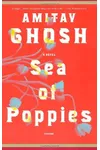
If you want to experience Ghosh’s most famous historical saga, start with Sea of Poppies. This book kicks off the Ibis Trilogy, a sprawling epic set in the lead-up to the First Opium War. Reading this trilogy in order is essential because the characters, themes, and narrative arc progress directly across the three novels.
Option 2: The Accessible Standalone Route
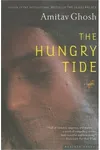
If you prefer a self-contained story before committing to a trilogy, start with The Hungry Tide (2004) or The Glass Palace (2000). The Hungry Tide is an atmospheric novel set in the Sundarbans that beautifully showcases his signature blend of environmental science, local folklore, and human drama. The Glass Palace is a multi-generational saga tracing a family across Burma, India, and Malaya, dealing with imperialism and cultural displacement.
The Ibis Trilogy in Publication Order
The Ibis Trilogy follows a diverse cast of characters aboard the schooner Ibis as they navigate the British opium trade between India and China. You must read these books in chronological publication order:
- Sea of Poppies (2008) – Introduces the characters, the ship Ibis, and the opium trade in colonial India.
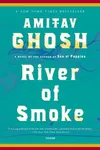
- River of Smoke (2011) – Shifts the focus to Canton (Guangzhou), China, detailing the trade conflicts and botanists searching for rare plants.
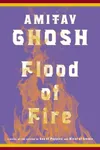
- Flood of Fire (2015) – Concludes the saga as tensions explode into the First Opium War.
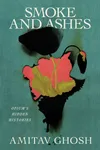
Non-Fiction Companion: To explore the real-world history behind the trilogy, read Ghosh's non-fiction book Smoke and Ashes: Opium's Hidden Histories (2024). It acts as a companion piece, detailing the extensive research on the global opium trade that inspired the novels.
The Sundarbans / Climate Cycle
While often categorized as standalones, three of Ghosh's works are tightly linked by their setting in the tide country of the Sundarbans and their focus on climate change and local folklore. They can be read independently, but reading them in order provides a richer experience:
- The Hungry Tide (2004) – Introduces the ecology of the Sundarbans, the research of cetologist Piya, and local guide Tipu (as a child).
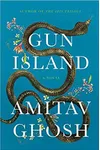
- Gun Island (2019) – A thematic sequel to The Hungry Tide. It brings back several characters, including Piya, Tipu (now a young man), and Kanai, linking the Sundarbans legend of the snake goddess Manasa Devi to modern global climate migration.
- Jungle Nama: A Story of the Sunderban (2021) – A graphic verse novel that adapts the legend of Bon Bibi, the forest goddess. This legend is a central narrative element in The Hungry Tide, making this a perfect companion piece.
Standalone Novels
Ghosh's other fiction works can be read in any order. They showcase his range, spanning from psychological detective fiction to historical reflections:
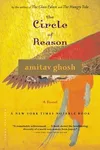
- The Circle of Reason (1986) – Ghosh's debut novel, blending magic realism and adventure as a young weaver flees India.
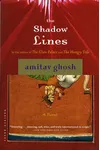
- The Shadow Lines (1988) – A critically acclaimed novel exploring memory, the violence of Partition, and the borders that divide people.
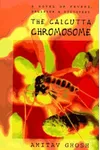
- The Calcutta Chromosome (1996) – A medical science fiction thriller centering on the discovery of the malaria parasite's transmission. It won the Arthur C. Clarke Award.
Non-Fiction and Lecture Collections
Ghosh is also a prolific essayist and climate advocate. His non-fiction works generally do not have a narrative order, with one major caveat regarding lecture series:
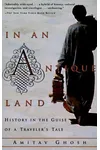
- In an Antique Land (1993) – A unique genre-bending book combining anthropology, travelogue, and history.
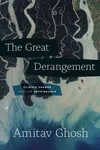
- The Great Derangement: Climate Change and the Unthinkable (2016) – A landmark book examining why modern literature fails to address the scale of the climate crisis.
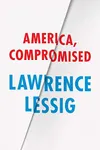
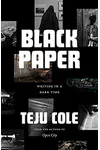
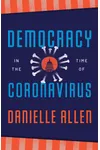
The Berlin Family Lectures Caveat: Local library catalogs sometimes list a series called the Berlin Family Lectures. Ghosh's The Great Derangement was born from his 2015 lectures in this series. However, other books associated with the series—such as America, Compromised, Black Paper, and Democracy in the Time of Coronavirus—are written by different authors (Lawrence Lessig, Teju Cole, and Danielle Allen, respectively) and are not part of Ghosh's bibliography.
What to Know Before You Start
Ghosh writes with a deep respect for language, often utilizing authentic 19th-century nautical jargon, Pidgin English, and regional dialects (especially in the Ibis Trilogy). Do not let the unfamiliar vocabulary deter you; he builds the context naturally, and many editions include a glossary (or 'Chrestomathy') to help you navigate the sea terminology.