

Where to Start with Amy Jo Burns
Because Amy Jo Burns writes standalone books, there is no strict chronological timeline or narrative continuity to worry about. Readers can pick up any of her books in whatever order they choose. However, the ideal starting point depends on whether you prefer immersive fiction or raw, lyrical non-fiction:
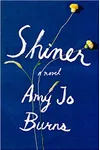
- For Fiction Lovers (Recommended): Start with Mercury (2024). This multi-generational family saga is her most commercially successful and widely acclaimed novel. It serves as a perfect introduction to her signature themes of small-town secrets, complex family dynamics, and the quiet resilience of working-class women. Alternatively, if you prefer isolated, atmospheric Southern gothic settings with a touch of mystery, Shiner (2020) is an excellent entry point.
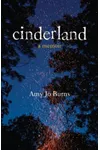
- For Memoir and Non-Fiction Readers: Start with her debut, Cinderland (2014). Reading her memoir first provides profound context for her fiction, revealing the real-life Rust Belt upbringing and personal history that inspire the themes of community silence, memory, and survival in her novels.
Amy Jo Burns Books in Publication Order
Following Amy Jo Burns's books in the order they were published is a satisfying way to witness her development as a writer. Below is the complete bibliography of her major works:
- Cinderland: A Memoir (2014) – A non-fiction account of growing up in a Western Pennsylvania town dealing with the aftermath of a town-wide abuse scandal.
- Shiner (2020) – Her debut novel, set in the remote, snake-handling country of the West Virginia mountains, following a teenage girl uncovering family secrets.
- Mercury (2024) – A novel following a young woman who marries into a family of roofing brothers in a small Pennsylvania river town.
- Wait for Me (2026) – A dual-timeline novel exploring the disappearance of a 1970s folk singer and an 18-year-old girl in the 1990s who uncovers the truth.
Understanding the "Mercury" Connection and Settings
Readers of Amy Jo Burns will notice that Western Pennsylvania and the fictional town of Mercury play a central role in her body of work. Here is what you need to know about the setting and its real-world inspiration before you read:
The Pseudonym of Meadville
In her memoir, Cinderland, Burns refers to her actual childhood hometown of Meadville, Pennsylvania, under the pseudonym "Mercury" to protect the privacy of local residents and family members. Ten years later, she reused the name Mercury, Pennsylvania, as the official setting for her 2024 novel, Mercury. Though the town in the novel is a fictionalized composite of several industrial, blue-collar Rust Belt towns along the river, it directly reflects the cultural and economic landscape of her own upbringing.
Appalachian vs. Rust Belt Landscapes
While Cinderland and Mercury are grounded in the fading industrial heart of the Rust Belt, Shiner shifts south to the rugged wilderness of West Virginia. Despite the geographic difference, both settings are characterized by isolation, deeply rooted traditions, and characters who are fiercely loyal to their land but burdened by its secrets.
A Closer Look at the Books
Cinderland (2014)
Written when she was in her late twenties, Cinderland is a coming-of-age memoir that details a sexual abuse scandal involving a local piano teacher in Meadville. Rather than focusing solely on the crimes, Burns explores how the town's culture of silence and collective denial shaped her childhood and forced her to navigate trauma in isolation. It is a lyrical, devastating study of how communities protect their status quo at the expense of the vulnerable.
Shiner (2020)
Set in a cabin on a mountain in West Virginia, Shiner follows fifteen-year-old Wren Bird. Wren has grown up under the shadow of her father, a legendary snake-handling preacher who claims to perform miracles, and her mother, a woman with a mysterious past. When a local tragedy occurs, the legends surrounding her father begin to unravel, forcing Wren to confront the truth about her family's history. The book is widely praised for its rich, atmospheric prose and its portrayal of female agency in a deeply patriarchal subculture.
Mercury (2024)
Set in 1990, Mercury centers on Marley West, a young woman who arrives in the small town of Mercury and quickly becomes intertwined with the Joseph family—a father and three brothers who run a local roofing business. Marley marries one of the brothers, only to find herself stepping into a house dominated by men and old rivalries. When a decades-old discovery is made under the floorboards of a church, the family's survival is put to the test. The novel is a beautifully crafted story of belonging, labor, and the unsung work of women who hold families together.
Wait for Me (2026)
In Wait for Me, Burns crafts a dual-timeline mystery that merges historical fiction with a deep exploration of motherhood and identity. The 1973 timeline follows Elle Harlow, a rising folk star who vanishes after a legendary performance. The 1990s timeline follows Marijohn Shaw, a teenager working at a gas station that doubles as a museum dedicated to the missing singer. When a nearby meteor strike unearths a relic from Elle's past, Marijohn is drawn into a search for the truth that forever links their lives.