
How to Start Reading Ana Johns
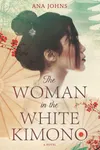
If you are looking to dive into the writing of Ana Johns, the starting point is clear. As of now, her historical fiction bibliography under this pen name consists of a single, highly acclaimed standalone novel: The Woman in the White Kimono, published in 2019. It has become an international bestseller, translated into over twenty-six languages, and was selected as a BBC Radio 2 Book Club pick.
While Johns has previously written under a different, unpublicized pseudonym in the romantic comedy genre, her work as Ana Johns represents a distinct shift toward deeply researched, emotionally resonant historical drama. Because she has only one novel under this name, there are no complicated multi-book series, prequels, or spin-offs to navigate. You can simply pick up her debut and immerse yourself in the story.
Navigating the Dual Timelines
Though The Woman in the White Kimono is a single volume, it features a complex dual-timeline narrative. Understanding how these timelines work will help you get the most out of your reading experience:
- 1957 Japan (The Past): This storyline follows seventeen-year-old Naoko Nakamura. She is caught between her family's traditional expectations, including an arranged marriage to her father's business associate, and her love for a U.S. Navy sailor. When she becomes pregnant, she faces societal exile and must make heart-wrenching choices to protect her child.
- Present-Day America (The Present): This storyline follows Tori Kovac. While caring for her dying father, Tori discovers a letter containing a shocking revelation: her father had another family in Japan. Seeking the truth and a way to honor her father's memory, Tori travels to Japan to piece together a history that has been hidden for decades.
Chronological Order vs. As-Written Flow
Because the book relies on these alternating perspectives, some readers wonder if they should read the chapters chronologically—focusing first on Naoko's 1957 journey and then shifting to Tori's modern-day search. However, the author carefully structured the chapters to mirror each other, allowing clues in Tori's timeline to illuminate the emotional weights of Naoko's choices in the past. To preserve the mystery and the thematic resonance of the "red thread of fate," we highly recommend reading the book exactly as published, alternating between the two timelines chapter by chapter.
What to Know Before You Start
Before reading, it is helpful to understand the cultural and historical contexts that shape the novel. The book is not just a romance; it is an exploration of a dark and often overlooked period of post-war history.
The U.S. Occupation of Japan: Following World War II, the American military occupied Japan. During this time, relationships between American servicemen and Japanese women were highly discouraged by both sides. Women who fell in love with American sailors were often ostracized by their families and communities, viewed as traitors to their culture.
The Plight of Mixed-Race Children: Over 10,000 mixed-race children, sometimes referred to as konketsuji, were born during the occupation. These children and their mothers faced severe systemic discrimination, societal rejection, and poverty. Many of these children were placed in specialized orphanages, and their stories form the emotional core of the novel.
Personal Inspiration: The novel is deeply personal for Ana Johns. Her father served in the U.S. Navy in 1950s Japan and fell in love with a Japanese woman. Though his story ended differently, the stories he told Johns during her childhood planted the seeds for the characters of Naoko and Tori, bridging her family's history with meticulous historical research.
Audiobook Recommendations
For readers who enjoy audiobooks, the narration format of The Woman in the White Kimono is highly recommended. The producers utilized a dual-narrator approach to highlight the separate timelines:
The standard audiobook is co-narrated by Emily Woo Zeller, who voices Naoko's chapters, and Lauren Ezzo, who voices Tori's chapters. Zeller's narration brings out the cultural nuances and quiet resilience of 1950s Japan, while Ezzo captures Tori's modern American voice and emotional vulnerability. Hearing the distinct voices makes navigating the alternating timelines seamless and adds an extra layer of depth to the narration.
What to Read Next: Read-Alikes
Since Ana Johns has only published one novel under this name, readers who finish it often look for similar historical fiction to fill the void. Here are our top recommendations for what to read next:
- Pachinko by Min Jin Lee: A sweeping multigenerational saga that details the struggles of a Korean family living in Japan. It shares the same themes of cultural displacement, familial duty, and overcoming societal discrimination.
- Sayonara by James A. Michener: Set during the Korean War, this classic novel explores the forbidden love between an American pilot and a Japanese theater performer, dealing directly with the military and societal pressures against interracial relationships.
- The Stationery Shop of Tehran by Marjan Kamali: A heartbreaking, dual-timeline love story set against the backdrop of political upheaval in 1953 Iran and modern-day America, perfect for readers who loved the emotional depth of star-crossed lovers.
- The Island of Sea Women by Lisa See: A novel focused on the lives of female divers (Haenyeo) on Jeju Island, dealing with themes of cultural traditions, family secrets, and the historical traumas of war.