
Recommended Reading Path
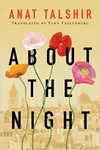
For readers diving into Anat Talshir's literary work, the path is straightforward yet rich with historical layers. Talshir is primarily celebrated for a single, expansive historical novel that has been published under different titles depending on the language. To experience her storytelling, you should read her flagship novel:
- About the Night (2016 English translation by Evan Fallenberg / Originally published in Hebrew as אם אשכחך in 2010)
Understanding the Translation and Title Differences
When searching for Anat Talshir's work, it is helpful to understand the publishing history across different markets, as the title changes significantly:
- Hebrew Edition (2010): Published by Kinneret Zmora-Bitan Dvir under the title אם אשכחך (which translates literally to "If I Forget Thee").
- English Edition (2016): Translated by award-winning translator Evan Fallenberg and published by AmazonCrossing under the title About the Night.
- German Edition: Published under the title Über uns die Nacht ("Above Us the Night").
The English version translated by Evan Fallenberg is highly praised for capturing the lyrical, atmospheric prose of the original Hebrew text. Fallenberg, an established author himself, ensures that the poetic descriptions of Jerusalem and the complex emotional states of the characters translate beautifully for English-speaking audiences.
Chronological Timeline and Narrative Structure
While About the Night is a standalone novel, it does not follow a strict linear timeline. Readers should prepare for a narrative that shifts across fifty-nine years of history. Understanding this structure beforehand can help you navigate the chronological jumps:
The 1947 Sequence: The Meeting
The core of the story begins in 1947 during the final months of the British Mandate in Palestine. Elias Riani, a twenty-nine-year-old Christian Arab tea importer from Jerusalem's Sheikh Jarrah neighborhood, meets Lila, a twenty-seven-year-old Turkish-born Jewish woman. Their passionate and forbidden romance unfolds just as the city prepares for partition and the outbreak of the 1948 War of Independence.
The Separation Years (1948–1967)
Following the war, Jerusalem is divided, physically separating Elias and Lila. The novel explores the long decades of longing and silence during this separation, showing how the geopolitical borders affected the internal lives of the individuals on both sides of the divide.
The 1967 Sequence: The Search
Following the Six-Day War and the reunification of Jerusalem, Elias begins a search to find Lila. The narrative details how their lives have shifted during the decades apart and introduces Nomi, a woman from Tel Aviv who plays a crucial role as an intercessor between them.
The 2006 Frame: Reflection
The overarching frame of the book is told from the perspective of an older Elias in 2006, looking back on his life, the choices made, and the enduring nature of his love for Lila. This frame anchors the non-linear shifts, making the novel a reflective, retrospective journey.
What to Know Before You Start
Before reading, it is helpful to keep a few historical and thematic elements in mind to fully appreciate the depth of Talshir's writing:
- Historical Context: The book assumes some familiarity with the division and subsequent reunification of Jerusalem. The physical geography of the city—its neighborhoods, walls, and borders—functions almost as a character itself.
- Journalistic Roots: Talshir's background as an investigative journalist shines through in the meticulous historical detail. She spent over three decades reporting on Israeli current affairs and won the Sokolov Prize in 2002. This professional dedication to research ensures that the settings, historical events, and social tensions are grounded in reality.
- Lyrical Tone: Despite the heavy political backdrop, the novel is fundamentally a character-driven romance. It focuses more on the emotional landscapes and sensory details of Jerusalem—such as the scents of tea and spices—than on military tactics or political debates.