

Where to Start: The Recommended Reading Path
André Aciman's writing is celebrated for its introspective, sensory prose that explores the complex geometry of human desire, exile, and nostalgia. If you are diving into his bibliography for the first time, your path will depend on whether you prefer deeply emotional fiction or vivid, evocative memoirs.
For Fiction Lovers: The Call Me by Your Name Duology
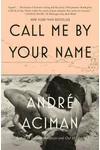
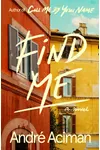
Start with Call Me by Your Name (2007). This is Aciman's most famous work, capturing the intense summer romance between seventeen-year-old Elio and a twenty-four-year-old graduate student named Oliver in 1980s Italy. Once you have finished, proceed to the follow-up, Find Me (2019), which revisits the characters decades later. Reading these two in publication order is essential, as the emotional weight of the second book relies entirely on the foundation built in the first.
For Non-Fiction Lovers: His Classic Memoir
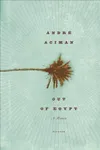
If you prefer memoirs, begin with Out of Egypt (1995). This landmark work recounts Aciman's childhood in Alexandria, detailing his Sephardic Jewish family's multicultural life and their eventual exile. It serves as an excellent introduction to the themes of displacement, language, and memory that permeate all of his subsequent fiction.
The Call Me by Your Name Universe: Timeline and Structure
While Find Me is marketed as a sequel to Call Me by Your Name, readers should adjust their expectations. The two books operate on a highly fluid, emotional sense of time rather than a rigid chronological structure.
Call Me by Your Name (2007)
The original novel is framed as a retrospective first-person narrative. An older Elio looks back on a single, transformative summer in the early 1980s. The final chapter of the book fast-forwards through subsequent meetings between Elio and Oliver over the next twenty years, establishing a bittersweet arc of enduring love.
Find Me (2019)
Rather than picking up immediately where the first novel left off, Find Me is structured like a musical composition, divided into four distinct movements:
- Tempo: Focuses on Elio's father, Samuel Perlman, during a train ride to Rome, where he meets a much younger woman. This segment takes place roughly ten years after the summer of CMBYN.
- Cadenza: Focuses on Elio, now a classical pianist living in Paris, who enters a relationship with an older man named Michel.
- Capriccio: Centers on Oliver, now a music professor in New England, who contemplates his life choices and his unresolved feelings for Elio at a farewell party.
- Da capo: A brief final section that brings Elio and Oliver back together in Italy, resolving their decades-long separation.
Timeline Inconsistencies
Aciman does not prioritize strict canonical consistency. Readers will notice minor timeline discrepancies between the two books, particularly regarding the ages of characters, the post-divorce timeline of Elio's father, and how the characters' post-summer reunions align. It is best to approach Find Me as a companion meditation on memory and time rather than a direct, plot-driven sequel.
Publication Order of André Aciman's Books
The Call Me by Your Name Books
- Call Me by Your Name (2007)
- Find Me (2019)
Standalone Novels and Novella Collections
Aciman's standalone fiction shares the same lyrical prose and thematic preoccupation with romance, longing, and identity. Enigma Variations is structured as a series of connected stories focusing on the romantic history of a single protagonist, while his later novellas have been compiled into a single volume.
- Eight White Nights (2010) – A dense, introspective novel detailing a whirlwind New York romance over the course of eight nights.
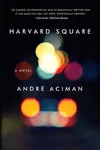
- Harvard Square (2013) – Set in the 1970s, this novel explores the intense friendship between a Jewish graduate student from Egypt and a charismatic Tunisian waiter.
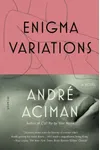
- Enigma Variations (2017) – A novel in five parts tracking the evolving desires of a man named Paul across different periods of his life.
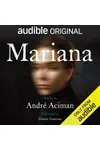
- Room on the Sea (2022) – A collection that compiles Aciman's shorter fiction and novellas, including Mariana (2021) and The Gentleman from Peru (2024), which were originally published as standalone novellas or audiobooks.
Memoirs and Essay Collections
Aciman is a highly accomplished essayist, often writing about Marcel Proust, exile, and what he calls the "irrealis mood"—the space of what could have been.
- Out of Egypt (1995) – Aciman's celebrated debut memoir about his upbringing in Alexandria.
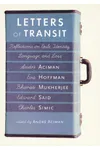
- Letters of Transit (1999) – A collection of essays on exile and memory featuring contributions from Aciman and other writers.
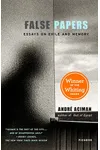
- False Papers: Essays on Exile and Memory (2000) – Intimate reflections on the cities he has inhabited and left behind.
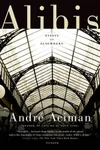
- Alibis: Essays on Elsewhere (2011) – A travelogue of memory spanning Rome, Paris, Alexandria, and New York.
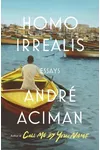
- Homo Irrealis: Essays (2021) – Philosophical explorations of time, art, literature, and imagination.
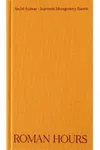
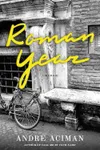
- Roman Year: A Memoir (2024) – A detailed memoir focusing specifically on his family's transition to Rome after their expulsion from Egypt.
What to Know Before You Start
Aciman’s prose style is heavily influenced by Marcel Proust, featuring long, rhythmic sentences and deep dives into internal monologues. Plot is secondary to mood and psychological exploration. If you expect fast-paced action, his books may feel slow. However, for readers who appreciate beautiful prose and complex emotional landscapes, Aciman offers a deeply rewarding experience. His works frequently highlight the "irrealis mood"—a grammatical state of possibility and regret that defines how his characters look back on their lives.