
Where to Start Reading Andrew David MacDonald
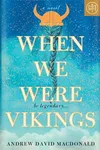
For readers looking to dive into Andrew David MacDonald's writing, the starting point is clear-cut: his breakout debut novel, When We Were Vikings (2020). As MacDonald has only published one full-length novel, it serves as his definitive flagship work. The book has captured a dedicated audience for its unique voice, emotional depth, and its unforgettable protagonist, Zelda.
While MacDonald has also written acclaimed short fiction, these pieces are scattered across literary anthologies rather than collected in a single author-specific volume. Therefore, starting with his novel is the best and most accessible way to experience his trademark blend of humor, grit, and empathy.
Deep Dive: When We Were Vikings (2020)
Published in early 2020, When We Were Vikings introduces readers to Zelda, a twenty-one-year-old woman born with fetal alcohol syndrome (FAS) who lives in Lake Oswego, Oregon. Zelda is obsessed with Viking history, culture, and mythology. She views the world through the heroic codes of the Vikings, striving to be "legendary" and live by a strict set of rules to keep her and her older brother, Gert, safe.
Gert, who has sacrificed his own college plans and financial security to act as Zelda's primary caregiver, finds himself drawn into dangerous illicit activities to make ends meet. When Zelda discovers the truth about how Gert is financing their lives, she decides she must launch her own quest to rescue her family. Along the way, she navigates the challenges of first love, the threat of local criminals, and the realities of her own developmental disability. The novel stands out for its refusal to treat Zelda with pity, choosing instead to showcase her fierce agency and warrior spirit.
The Story Behind the Book: From Gert to Zelda
Intriguingly, the novel did not begin with Zelda's voice. MacDonald originally wrote a short story from the perspective of Gert, exploring the weight of family responsibility and the sacrifices of caregiving. However, as the narrative evolved, MacDonald realized that the core of the story belonged to the sister. By shifting the point of view to Zelda, he unlocked the voice that would define the novel: a highly structured, literal, and deeply poetic perspective that challenges readers' expectations of neurodiverse characters.
Before publishing his novel, MacDonald developed his voice through years of short stories. His shorter works won a Western Magazine Award for Fiction, were shortlisted for the Canadian National Magazine Award, and were anthologized in four separate volumes of the prestigious annual collection, The Journey Prize Stories. His short fiction often deals with themes of family bonds, neurodiversity, and characters striving for autonomy under difficult circumstances.
Format Recommendations: Page vs. Audio
How you read When We Were Vikings can change your experience of the story. While the physical book and eBook let readers absorb Zelda's unique grammatical style and structured formatting on the page, the audiobook is highly recommended by fans. narrated by Phoebe Strole, the English-language audiobook brings Zelda's voice to life with a performance that captures both her vulnerability and her stubborn determination. For German-speaking readers, the translation is titled Jeder Tag ist eine Schlacht, mein Herz, and its audiobook edition is narrated by Luise Helm.
What to Know Before You Start
While When We Were Vikings is frequently described as heartwarming, readers should be prepared for its darker, grittier elements. The book does not shy away from the harsh realities of poverty, the threat of physical and sexual violence, and the exploitation of vulnerable individuals. MacDonald draws on his own personal background, including caring for a family member with mental illness, to bring an authentic, unsentimental honesty to the family dynamic. It is a story about resilience in the face of real-world trauma, framed through the empowering lens of Viking mythology.