



The Recommended Reading Order for Andrew Krivak
For readers diving into Andrew Krivak’s library, the primary focus is the Dardan Trilogy, a sweeping multigenerational family saga set in the fictional town of Dardan, Pennsylvania. While the author crafted these novels to stand on their own, the deep history of the Vinich family and their connections to war, memory, and the land are best experienced in a specific sequence.
We highly recommend starting with the Dardan Trilogy in publication order, followed by his standalone post-apocalyptic fable, and then exploring his earlier non-fiction and poetry collections. Here is the suggested reading path:
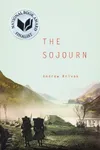
- The Sojourn (2011) – Book 1 of the Dardan Trilogy
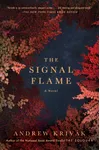
- The Signal Flame (2017) – Book 2 of the Dardan Trilogy
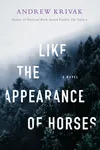
- Like the Appearance of Horses (2023) – Book 3 of the Dardan Trilogy
- The Bear (2020) – Standalone Novel
- A Long Retreat: In Search of a Religious Life (2008) – Memoir
- Islands (1999) – Poetry Chapbook
- Ghosts of the Monadnock Wolves (2021) – Poetry Chapbook
The Dardan Trilogy: A Multigenerational Saga
Krivak’s signature work is a trio of interconnected novels centered around the Vinich family and their home in Dardan, Pennsylvania. The trilogy explores the haunting, legacy-defining impacts of major 20th-century conflicts on a single family lineage.
1. The Sojourn (2011)
Set during World War I, this debut novel serves as the foundation of the trilogy. It follows Jozef Vinich, a young man raised in the rugged mountains of Colorado who returns to his father’s homeland in Eastern Europe. Drafted into the Austro-Hungarian army as a sharpshooter, Jozef must navigate the brutal and unforgiving landscape of the Italian front. The novel introduces themes of survival, familial duty, and the psychological scars of combat that echo through the rest of the series.
2. The Signal Flame (2017)
Skipping ahead to 1972, this installment shifts the focus to the Vietnam War era. Jozef Vinich is now the aging patriarch of the family in Dardan, Pennsylvania. The narrative centers on Jozef's widowed daughter, Hannah, and her son, Bo, as they wait for news of Bo's brother, Sam, who is missing in action in the jungles of Vietnam. It is a quiet, emotionally heavy exploration of grief, waiting, and generational continuity in a close-knit mountain town.
3. Like the Appearance of Horses (2023)
The culminating novel of the trilogy functions as both a continuation and a structural bridge for the family history. It follows Bexhet "Becks" Konar—who first appeared as a young man in the previous books—and traces his path back to 1933, his military service in World War II, and the subsequent choices of his own son during the Vietnam War. This volume binds the thematic threads of the trilogy together, focusing on how the instinct for survival and the love of family persist through generations of recurring conflict.
Publication Order vs. Chronological Order
Because the Dardan Trilogy spans nearly a century of family history, some readers wonder if a chronological reading order is superior to publication order. However, attempting a strict chronological read is highly complicated and not recommended for first-time readers.
While The Sojourn covers World War I and The Signal Flame jumps to 1972, the final book, Like the Appearance of Horses, is non-linear. It actively bounces between the 1930s, World War II, the Vietnam War, and later periods to fill in the narrative gaps left between the first two novels. Reading the books in their publication order allows Krivak's deliberate revelation of family secrets and character relationships to unfold naturally, providing the most satisfying emotional payoff.
Standalone Fiction: The Bear
For readers who prefer fables and nature-centric narratives over historical war fiction, Krivak's 2020 novel The Bear is an excellent entry point. Set in a distant, Edenic future where human civilization has collapsed and nature has fully reclaimed the planet, the book follows a father and his young daughter—the last two humans on Earth.
When the daughter is separated from her father, she must embark on a long journey home, guided by a talking bear who teaches her how to survive and live in harmony with the wild. Written in sparse, poetic prose, this short and meditative novel reads like a mythic bedtime story. It is entirely separate from the Dardan Trilogy and can be read at any point in your reading journey.
What to Know Before You Start
Before diving into Andrew Krivak’s works, it helps to understand his distinct literary style and background. Krivak spent eight years training to become a Jesuit priest before deciding to pursue poetry and fiction. This training deeply informs his writing, which is quiet, philosophical, and deeply reverent of both human faith and the natural world.
His prose is frequently compared to the works of Cormac McCarthy and Ernest Hemingway for its stark, clean style, and to Wendell Berry for its rich appreciation of rural landscapes. Whether writing about trenches in World War I or the quiet recovery of nature in a post-human world, Krivak focuses on the emotional resilience of his characters rather than fast-paced action.
Non-Fiction and Poetry
For those looking to explore Krivak's complete bibliography, his earlier non-fiction and poetry collections offer valuable context into his thematic interests:
- A Long Retreat: In Search of a Religious Life (2008) – A memoir recounting his eight years in the Jesuit order, exploring his search for faith, identity, and his ultimate realization that his calling lay outside the priesthood.
- Islands (1999) – His debut poetry chapbook, showcasing his early experiments with lyrical precision and place-based imagery.
- Ghosts of the Monadnock Wolves (2021) – A poetry chapbook published shortly after The Bear, which shares similar themes of nature, family, and the passage of time in the mountains of New England.