


Where to Start with Andrew Williams
If you are new to Andrew Williams, you are in for a treat. As a former BBC documentary maker and journalist, Williams brings a rare level of historical precision and realism to his espionage thrillers. Because all of his novels are standalones featuring different protagonists and taking place in different eras, you have complete freedom in how you approach them. However, we recommend starting with one of two entry points depending on your historical interests.
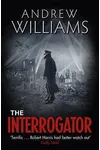
Option A: The Interrogator (2009). This is Williams's debut novel, and it remains one of his most popular and acclaimed works. Set during the height of the Battle of the Atlantic in World War II, it is a masterclass in claustrophobic tension and psychological warfare. It was shortlisted for both the CWA Ian Fleming Steel Dagger and the Ellis Peters Historical Award, making it the perfect introduction to his style.
Option B: To Kill a Tsar (2010). If you prefer 19th-century political intrigue, start here. Set in the snowy, volatile streets of St. Petersburg during the reign of Tsar Alexander II, this novel explores the rise of the revolutionary group Narodnaya Volya (The People's Will). It was shortlisted for the prestigious Walter Scott Prize for Historical Fiction and showcases Williams's ability to humanize opposing sides in a conflict.
Andrew Williams Books in Chronological Order
Although the books were not published in this order, reading them chronologically by their historical setting provides a fascinating journey through nearly a century of espionage and political intrigue. It allows you to trace the evolution of the British intelligence services from their pre-World War I origins through the Cold War. Here is how the books fall on the historical timeline:
- To Kill a Tsar (Set in 1879–1881) – Explores the revolutionary underground of St. Petersburg and the plots to assassinate Tsar Alexander II through the eyes of an Anglo-Russian doctor, Frederick Hadfield.
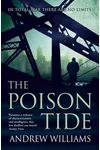
- The Poison Tide (Set in 1915) – Takes place during the early years of the First World War, following Sebastian Wolff of the infant Secret Service Bureau as he hunts for a traitor and investigates a terrifying biological weapon.
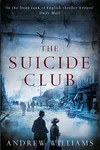
- The Suicide Club (Set in 1917) – Set during the grueling trench warfare of WWI, focusing on Sandy Innes as he investigates internal intelligence corruption at Field Marshal Haig's GHQ in France.
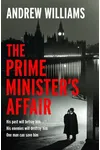
- The Prime Minister's Affair (Set in 1929) – Captures the political vulnerability of Ramsay MacDonald's first Labour government, where a veteran named Frenchie Stewart is hired to suppress a blackmail plot in Paris.
- The Interrogator (Set in 1941) – Deals with the Battle of the Atlantic in World War II, focusing on Douglas Lindsay, a naval interrogator trying to determine if the Germans have broken British naval codes.
- Witchfinder (Set in 1963) – A classic Cold War mole-hunt set in the paranoid aftermath of the Kim Philby defection, following Harry Vaughan as he is drawn into internal investigations within MI5 and MI6.
Andrew Williams Books in Publication Order
If you prefer to see how Williams developed as a novelist, reading in order of publication is a highly satisfying approach. This sequence highlights his progression from WWII naval thrillers to broader European historical dramas:
- The Interrogator (2009)
- To Kill a Tsar (2010)
- The Poison Tide (2012)
- The Suicide Club (2014)
- Witchfinder (2017)
- The Prime Minister's Affair (2022)
A Closer Look at the Novels
The Interrogator (2009)
Set in 1941, the novel focuses on Lieutenant Douglas Lindsay, a naval intelligence officer tasked with interrogating captured German U-boat crewmen. Lindsay becomes convinced that the Germans have cracked the British naval codes, allowing them to hunt down Allied convoys with devastating precision. His obsession puts him at odds with his superiors, creating a double-threaded mystery that is both a military procedural and a psychological thriller.
To Kill a Tsar (2010)
In this book, Williams transports readers to late-Victorian Russia. The protagonist is Dr. Frederick Hadfield, a British doctor living in St. Petersburg who cares for the imperial elite. When he falls in love with Anna Petrovna, a passionate idealist, he is dragged into the dangerous world of anti-tsarist revolutionaries and the ruthless Okhrana (the secret police). The novel is highly praised for its rich atmosphere and moral complexity, refusing to paint either the revolutionaries or the autocrats in simple black-and-white terms.
The Poison Tide (2012)
This thriller takes place during the first year of World War I. Sebastian Wolff, a lieutenant in the newly formed Secret Service Bureau, is sent on a high-stakes mission across Europe and the Atlantic. He must track down a prominent British citizen suspected of treason and stop a German-American doctor who is developing a lethal biological weapon. It is a fast-paced, globetrotting adventure that captures the panic and paranoia of the early war years.
The Suicide Club (2014)
Set in 1917, this novel focuses on the bitter political struggles between Prime Minister Lloyd George and Field Marshal Douglas Haig. Sandy Innes, a battle-weary soldier and spy, is sent to Haig’s GHQ in France to investigate suspected intelligence manipulation. To do so, he must join a dangerous reconnaissance unit known as "The Suicide Club." The book exposes the devastating human cost of military politics and the early rivalries within British intelligence.
Witchfinder (2017)
Moving forward to the Cold War, this novel is set in 1963 during the fallout of Kim Philby's defection to the Soviet Union. Harry Vaughan, a British agent based in Vienna, is recalled to London to help investigate potential Soviet moles high up in the intelligence services. Working alongside historical figures like Peter Wright, Vaughan quickly discovers that the hunt for traitors can easily spiral into a destructive witch-hunt driven by paranoia and careerism.
The Prime Minister's Affair (2022)
Set in the interwar period, this political thriller focuses on the first British Labour government under Ramsay MacDonald in 1929. When the Prime Minister is blackmailed by a former lover with politically sensitive letters, MI5 hires Dick "Frenchie" Stewart, a damaged WWI veteran, to recover the documents. What starts as a straightforward recovery operation in Paris quickly unravels into a conspiracy involving political rivals, press barons, and foreign agents determined to bring down the government.
Practical Reader Advice and Tone
One of the best aspects of Andrew Williams's bibliography is that there are no complex continuity issues to worry about. You do not need to read the books in a specific order to understand the plots, as each book features a self-contained story with its own resolution. However, the recurring theme across all his novels is the moral compromise inherent in intelligence work. Whether it is the trenches of WWI or the smoky offices of Cold War London, his characters are forced to make difficult ethical decisions where there are rarely clean answers. If you enjoy the intellectual depth of John le Carré mixed with the historical detail of Robert Harris, Andrew Williams is an author you should add to your reading list immediately.
Nonfiction Companion Works
Before turning to fiction, Andrew Williams wrote and directed award-winning historical documentaries for the BBC. If you want to explore the real-world history that inspired his novels, he has written two acclaimed companion history books: The Battle of the Atlantic (2002), which serves as excellent background reading for The Interrogator, and D-Day to Berlin (2004), which details the final Allied push in Europe during World War II.