

























Where to Start with Ann Rinaldi
With more than 40 novels spanning decades of American history, diving into Ann Rinaldi's bibliography can feel overwhelming. Fortunately, because the vast majority of her books are self-contained standalone novels, you have a lot of flexibility. If you are new to her work, we recommend starting with one of her three most celebrated standalone novels:
- Time Enough for Drums (1986): A perfect introduction to her style, set during the Revolutionary War in Trenton, New Jersey, focusing on family loyalty and political rebellion.
- Wolf by the Ears (1991): A critically acclaimed, thought-provoking story about Harriet Hemings, a young woman born into slavery who is widely believed to be the daughter of Thomas Jefferson.
- A Break with Charity (1992): A gripping, humanized look at the Salem Witch Trials told from the perspective of an observer who knows the truth behind the mass hysteria.
The Quilt Trilogy: Multi-Generational Family Saga
While most of Rinaldi's novels can be read in any order, the Quilt Trilogy is a direct series that should be read in order of publication (which matches chronological order). The series follows the generations of the Chelmsford family, Salem shipping merchants, and is connected by a family quilt that acts as a physical archive of their history.
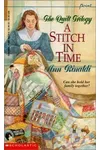
- A Stitch in Time (1994): Spanning the post-Revolutionary War period (starting in 1788), sixteen-year-old Hannah Chelmsford creates the original quilt to keep her fracturing family bound together.
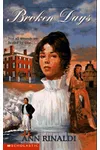
- Broken Days (1995): Continues the family drama into the next generation in early 19th-century Salem.
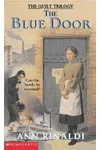
- The Blue Door (1996): Set in 1841, following Hannah's granddaughter Amanda as she travels from a Southern plantation to New England to work with the Lowell mill girls.
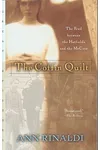
Note: Do not confuse this trilogy with Rinaldi's standalone novel The Coffin Quilt (1999), which is about the Hatfield-McCoy feud and is completely unrelated to the Chelmsford family saga.
The "Great Episodes" Publisher Line
Many of Rinaldi's best-known historical standalones were originally marketed under the Great Episodes banner by Gulliver Books/Harcourt. It is important to know that Great Episodes is a publisher-curated line of historical YA fiction featuring works by multiple authors (such as Seymour Reit, Dorothea Jensen, and Roland Smith). However, Ann Rinaldi was its most prominent contributor, writing 17 books under the label. Her Great Episodes books do not share characters or direct continuity and can be read in any order. The list of books she wrote in this series includes:
- A Ride into Morning (1991)
- A Break with Charity (1992)
- The Fifth of March (1993)
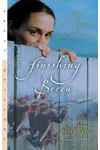
- Finishing Becca (1994)
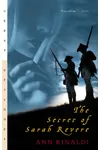
- The Secret of Sarah Revere (1995)
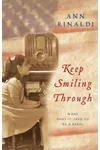
- Keep Smiling Through (1996)
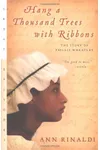
- Hang a Thousand Trees with Ribbons (1996)
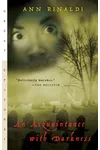
- An Acquaintance with Darkness (1997)
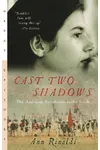
- Cast Two Shadows (1998)
- The Coffin Quilt (1999)
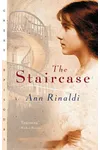
- The Staircase (2000)
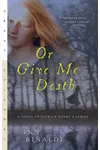
- Or Give Me Death (2003)
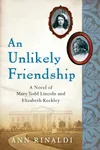
- An Unlikely Friendship (2007)
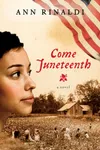
- Come Juneteenth (2007)
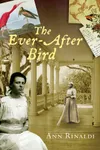
- The Ever-After Bird (2007)
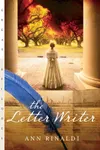
- The Letter Writer (2008)
- Leigh Ann's Civil War (2011)
Scholastic Diary Contributions
Rinaldi also contributed to Scholastic's popular fictional diary series. While these series feature dozens of entries by different writers, Rinaldi specifically authored two key books:
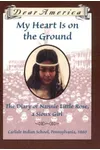
- Dear America: My Heart Is on the Ground (1999): The diary of Nannie Little Rose, a Sioux girl sent to the Carlisle Indian School in 1880.
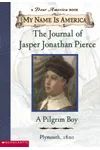
- My Name Is America: The Journal of Jasper Jonathan Pierce (2000): The diary of a Pilgrim indentured boy arriving in Plymouth in 1620.
Reading by Historical Era (Chronological Approach)
Because Rinaldi's novels cover different periods of American history, many readers enjoy reading her standalone books chronologically by the historical era they depict rather than by publication date. Here is a guide to how her key books line up historically:
Early Colonial & Salem Witch Trials
- The Journal of Jasper Jonathan Pierce (Plymouth, 1620)
- A Break with Charity (Salem, 1692)
The American Revolution
- The Fifth of March (Boston, 1770)
- Time Enough for Drums (Trenton, 1776)
- Or Give Me Death (Virginia, 1777–1781)
- A Ride into Morning (New Jersey, 1780)
- Finishing Becca (Philadelphia, 1780)
- The Secret of Sarah Revere (Boston, 1775–1781)
- Cast Two Shadows (South Carolina, 1780)
- A Stitch in Time (Salem, 1788)
Antebellum Era & Westward Expansion
- Wolf by the Ears (Virginia, 1807–1822)
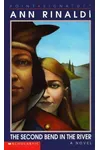
- The Second Bend in the River (Ohio, 1805–1813)
- Broken Days (Salem, early 1800s)
- The Blue Door (Salem and Lowell, 1841)
The Civil War
- The Last Silk Dress (Virginia, 1861–1865)
- In My Father's House (Virginia, 1861–1865)
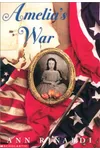
- Amelia's War (Maryland, 1861–1865)
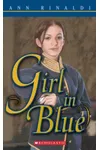
- Girl in Blue (Maryland/Virginia, 1861)
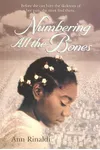
- Numbering All the Bones (Georgia, 1864)
- My Vicksburg (Mississippi, 1863)
- The Last Full Measure (Pennsylvania, 1863)