
How to Read Anna Solomon's Books: The Recommended Order
Because Anna Solomon writes standalone novels, there is no strict narrative continuity to follow. However, the order in which you experience her books can shape your appreciation of her growth as a writer and the complexity of her themes. We recommend starting with her most celebrated and structurally complex work to immediately experience her at her best, before exploring her earlier historical projects.
1. The Recommended Path for Most Readers
If you want to dive straight into the deep end of Solomon's stylistic genius, begin here:
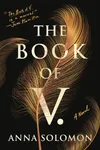
- Start with: The Book of V. (2020) — This is Solomon's breakout masterpiece. By weaving together three distinct historical eras and characters, it showcases her signature style, her command of female perspectives, and her ability to build resonance across centuries.
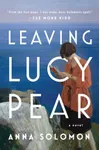
- Next read: Leaving Lucy Pear (2016) — Step back into a more localized, character-driven historical setting in 1920s New England. This novel features dual perspectives and explores maternal bonds, class divisions, and societal expectations.
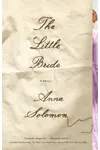
- Finally read: The Little Bride (2011) — Conclude with her debut novel. It offers a more linear, traditional historical fiction structure while introducing the themes of isolation, immigrant struggle, and hidden female agency that define her later works.
2. The Linear Option: Starting with the Debut
For readers who prefer to watch an author's voice evolve over time, reading in publication order is the ideal path:
- The Little Bride (2011)
- Leaving Lucy Pear (2016)
- The Book of V. (2020)
Detailed Guide to Anna Solomon's Novels
The Little Bride (2011)
Solomon’s debut novel transports readers to the unforgiving landscape of the late 19th-century American West. The story follows Minna Losk, a sixteen-year-old Jewish orphan from Odessa who dreams of a life of luxury and escape. She travels to America as a mail-order bride, only to find herself married to Max, an older, intensely Orthodox man living in a desolate sod hut on the South Dakota plains. Minna is forced to navigate the physical trials of frontier farming, Max's strict religious demands, and her own unexpected feelings for her teenage stepson. It is a gritty, beautiful look at survival and the compromise of female desire.
Leaving Lucy Pear (2016)
Set during the height of the Prohibition era in New England, this novel revolves around a single, life-altering choice. In 1917, Beatrice Haven, a wealthy young Jewish woman, leaves her newborn baby girl under a pear tree in a Massachusetts orchard to hide her pregnancy. The baby is discovered and raised by Emma Murphy, a working-class mother of a large, struggling Irish family. Ten years later, Beatrice returns to Cape Ann, and the paths of the two mothers collide. The novel is a lush, evocative exploration of motherhood, privilege, and the secrets that define families.
The Book of V. (2020)
Solomon’s third novel is her most ambitious, braiding together the lives of three different women across three disparate eras. In ancient Persia, Esther must leave her nomadic life to enter a beauty pageant to become the King's wife and protect her people. In 1970s Washington, D.C., Vee is a senator's wife who rebels against the humiliating compromises required by her husband's political career. In 2016 Brooklyn, Lily is a modern mother and writer trying to balance her domestic duties with her creative and intellectual desires. Inspired by the structure of Michael Cunningham’s The Hours and the biblical Book of Esther, the novel explores how women negotiate power, bodily autonomy, and legacy over millennia.
Anthologies and Editorial Projects
In addition to her long-form fiction, Solomon has contributed to and edited literary collections that highlight her interest in women's stories and contemporary literature:
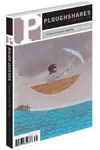
- Ploughshares Spring 2013 (Anthology): Solomon served as the guest editor for this prestigious literary journal, selecting poetry and prose that reflected her commitment to rigorous, deeply felt storytelling.
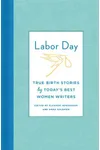
- Labor Day: True Birth Stories by Today’s Best Women Writers (2014): Co-edited with Eleanor Henderson, this non-fiction anthology features raw, honest, and diverse essays from prominent female writers discussing the realities of giving birth, shedding light on a subject often sanitized by popular culture.
What to Know Before You Start
Solomon's writing is highly literary and character-driven. Readers should expect poetic, sensory-rich prose and complex, sometimes unsympathetic female characters who struggle with the limitations of their respective eras. Her novels frequently address Jewish-American identity and history, providing a unique cultural lens to typical American historical settings (such as the South Dakota frontier and New England quarry towns). Because she often uses non-linear timelines and multiple perspectives, readers who enjoy active, puzzle-like reading experiences will find her narrative structures particularly satisfying.