
The Recommended Reading Path: Where to Start with Anne Brontë
Unlike her sisters Charlotte and Emily, whose works are steeped in gothic drama and intense passion, Anne Brontë wrote with an unflinching commitment to realism and social reform. Because she died tragically young at the age of 29, her complete bibliography is small, making it incredibly easy to navigate. However, choosing which novel to pick up first depends entirely on what kind of reading experience you are looking for.
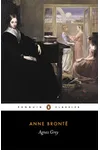
Option 1: The Chronological Entry Point – Agnes Grey (1847)
If you want to experience Anne's writing as it developed, start with her debut novel, Agnes Grey. Based heavily on her own experiences working as a governess for wealthy families, this relatively short novel provides a quiet, ironic, and highly detailed look at the vulnerability and isolation of middle-class women who had to earn their own living in Victorian England. It is a gentle yet pointed social critique that makes for a quick and rewarding read.
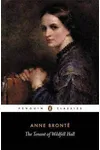
Option 2: The Groundbreaking Masterpiece – The Tenant of Wildfell Hall (1848)
If you want to jump straight to her most famous, boldest, and most controversial work, start with The Tenant of Wildfell Hall. This novel was decades ahead of its time, telling the story of Helen Graham, an artist who flees a toxic, abusive marriage to protect her young son. Structured as a frame narrative using letters and diary entries, it is widely considered one of the first feminist novels in the English language. Be prepared for a much darker, more intense story than Agnes Grey, dealing directly with alcoholism, emotional abuse, and societal double standards.
Publication Order of Standalone Novels
Anne Brontë's novel career comprises just two completed works, both published under her masculine pen name, Acton Bell. Although few in number, their publication history is filled with Victorian drama and sibling rivalry:
- Agnes Grey (1847): Published in December 1847 alongside Emily Brontë's Wuthering Heights as part of a joint three-volume set. While Charlotte's Jane Eyre had already become a sensation, Agnes Grey was initially overshadowed by the raw power of Emily's novel, though it gained appreciation for its realistic portrayal of domestic life.
- The Tenant of Wildfell Hall (1848): Published in June 1848, this novel was an instant success, selling out its first run in weeks. Anne wrote a famous preface for the second edition in August 1848, defending her decision to write about harsh realities, stating that 'when we have to do with vice and vicious characters, I maintain it is better to depict them as they really are than as they would wish to appear.'
Understanding the Bell Family Pseudonym Confusion
To avoid the gender bias of Victorian publishers and critics, Charlotte, Emily, and Anne adopted the pseudonyms Currer, Ellis, and Acton Bell, matching their respective initials. This strategy successfully protected their identities but led to massive confusion. In 1848, the publisher Thomas Cautley Newby attempted to market The Tenant of Wildfell Hall in the United States by claiming it was written by the same author as Jane Eyre (Charlotte). To clear up this deception and prove they were indeed three separate authors, Charlotte and Anne took a sudden, historic train ride to London in July 1848 to present themselves in person to Charlotte's publisher, George Smith.
The Gondal Saga and Poetry Collections
Before publishing their novels, the Brontë siblings spent their childhood and early adulthood writing complex fantasy stories set in imaginary worlds. While Charlotte and Branwell wrote about the empire of Angria, Emily and Anne created the island kingdom of **Gondal**.
Although all of their prose stories about Gondal were lost or destroyed, their poetry remained. Anne and Emily collaborated closely on Gondal poems, developing characters, histories, and dramatic monologues for their shared world. This collaborative work paved the way for their first public release:
- Poems by Currer, Ellis, and Acton Bell (1846): This joint poetry collection was the sisters' first published book, financed out of their own pockets. It contained 21 poems by Anne (Acton), 21 by Emily (Ellis), and 19 by Charlotte (Currer). Although it was a commercial failure—notoriously selling only a handful of copies in its first run—it established Acton Bell as a distinct poetic voice.
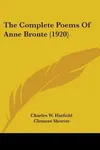
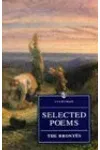
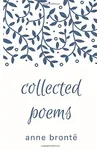
- Posthumous Collections: Because Anne's poems were scattered across manuscripts and joint editions, modern editors have consolidated her poetry. Key editions include The Complete Poems of Anne Brontë (1971), Selected Poems (1993), and the comprehensive Collected Poems (2019). These are best read after finishing her novels, allowing you to trace the thematic overlaps between her verse and her prose.
What to Know Before You Start
Reading Anne Brontë requires adjusting your expectations if you are coming from the works of her sisters. Charlotte and Emily wrote about passionate, self-destructive romances (like Rochester and Jane, or Heathcliff and Cathy) that bordered on the supernatural. Anne, on the other hand, was a realist. She viewed such dramatic passions with skepticism, warning readers about the dangers of romanticizing abusive, charming men.
Furthermore, Charlotte Brontë's influence on Anne's legacy cannot be ignored. Following Anne's death in May 1849, Charlotte prevented the republication of The Tenant of Wildfell Hall in England. Charlotte believed the subject matter was too graphic and unsuitable for a young woman to have written. This suppression lasted for several years, which is why Anne was long cast as the 'minor' sister. Modern readers, however, have reclaimed Anne as perhaps the most radical and modern thinker of the family.
Summary of the Recommended Reading Order
- Agnes Grey (1847) – For a quick, satirical, and autobiographical introduction to her realistic prose style.
- The Tenant of Wildfell Hall (1848) – For her complex, feminist masterpiece on survival, independence, and domestic realism.
- Poems by Currer, Ellis, and Acton Bell (1846) / Modern Poetry Collections – To discover her personal faith, nature poetry, and the surviving pieces of the Gondal fantasy world.