
Where to Start with Annette Gordon-Reed
Annette Gordon-Reed’s bibliography isn't a fictional series with tight continuity, but her groundbreaking research does have a distinct thematic progression. If you are looking to dive into her work, there are two primary entry points depending on what kind of reading experience you prefer.
Option A: The Narrative Entry (Recommended for General Readers)
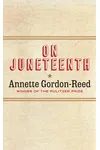
Start with On Juneteenth (2021). This short, beautiful book is part memoir and part history. It weaves Gordon-Reed's personal experiences growing up in a newly integrated Texas school system with the broader historical context of the Juneteenth holiday. Because it is highly personal and written in an accessible, essayistic style, it serves as the perfect introduction to her tone and historical philosophy before you tackle her weightier, more academic volumes.
Option B: The Groundbreaking Historical Entry (Recommended for History Buffs)
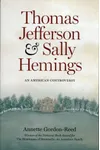
Start with Thomas Jefferson and Sally Hemings: An American Controversy (1997). This is the book that took the academic world by storm. In it, Gordon-Reed uses her training as a lawyer to analyze the historical evidence—and the biases of previous historians—surrounding the relationship between Thomas Jefferson and Sally Hemings. It is a masterclass in historiography and legal reasoning, laying the foundation for all her subsequent work.
The Core Jefferson & Hemings Sequence
The core of Gordon-Reed's academic fame rests on her multi-decade exploration of Thomas Jefferson, his estate, and the enslaved Hemings family. To get the most out of these books, we recommend reading them in order of publication, as each one builds upon the changing historical consensus that her own earlier work helped create:
- Thomas Jefferson and Sally Hemings: An American Controversy (1997) – Read this first to understand the debate. Published before the 1998 DNA tests confirmed the Jefferson-Hemings connection, this book reads like a legal brief arguing why the historical testimonies of enslaved people and their descendants should be treated with the same weight as white historical figures.
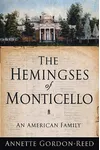
- The Hemingses of Monticello: An American Family (2008) – Read this second. This is Gordon-Reed's magnum opus, earning both the Pulitzer Prize and the National Book Award. Rather than focusing just on the controversy, this expansive narrative traces the Hemings family across generations, from their roots in Virginia to their lives in Paris and back to Monticello, restoring their agency and humanity as a pivotal American family.
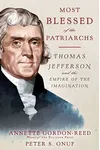
- “Most Blessed of the Patriarchs”: Thomas Jefferson and the Empire of the Imagination (2016) – Read this third. Co-authored with Jefferson scholar Peter S. Onuf, this book shifts the lens back to Jefferson himself. It attempts to understand Jefferson's internal logic, his self-image, and how he reconciled his vision of a free American empire with his role as a slaveholder.
Publication Order of Non-Fiction Books
If you prefer to read Gordon-Reed's work in the exact order she wrote them, here is the complete publication sequence of her non-fiction titles, including memoirs, legal histories, and presidential biographies:
- Thomas Jefferson and Sally Hemings: An American Controversy (1997) – The seminal historiographical and legal analysis of the Jefferson-Hemings relationship.
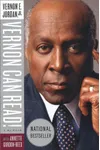
- Vernon Can Read! A Memoir (2001) – Co-authored with civil rights activist and lawyer Vernon Jordan, detailing his life growing up in the segregated South and his rise to national prominence.
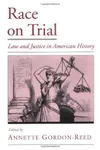
- Race on Trial: Law and Justice in American History (2002) – An academic volume edited by Gordon-Reed, featuring essays from various scholars exploring how race has shaped the American legal system.
- The Hemingses of Monticello: An American Family (2008) – The definitive biographical and historical account of the Hemings family.
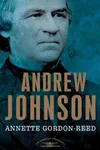
- Andrew Johnson (2008) – Part of the prestigious "American Presidents" series, this short biography offers a critical look at the seventeenth president, his disastrous Reconstruction policies, and his impeachment.
- “Most Blessed of the Patriarchs”: Thomas Jefferson and the Empire of the Imagination (2016) – A collaborative character study of Jefferson co-authored with Peter S. Onuf.
- On Juneteenth (2021) – A memoir-infused history of Texas, the origins of Juneteenth, and the long road to racial equality.
Anthologies and Contributions
Beyond her main titles, Gordon-Reed has been a vital voice in historical anthologies and law review collections. Two major collaborative volumes to look out for include:
- Jubilee: The Emergence of African-American Culture (2003) – Published by National Geographic and the Schomburg Center, this book features contributions from leading scholars, including Gordon-Reed, exploring the survival and development of Black culture from slavery to freedom.
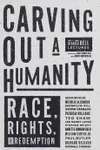
- Carving Out a Humanity: Race, Rights, and Redemption (2020) – A collection of NYU's Derrick Bell Lectures. Gordon-Reed contributed the key essay, "Critiquing the Family Tree: White Supremacy in the Writing of History", which discusses how racial biases have historically distorted the archiving and recording of American history.
What to Know Before You Start
Before reading Annette Gordon-Reed's books, it is helpful to keep a few key contexts in mind. First, her academic writing is heavily influenced by her legal background. As a Harvard Law professor, she doesn't just present historical facts; she evaluates historical evidence like a prosecutor or defense attorney, interrogating why certain voices were historically ignored. This means books like Thomas Jefferson and Sally Hemings can feel quite academic and analytical.
Second, the timing of her publications matters. Her 1997 book was written when major historians still actively dismissed the idea that Jefferson fathered children with Sally Hemings. By the time she wrote The Hemingses of Monticello in 2008, genetic testing and her own work had settled the debate, allowing her to write a much richer, narrative family biography rather than an argumentative defense. Reading them in sequence allows you to experience this monumental shift in American historiography firsthand.