


Where to Start Reading Annie Ernaux
Annie Ernaux’s books are short, sharp, and intensely focused. Because almost all her works are autobiographical, they can be read in multiple ways. Rather than starting at the absolute beginning of her career, most readers find it best to enter her world through one of these highly acclaimed access points based on theme:
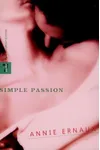
The Gateway to Obsession: Simple Passion
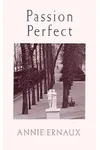
If you want a quick, arresting introduction to Ernaux's style, Simple Passion (originally published in French as Passion simple in 1991) is the perfect place to start. Clocking in at under 80 pages, this slim book documents the consuming, minute-by-minute obsession of an extramarital affair with a foreign diplomat. It showcases her signature style: clinical, raw, devoid of melodrama, yet completely captivating. Note that some early UK editions published this work under the title Passion Perfect.
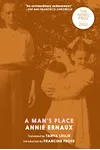
The Family and Class Entry Point: A Man's Place
If you are interested in social mobility, class shame, and family dynamics, begin with A Man's Place (published in French as La Place in 1983). This masterpiece investigates the life of her father, a former peasant worker who became a small-town shopkeeper, and the growing cultural chasm that opened between them as Ernaux became educated and entered the bourgeoisie. This was the book that solidified her signature style. It is also sometimes translated under the title Positions.
The Political and Personal Crucible: Happening
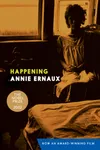
For a look at the intersection of private trauma and public policy, Happening (L'Événement, 2000) is a visceral, vital read. It recounts Ernaux’s experiences seeking an illegal abortion as a university student in 1963 France. The prose is unyielding and acts as a powerful historical document of a time when women's bodies were heavily policed by the state.
The Ultimate Masterpiece: The Years
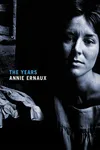
While many consider The Years (Les Années, 2008) to be her absolute masterpiece, it is often recommended as a second or third read rather than a starting point. Instead of using the first-person singular "I," Ernaux writes in the collective "we" (nous) and "she" (elle) to craft a biography of a generation. It weaves her personal memories from post-WWII childhood to the early 2000s with the cultural, political, and consumerist shifts of French society.
Understanding the Early Autobiographical Trilogy
Before Ernaux defined her style as "autosociobiography," she began her career writing what she classified as autobiographical novels. These early works are slightly more fictionalized, containing more traditional narrative structures and stream-of-consciousness prose than her later, more clinical memoirs. If you want to see the roots of her literary style, read these three in order:
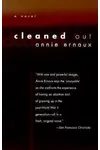
- Cleaned Out (Les armoires vides, 1974): Her debut novel, which details a young student waiting in her dorm room during the aftermath of an illegal abortion, reflecting on her working-class roots.
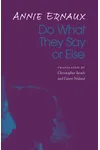
- Do What They Say or Else (Ce qu'ils disent ou rien, 1977): A coming-of-age story centering on a fifteen-year-old girl named Anne navigating adolescence, sexuality, and parental expectations in Normandy.
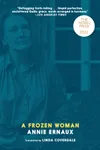
- A Frozen Woman (La Femme gelée, 1981): An examination of how a young, free-thinking woman gradually finds herself constrained by the traditional societal expectations of marriage and motherhood.
Publication Order vs. Chronological Life Order
Ernaux's work is unique because she frequently returns to the same periods of her life decades later, extracting new insights or publishing raw source material. This creates interesting overlaps and dualities that readers should keep in mind.
The Diary vs. The Memoir (The Double-Read)
One of the most fascinating aspects of reading Ernaux is seeing how she reconstructs the same event in different formats. There are two major instances of this in her bibliography:
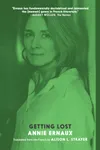
- The Affair: Read Simple Passion (her polished memoir of her affair) followed immediately by Getting Lost (Se perdre, 2001), which is the actual, unedited diary she kept during the months the affair occurred.
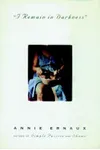
- The Mother's Decline: Read A Woman's Story (Une femme, 1987), her sociological tribute written shortly after her mother’s death from Alzheimer's disease, and pair it with I Remain in Darkness ("Je ne suis pas sortie de ma nuit", 1997), the raw, agonizing journal entries she kept while visiting her mother in the hospital.
Co-Authored Works and Special Additions
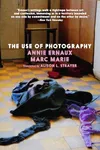
Beyond her main memoirs, Ernaux has engaged in collaborative works. The Use of Photography (L'usage de la photo, 2005), co-authored with journalist and photographer Marc Marie, is a unique collaborative memoir. It uses 14 photos of their discarded clothes taken during their passionate affair while Ernaux was undergoing treatment for breast cancer as writing prompts for both lovers. Additionally, I Will Write to Avenge My People is the published transcript of her 2022 Nobel Lecture, reflecting on her writing motivations and social background.
Complete English Translation Publication Order
For readers who wish to follow the evolution of Ernaux's writing career as it unfolded, here is the chronological list of her major translated works by their original French publication dates:
- Cleaned Out (1974)
- Do What They Say or Else (1977)
- A Frozen Woman (1981)
- A Man's Place (also translated as Positions) (1983)
- A Woman's Story (1987)
- Simple Passion (also translated as Passion Perfect) (1991)
- Exteriors (1993)
- I Remain in Darkness (1997)
- Shame (1997)
- Happening (2000)
- Things Seen (2000)
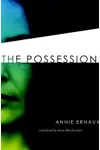
- The Possession (2002)
- The Use of Photography (2005)
- The Years (2008)
- Look at the Lights, My Love (2014)
- A Girl's Story (2016)
- The Young Man (2022)
- Getting Lost (published in French in 2001, translated to English in 2022)