







Where to Start Reading Anton Gill and Oliver Bowden
Anton Gill is a master of historical storytelling. Under his own name, he is celebrated for immersive historical mysteries and highly detailed non-fiction. Under the famous pen name Oliver Bowden, he helped launch the massive tie-in library for Ubisoft's Assassin's Creed video game franchise. Because his work spans very different settings—from Akhenaten's Egypt to Renaissance Rome and modern art history—your starting point depends on what kind of reader you are.
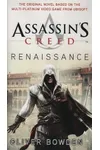
- For Gaming Fans and Action Lovers: Start with Assassin's Creed: Renaissance (2009). It is the book that kicked off the Assassin's Creed series and introduces Ezio Auditore da Firenze, the franchise's most beloved protagonist.
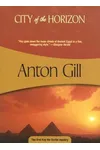
- For Historical Mystery Buffs: Begin with City of the Horizon (1991), the first book in the Huy the Scribe series. It introduces Huy, an ancient Egyptian scribe who operates essentially as the world's first private investigator.
- For Lovers of Serious History: Pick up The Journey Back from Hell (1988), a deeply moving oral history compiled from interviews with survivors of Nazi concentration camps, which won the H.H. Wingate Award.
The Assassin's Creed Series (Oliver Bowden)
The name Oliver Bowden is a house pseudonym used by Penguin Books for the Assassin's Creed novelizations. Anton Gill penned the first few entries in the series before passing the torch to other authors, most notably Andrew Holmes, who wrote several later books under the same pseudonym, while authors like Christie Golden contributed to the expanded universe under their own names.
Because these novels feature distinct historical eras, readers often debate the best way to experience them. There are two primary reading paths: publication order and chronological order.
1. Publication Order (Recommended)
Reading in publication order allows you to experience the world just as the lore developed. It also aligns closest with the release order of the video games they adapt or complement:
- Renaissance (2009) – Adapts Assassin's Creed II, following Ezio's quest for vengeance in Renaissance Italy.
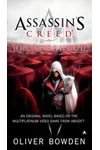
- Brotherhood (2010) – Adapts the game of the same name, continuing Ezio's fight against the Borgias in Rome.
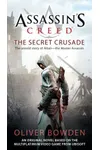
- The Secret Crusade (2011) – Follows the life of Altaïr Ibn-La'Ahad, the protagonist of the original game, as narrated by Niccolò Polo.
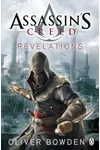
- Revelations (2011) – The final chapter of Ezio's journey as he travels to Constantinople.
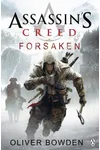
- Forsaken (2012) – Serves as a prequel and companion to Assassin's Creed III, written from the perspective of Haytham Kenway.
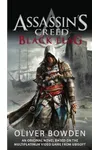
- Black Flag (2013) – Adapts the pirate-themed game, following Edward Kenway.
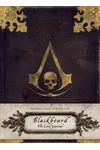
- Blackbeard: The Lost Journal (2014) – An illustrated companion journal expanding on characters from Black Flag.
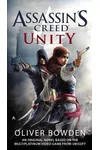
- Unity (2014) – Set during the French Revolution, focusing on Elise de la Serre.
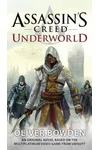
- Underworld (2015) – Set in Victorian London, serving as a prequel to Assassin's Creed Syndicate.
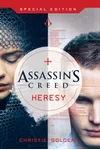
- Heresy (2016) – Set during the Hundred Years' War (Joan of Arc), written by Christie Golden.
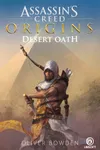
- Desert Oath (2017) – A prequel to Assassin's Creed Origins, exploring the youth of Bayek of Siwa.
2. Chronological Order (By Historical Setting)
For readers who want to follow the historical timeline of the Brotherhood from the ancient world to the nineteenth century, follow this chronological order. Note that some books overlap in time, but this sequence is based on when the main plot starts:
- Desert Oath (1st Century BCE – Ancient Egypt)
- The Secret Crusade (12th to 13th Century – Third Crusade / Crusades Era)
- Renaissance (15th Century – Renaissance Italy)
- Brotherhood (16th Century – Renaissance Rome)
- Revelations (16th Century – Constantinople)
- Black Flag (18th Century – Golden Age of Piracy)
- Forsaken (18th Century – American Revolution Era)
- Unity (18th Century – French Revolution)
- Underworld (19th Century – Victorian Era London)
- Heresy (Dual setting: 15th Century France and modern day)
Huy the Scribe Egyptian Mystery Series
Written under his own name, Anton Gill's Huy the Scribe series is a brilliant blend of historical fiction and classic detective tropes. Set in the Amarna Period of Ancient Egypt—following the death of the heretic Pharaoh Akhenaten—the kingdom is in political and religious turmoil. Huy, a disgraced former scribe, finds a new calling solving crimes that local authorities would rather ignore. This series should be read in order of publication to track Huy's evolving relationships and the ongoing political shifts in Egypt:
- City of the Horizon (1991)
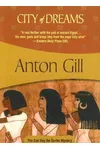
- City of Dreams (1993)
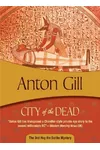
- City of the Dead (1993)
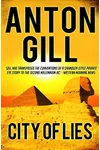
- City of Lies (1994)
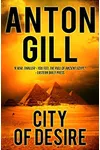
- City of Desire (1998)
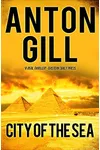
- City of the Sea (1999)
Standalone Novels
If you are looking for a complete story without committing to a series, Anton Gill has written several historical standalones. These include:
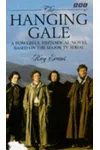
- The Hanging Gale (1995) – Set during the Irish Potato Famine, dealing with two brothers on opposite sides of the law.
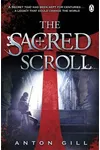
- The Sacred Scroll (2012) – A thriller exploring ancient mysteries and modern-day conspiracies.
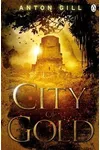
- City of Gold (2013) – A fast-paced historical adventure.
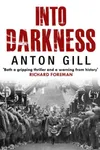
- Into Darkness (2014) – A dramatic tale exploring survival and human nature.
Notable Non-Fiction Works
Before achieving gaming fame, Anton Gill was best known for his meticulously researched non-fiction. Readers looking for deep, factual histories should look at these key titles:
- The Journey Back from Hell: An Oral History (1988) – Gill's landmark book detailing concentration camp survivors' struggles to rebuild their lives.
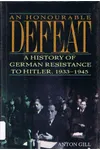
- An Honourable Defeat (1994) – A comprehensive chronicle of the German internal resistance against Adolf Hitler.
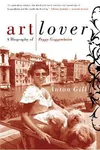
- Art Lover: A Biography of Peggy Guggenheim (2001) – A look at the dramatic life of the legendary modern art collector.
- Il Gigante (2002) – The story of Michelangelo, Florence, and the carving of the David.
What to Know Before You Start
When diving into the Oliver Bowden books, keep in mind that they are tie-ins. Unlike the video games, which alternate between the modern day (using the Animus) and the historical settings, the novels focus almost entirely on the historical narratives. This makes the books highly readable even if you have never played the games. Additionally, because the pseudonym Oliver Bowden was shared among multiple writers (including Anton Gill and Andrew Holmes), you may notice subtle shifts in pacing and tone as the series progresses.