





Where to Start Reading the Strugatsky Brothers
For readers new to Arkady and Boris Strugatsky, finding the best place to begin can be daunting due to their vast bibliography and the loose, non-linear nature of their shared worlds. Depending on what style of science fiction you enjoy, there are three ideal starting points:
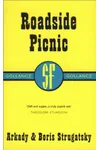
- Roadside Picnic (1972): If you want to experience their absolute masterpiece, start here. This gripping, stand-alone story follows Reduhk Schart, a 'stalker' who risks his life and sanity entering the Zone—an area left littered with dangerous, inexplicable alien debris after a brief extraterrestrial visit. It is atmospheric, deeply philosophical, and inspired Andrei Tarkovsky's legendary film Stalker.
- Hard to Be a God (1964): For fans of planetary romance, medieval intrigue, and intense moral dilemmas, this is the perfect entry point. It follows Anton, an undercover Earth observer on a planet stuck in its own dark ages, who must struggle with the strict directive of non-interference as he witnesses horrific brutality. It is also a key early entry in their famous Noon Universe.
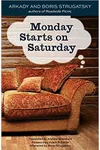
- Monday Starts on Saturday (1965): If you prefer lighthearted satire, bureaucratic absurdity, and magical realism, start with this whimsical novel. Poking fun at Soviet research institutions, it follows a programmer who gets recruited into the Scientific Research Institute of Sorcery and Wizardry (NIIChaVo), where magic is treated as a rigorous, albeit chaotic, academic science.
Understanding the Noon Universe
The Noon Universe (also known as the World of Noon) is the Strugatsky brothers' most expansive setting, depicting a utopian 22nd-century human society that has conquered social ills and expanded into the cosmos. However, unlike traditional, tightly-plotted sci-fi franchises, the Noon Universe is not a linear series. The authors did not write these books to build a single, unified continuity; rather, they used the setting and characters organically to explore different philosophical questions across several decades.
Because of this, you do not need to read the Noon Universe in a strict chronological order. In fact, doing so can be confusing, as the authors frequently altered timelines, resurrected characters, or shifted the tone of the universe from optimistic techno-utopianism to cynical, dark socio-political commentary.
The Maxim Kammerer Trilogy
While most Noon Universe novels are standalone, there is one crucial exception: the Maxim Kammerer Trilogy (often referred to as the Progressors Trilogy). These three books follow the life, career, and disillusionment of the investigator and agent Maxim Kammerer, and they must be read in order:
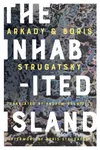
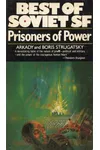
- The Inhabited Island (1969): Also published under the title Prisoners of Power, this novel introduces Maxim as a young, idealistic space explorer who crash-lands on Saraksh, a planet ruled by a totalitarian regime that brainwashes its citizens with radiation towers.
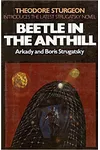
- Beetle in the Anthill (1979): Set years later, a much older and more cynical Maxim is now working for the global security apparatus. He is tasked with tracking down Rudolf Sikorski, a progressor who might unknowingly be a sleeper agent for a mysterious, advanced alien race known as the Wanderers.
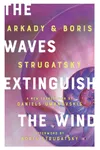
- The Time Wanderers (1985): Also translated under the title The Waves Extinguish the Wind, this final book wraps up the trilogy and the broader themes of the Noon Universe, investigating a sudden, unexplained evolution within humanity that threatens to fracture society forever.
Other Major Noon Universe Books
If you wish to explore the rest of the Noon Universe, these books can be read at any point, though they are best appreciated after you have a feel for the setting:
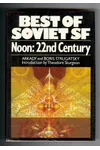
- Noon: 22nd Century (1961): A collection of thematic short stories and vignettes that sets the foundational baseline for the utopian society.
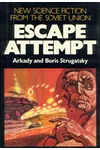
- Escape Attempt (1962): An early, dark tale featuring the first appearance of the 'Progressors'—agents sent by Earth to subtly steer primitive alien civilizations toward progress.
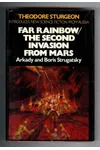
- Far Rainbow (1963): A somber catastrophe novel focusing on scientists on a testing planet who must decide who to save when an experimental energy wave threatens to consume their colony.
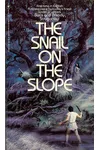
- The Snail on the Slope (1966): A surrealist, highly allegorical work split into two narratives: one inside an administrative authority and the other inside a bizarre, living forest. The Strugatskys considered this to be one of their most profound works.
The Bykov and Zhilin Cycle (Early Hard Sci-Fi)
Before transitioning into their philosophical masterpieces, the Strugatskys wrote early hard science fiction. Several of these books focus on character Alexei Bykov and flight engineer Ivan Zhilin. This cycle serves as a precursor to the Noon Universe and features a distinct progression:
- The Country of Crimson Clouds (1959): A classic, optimistic adventure detailing an expedition to the hazardous environment of Venus.
- Space Apprentice (1962): A novel following a young space pilot named Yurkovsky on a tour of the solar system, where he is mentored by Ivan Zhilin.
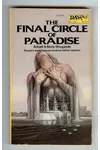
- The Final Circle of Paradise (1965): Posing as a writer, Ivan Zhilin goes undercover in a decadent, ultra-affluent resort city to investigate a highly addictive, reality-bending mental drug called 'the Slug'. This book marks the transition to a darker, more critical worldview.
Publication Order vs. Chronological Order Caveats
If you decide to read the Strugatsky brothers' books in publication order, be prepared for some confusion regarding titles, translations, and editorial histories:
- Title Discrepancies: Many of their books were heavily censored by Soviet authorities, resulting in altered texts and differing translation titles. For example, The Inhabited Island was translated as Prisoners of Power in older, censored English editions. Modern readers should look for the newer, uncensored translation under the title The Inhabited Island. Similarly, the philosophical novel One Billion Years to the End of the World was originally released in the West under the title Definitely Maybe.
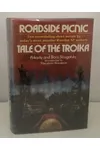
- Monday Starts on Saturday and Tale of the Troika: The satirical sequel to Monday Starts on Saturday, titled Tale of the Troika, has two vastly different versions (the 'Angara' version and the 'Smena' version), which were written to appease or bypass different censorship blocks. The 'Smena' version is generally considered the more direct, cohesive sequel.