

How to Read Art Spiegelman’s Books: Recommended Reading Path
Art Spiegelman is a titan of the graphic novel medium, best known for dismantling the idea that comics are merely children's entertainment. Because his body of work spans deeply personal family memoirs, avant-garde underground comix, political visual essays, and children's picture books, knowing where to begin can be daunting. We recommend starting with his masterwork before branching out into his historical, autobiographical, and editorial collections.
Step 1: The Maus Narrative (The Essential Starting Point)
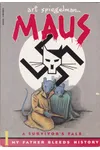
Start with Maus: A Survivor’s Tale. This is his defining achievement and a landmark in comic history. You can read it in one of two ways: either as the original two volumes or in a single consolidated volume. The core narrative must be read in this sequence:
- Maus I: A Survivor's Tale – My Father Bleeds History (1986): Introduces the dual narrative of Art interviewing his father, Vladek, a Polish Jew and Holocaust survivor, alongside Vladek's memories of pre-war Poland and life in the ghetto.
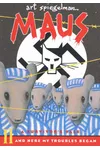
- Maus II: A Survivor's Tale – And Here My Troubles Began (1991): Follows Vladek's survival in Auschwitz and Birkenau, alongside Art's own struggles with the success and psychological weight of the first volume.
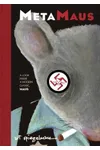
Alternatively, you can read The Complete Maus (1996), which collects both volumes under one cover. Once you have finished the main story, pick up MetaMaus: A Look Inside a Modern Classic, Maus (2011). This is a comprehensive companion book that contains transcripts of Spiegelman's interviews with his father, historical reference materials, family trees, and private sketches. It acts as the ultimate post-script to the narrative.
Step 2: Underground Roots and Memoirs
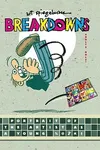
After experiencing Maus, transition to Breakdowns: Portrait of the Artist as a Young %@&*! (2008). This volume collects Spiegelman's early, experimental underground comics from the 1970s (originally published as Breakdowns in 1977) and wraps them inside a newly drawn, highly reflective graphic memoir that details his artistic coming-of-age.
Step 3: Political Visual Essays
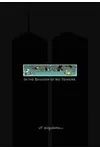
Next, read In the Shadow of No Towers (2004). This oversized, broadsheet-style graphic novel captures Spiegelman's immediate, visceral reactions to the September 11 attacks, having lived just blocks away from the World Trade Center. It juxtaposes modern trauma with style references to early 20th-century Sunday strip comics.
Step 4: Art, History, and Graphic Collaborations
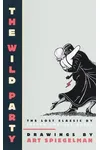
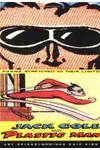
Round out your journey with Spiegelman's collaborative works, children's books, and sketchbooks, such as The Wild Party (1994), where he illustrated Joseph Moncure March's 1928 narrative poem, and Jack Cole and Plastic Man (2001), a celebration of one of his major artistic influences co-created with Chip Kidd.
Publication Order of Art Spiegelman's Core Works
While the recommended reading path places Maus first, reading Spiegelman's works in order of publication reveals how his style evolved from rebellious, fragmented underground comix to a polished, historic literary voice. Below is the chronological breakdown of his major publications:
- Breakdowns (1977 / Expanded in 2008): Spiegelman's initial showcase of experimental layouts and raw psychological themes, containing the very first strip that inspired Maus.
- Maus I: A Survivor's Tale (1986): The publication that brought underground graphic storytelling to the mainstream literary world.
- Maus II: A Survivor's Tale (1991): The concluding chapter of Vladek's survival and Art's complicated path to finishing the project.
- The Wild Party (1994): A collaborative illustrated edition reviving Joseph Moncure March's long-lost Jazz Age narrative poem from 1928.
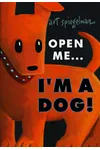
- Open Me... I'm a Dog! (1997): A whimsical, interactive novelty children's book that challenges the physical concept of what a book can be.
- Jack Cole and Plastic Man: Forms Stretched to Their Limits (2001): Part biography, part graphic analysis, analyzing the legendary creator of Plastic Man.
- In the Shadow of No Towers (2004): A large-format, personal, and political response to national tragedy.
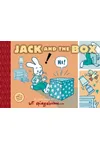
- Jack and the Box (2008): A playful, easy-to-read comic written for emerging readers, published under the TOON Books imprint.
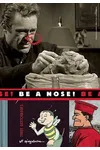
- Be a Nose! (2009): A rare, three-volume facsimile set of Spiegelman's private sketchbooks, showcasing the raw doodles and stream-of-consciousness ideas behind his work.
- MetaMaus (2011): The definitive companion to the Maus legacy, answering the common questions of "Why comics?" and "Why mice?".
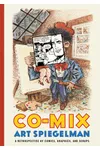
- Co-Mix: A Retrospective of Comics, Graphics, and Scraps (2013): A visual retrospective covering his cartoons, graphic designs, bubblegum cards, and fine art.
Understanding the Series and Collections
To fully navigate Art Spiegelman's catalog, it helps to categorize his output by theme, format, and target audience. His projects fall into four main categories:
The Maus Trilogy / Universe
The Maus narrative is tight and self-contained, but the companion volume expands it significantly. Maus I (1986) covers the events up to the gates of Auschwitz, while Maus II (1991) details survival within the camps and the liberation. MetaMaus (2011) acts as a documentary accompaniment, offering students and literary scholars a deep dive into the historical research and audio archives that Spiegelman used to construct the graphic novel.
Illustrated Collaborations and Monographs
Spiegelman frequently lends his visual genius to external texts and historical figures. In The Wild Party (1994), he paired his dark, expressive brushwork with the rhythmic, hard-boiled text of Joseph Moncure March's 1928 poem. In Jack Cole and Plastic Man (2001), he teamed up with Chip Kidd to write an essay-rich tribute to the comic artist Jack Cole, outlining Cole's tragic life and anarchic influence on the medium.
Children’s Books and TOON Books Imprint
Spiegelman has a long-standing commitment to children's literacy through visual media. In 1997, he published Open Me... I'm a Dog!, an interactive book featuring a fuzzy cover and a leash, designed to convince young readers that the book is actually a canine companion. In 2008, Spiegelman and his wife, Françoise Mouly, founded TOON Books, a publisher dedicated to high-quality comics for early readers. Under this banner, Spiegelman wrote and illustrated Jack and the Box (2008), which uses simple wordplay and panel-to-panel progression to help toddlers develop visual literacy skills.
Non-Fiction, Sketchbooks, and Editorial Retrospectives
For readers interested in the creative process, Spiegelman has opened his archives multiple times. Breakdowns (2008 edition) provides the foundation of his early avant-garde comix. Be a Nose! (2009) offers three pocket-sized reproductions of his personal notebooks, detailing his struggles with writer's block and early draft concepts. Co-Mix (2013) compiles his entire visual career, including his early work designing trading cards (such as the satirical Wacky Packages and Garbage Pail Kids) for the Topps Chewing Gum company.
Practical Reader Advice and Reading Caveats
When starting with Art Spiegelman, keep the following guidance in mind to get the most out of your reading experience:
- Maus is non-negotiably sequential: You cannot read Maus II without reading Maus I. The narrative is heavily serialized, and the emotional impact of the second volume relies entirely on the character relationships established in the first.
- MetaMaus is not a sequel: Do not read MetaMaus expecting a continuation of Vladek's story. It is a behind-the-scenes documentary book, filled with interview transcripts, historical photographs, and draft comparisons. Save it for last.
- The Wild Party Publication Date: Although Joseph Moncure March originally wrote The Wild Party in 1928, Spiegelman's illustrated version was published in 1994. Avoid confusion when looking for this book; search for the 1994 edition to find Spiegelman's contribution.
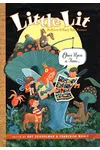
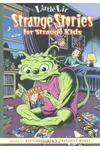
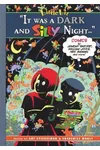
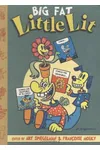
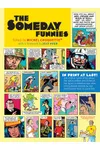
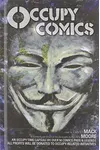
- Anthology Contributions: Spiegelman has edited or contributed to numerous anthologies, including the avant-garde magazine RAW (which he co-edited with Françoise Mouly from 1980 to 1991), the Little Lit series, and collections like The Someday Funnies (2011) and Occupy Comics (2014). These collections are excellent for readers who want to explore the wider world of alternative comics, but they are not required reading to understand Spiegelman's core memoir works.