
Where to Start: The Arthur Golden Reading Path
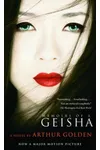
Because Arthur Golden has published only one novel in his career, starting your reading journey with him is exceptionally straightforward: you begin and end with his masterpiece, Memoirs of a Geisha (1997). However, the reading experience does not have to stop at the last page of his famous debut. To fully appreciate the story, its background, and the intense cultural conversations it sparked, readers can follow a multi-perspective reading path that includes the original novel, the real-life memoir written in response to it, and the Academy Award-winning film adaptation.
1. Memoirs of a Geisha (1997)
This is the core text and the essential starting point. Written in the first-person voice of Chiyo Sakamoto (later Sayuri Nitta), the novel follows a young girl from a poor coastal fishing village who is sold into an okiya (geisha house) in Kyoto's Gion district. Through years of rigorous training in music, dance, and tea ceremony, intense rivalries with the head geisha Hatsumomo, and the devastating hardships of World War II, she rises to become one of Kyoto's most celebrated geishas. Throughout her struggle, she harbors a lifelong, forbidden love for a businessman known as the Chairman.
2. The Essential Companion: Geisha, a Life by Mineko Iwasaki
To truly understand the context of Golden's novel and the world of Gion, readers should follow up with Geisha, a Life (published as Geisha of Gion in the United Kingdom). Mineko Iwasaki was one of the most famous geishas of her generation and served as Golden's primary source during his extensive research. After a dispute over her anonymity and the book's accuracy, Iwasaki wrote her own autobiography to set the record straight. Reading these two books back-to-back offers a fascinating contrast between Western historical fiction and authentic Japanese memoir.
Publication Order of Standalone Novels
- Memoirs of a Geisha (1997)
What to Know Before You Start: The "Translator's Note" Illusion
One of the most common points of confusion for new readers of Memoirs of a Geisha is the prologue. The novel opens with a "Translator's Note" signed by a fictional academic named Jakob Haarhuis. In this introduction, Haarhuis explains how he met the retired geisha Sayuri Nitta in New York and translated her dictated memoirs into English.
This prologue is entirely fictional. Arthur Golden did not translate the book from Japanese, nor does Sayuri Nitta exist in real life. Golden wrote the book originally in English. He employed this framing device to give the narrative the intimate, authentic feel of a real memoir. Knowing this beforehand prevents confusion and allows you to enjoy the book as a work of carefully crafted historical fiction rather than a literal autobiography.
Behind the Pages: Golden's Meticulous Writing Process
The success of the novel was not accidental; it was the result of a rigorous six-year writing process during which Golden rewrote the entire book three times. In his early drafts, Golden struggled with the perspective, originally writing the story in the third person. Feeling that the narrative lacked emotional immediacy, he eventually decided to rewrite the entire manuscript in the first person, channeling Sayuri's voice directly. This decision proved to be the key to the novel's success, creating a deeply intimate and evocative atmosphere that made readers feel as though they were reading an authentic historical document.
The Reading Order Controversy: Fiction vs. Reality
While Memoirs of a Geisha was a massive critical and commercial success, selling over four million copies in English, it also generated significant controversy. This controversy is crucial for readers to understand, as it directly led to the creation of the book's primary companion read:
- The Breach of Anonymity: Mineko Iwasaki agreed to be interviewed by Golden on the condition of strict anonymity, which is traditional in the private world of Kyoto's geisha. However, Golden listed Iwasaki by name in the book's acknowledgments, leading to serious professional and personal consequences for her in Japan, including death threats.
- The Defamation Lawsuit: In 2001, Iwasaki sued Golden and his publisher for breach of contract and defamation. She asserted that the book distorted geisha culture, notably by conflating geishas with high-class prostitutes (specifically regarding the fictional depiction of the mizuage ceremony as a bidding war for a virgin's virginity, which Iwasaki asserted was not a practice in Gion). The lawsuit was settled out of court in 2003.
- The Resolution: The settlement led directly to Iwasaki writing her own book, Geisha, a Life. This creates a natural "reading order" where Golden's book acts as the fictional, stylized narrative, and Iwasaki's acts as the factual correction.
The Cinematic Companion: The 2005 Adaptation
After finishing the books, the next step in the Arthur Golden experience is the 2005 film adaptation. Directed by Rob Marshall and produced by Steven Spielberg, the movie features an all-star international cast including Zhang Ziyi as Sayuri, Michelle Yeoh as Mameha, Ken Watanabe as the Chairman, and Gong Li as the antagonist Hatsumomo. The film won three Academy Awards (Art Direction, Cinematography, and Costume Design) and provides a highly stylized, visual interpretation of the story, though it faced its own controversies regarding casting choices.
Are There Any Other Arthur Golden Books?
For decades, fans have wondered if Arthur Golden would release a follow-up novel. While reports over the years suggested he was working on a second book—specifically a novel focusing on a young boy in 19th-century Amsterdam—nothing has ever materialized. Memoirs of a Geisha remains his sole published work. His limited output has only added to the mystique of his writing career, leaving his debut as a singular landmark in late 1990s historical fiction.