
Where to Start with Ashley C. Ford
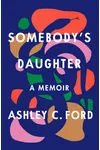
For readers new to Ashley C. Ford's raw, vulnerable, and lyrical storytelling, the absolute best starting point is her debut memoir, Somebody’s Daughter (2021). Released as part of Oprah Winfrey's publishing imprint at Flatiron Books, this New York Times bestseller is the definitive showcase of Ford’s literary talent. It offers a deeply personal and unflinching look at her coming-of-age journey in Indiana, navigating family relationships, and the long shadow of her father's incarceration.
Once you have experienced the emotional depth of her memoir, the next step is to explore her essay contributions and editing work. Because her catalog consists of a single central memoir and various anthology contributions, there is no complex chronological order to follow. Readers can safely start with Somebody’s Daughter and then branch out into the curated collections and anthologies featuring her writing based on their thematic interests.
Ashley C. Ford Books by Publication Order
While Ford has not yet released a second full-length book, her presence in contemporary literature spans several notable collaborative projects, forewords, and essay collections. Below is the publication order of the books she has authored, edited, or contributed to significantly.
The Memoir
- Somebody’s Daughter: A Memoir (2021) — Ford’s debut memoir focusing on her childhood, her relationship with her mother, and her incarcerated father.
Anthologies and Editorial Contributions
- Generation F: The Girls Write Now 2018 Anthology (2018) — A collection of works by young writers for which Ford wrote the introductory foreword.
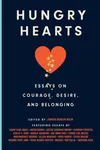
- Hungry Hearts: Essays on Courage, Desire, and Belonging (2021) — A collection of essays edited by Jennifer Rudolph Walsh, featuring a personal contribution from Ford alongside other prominent writers.
- The People's Project (2025) — A curation of poetry, essays, and visual art compiled by Maggie Smith and Saeed Jones, containing essay contributions by Ford.
Key Themes and What to Know Before You Start
Before diving into Ashley C. Ford's work, it is helpful to understand the core themes that define her writing. Ford writes extensively about identity, race, class, and family dynamics. Her narrative style is marked by a refusal to simplify complex human emotions; she approaches subjects like parental incarceration and abuse with a mixture of tough honesty and deep empathy. Her mentorship under acclaimed author Roxane Gay has also heavily influenced her commitment to vulnerability and truth-telling on the page.
In addition to her print writing, Ford is a highly active cultural commentator and podcaster. She has hosted or co-hosted programs such as The Chronicles of Now, Lovecraft Country Radio (for HBO), and BuzzFeed News’s Profile. This multimedia background infuses her written prose with a conversational, immediate, and rhythmic quality that makes her books particularly engaging when experienced as audiobooks narrated by the author herself.
Understanding the Reading Order Caveats
Because Ford's bibliography is focused on non-fiction, memoirs, and essays rather than serialized fiction, readers do not need to worry about storyline continuity or spoilers. However, there are a few publication details to keep in mind:
- The Not That Bad Editorial History: In early promotional materials around 2015 and 2016, Ashley C. Ford was widely announced as a co-editor alongside Roxane Gay for the landmark anthology Not That Bad: Dispatches from Rape Culture (published in 2018). In the final published version, Roxane Gay is credited as the sole editor, though Ford was heavily involved in its development phase.
- Standalone Essays: Ford’s essays, such as her acclaimed piece 'My Father Spent 30 Years in Prison. Now He’s Out' (featured on Longreads' Best of 2017), serve as excellent companion reads to her memoir but can be read entirely independently.
- Anthology Formats: When reading collections like Hungry Hearts, you do not need to read the book from cover to cover to appreciate Ford's contribution. Her essays stand alone as complete, self-contained narratives.