
Recommended Reading Order: Where to Start
Even though Ashley Flowers' novels are written as standalone thrillers rather than a serialized narrative, the best way to experience them is in publication order. Starting with her debut novel allows you to get a feel for her signature storytelling style, atmospheric pacing, and small-town midwestern settings before moving on to her follow-up release.
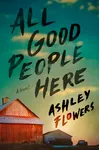
- All Good People Here (2022)
- The Missing Half (2025)
Reading in this order is also highly recommended because of a clever crossover easter egg included in specific editions of the second novel that rewards readers who are already familiar with the characters from her debut.
Ashley Flowers Books in Detail
1. All Good People Here (2022)
Co-authored with Alex Kiester, this debut thriller is set in the small town of Wakarusa, Indiana. The plot follows Margot Davies, a journalist who returns to her childhood home to care for her ailing uncle. Her arrival coincides with the disappearance of a young local girl, which elements closely echo the unsolved murder of Margot's childhood neighbor and friend, January Jacobs, twenty-five years earlier. Obsessed with finding the truth and convinced the two cases are connected, Margot begins digging into the town's darkest secrets, realizing that the people she grew up with may not be as innocent as they seem.
2. The Missing Half (2025)
Also co-authored with Alex Kiester, this second novel shifts the setting to Mishawaka, Indiana. The story centers on Nicole “Nic” Monroe, a young woman whose life was derailed seven years ago when her older sister, Kasey, vanished without a trace, leaving her car abandoned on the side of the highway. When Jenna Connor—the sister of another girl who went missing under nearly identical circumstances just weeks before Kasey—approaches Nic with new theories, the two join forces to investigate. As they trace the cold paths of their sisters' disappearances, they uncover deep-seated secrets and are forced to confront the gaps in Nic's own memories.
Understanding the Connections and Caveats
Are the Books Connected?
Plot-wise, both books are standalone stories featuring entirely different casts, investigators, and self-contained mysteries. However, they share a strong thematic link: both are set in tight-knit Indiana communities, focus on the painful aftermath of cold cases, and are co-written by Flowers and novelist Alex Kiester. Additionally, there is a minor crossover. Special editions of The Missing Half contain a bonus epilogue set five years later, where the main characters' story is featured on the Crime Junkie podcast. In this scene, Margot Davies from All Good People Here makes a brief cameo appearance, tying the two fictional universes together.
The “All Good People Here” Ending Controversy
Before reading the debut novel, it is important to know that its ending is highly controversial. Rather than delivering a traditional mystery resolution, the book concludes with a sudden, highly ambiguous cliffhanger regarding Margot's ultimate fate. Ashley Flowers has explained in interviews that this was a deliberate narrative choice meant to mimic real-life cold cases, which rarely end with neat explanations. If you prefer mysteries with clean, definitive resolutions, you should prepare yourself for a lingering sense of unease when turning the final pages of her first book.
What to Know Before You Start
Here are a few quick tips to help you get the most out of your reading experience:
- True Crime Influence: Fans of Flowers' podcast Crime Junkie will recognize the fast-paced, suspense-driven style of the books. The plots frequently draw inspiration from real historical cold cases, such as the JonBenét Ramsey case, which heavily influenced the mystery surrounding January Jacobs in the first novel.
- Co-Author Collaboration: While Flowers' name is prominently displayed on the covers, both books are collaborative efforts written alongside author Alex Kiester, who helped translate Flowers' true-crime expertise into structured novel formatting.
- Standalone Freedom: Because the crossover elements are minimal, you do not have to worry about missing vital plot points if you choose to read The Missing Half first. Both function perfectly as individual suspense novels.